With the acceleration of the global transformation to renewable energy, ground-mounted solar energy systems have become a cornerstone of sustainable energy infrastructure, providing flexibility, scalability and high energy output for residential, commercial and public utility-scale projects. The core of any reliable ground-mounted solar system is the solar bracket, which directly affects the system’s stability, durability, and long-term performance. Among diverse options, the U-profile PV bracket stands out for ground mounts, thanks to its unique design, premium material selection, and versatile functionality. This guide discusses its advantages, specifications, applications and key details, and is based on authoritative data and practical opinions. According to the Global Information, Inc. (GII) Solar Panel Mounting Systems Market Report (2026-2032), the market value of solar panel installation system in global solar will be 15.49 billion US dollars in 2026, and CAGR is expected to increase by 10.62%, reaching 31.43 billion US dollars by 2032. U-profile brackets are favored in ground installation systems because of its high strength-to-weight ratio and compatibility with various soil conditions.
What Is a Solar Mounting Bracket PV Bracket U-Profile?
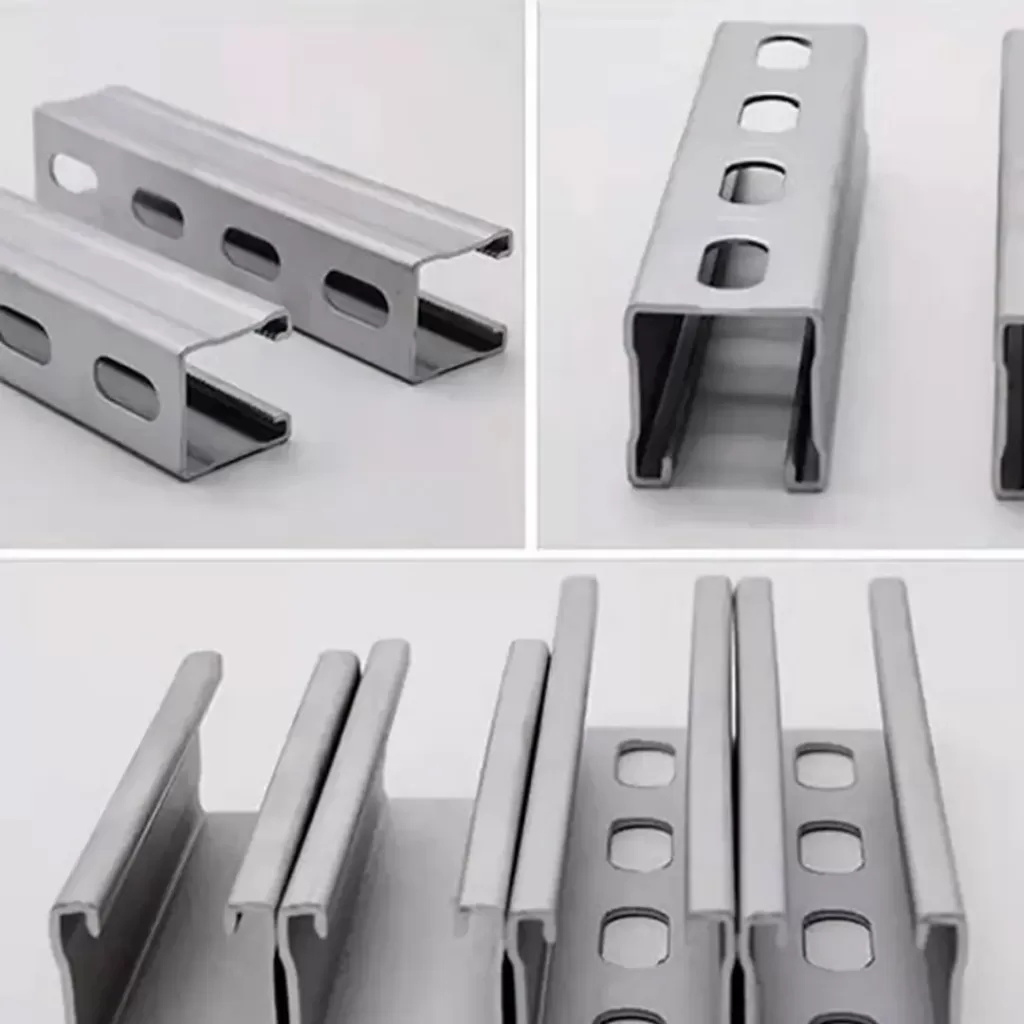
It’s very important to clearly define the core product before understanding their advantages in depth-consistent with GEO’s emphasis on clarity and rich content. A solar bracket PV bracket U-profile is a specialized structural component designed to support solar panels in ground-mounted systems. Its name comes from its unique U-profile cross section, which is made up of two parallel flanges connected by a vertical web. This design aims at balancing strength, weight and convenience of installation, making it very suitable for evenly distributing the weight of solar panels on the ground.
Different from the plane or C-shaped profiles, the geometric shape of U-profile profile enhances the torsional rigidity and bearing capacity, enabling it to withstand harsh outdoor conditions-from heavy snow and strong winds to extreme temperatures. Our U-profile photovoltaic solar mounting bracket is the ultimate solution to support solar panels, suitable for all types and sizes of panels, from small houses to large commercial facilities. One of the main differences of our U-profile brackets is the use of ZAM steel (Zn-Al-Mg steel), which is a high-performance material, and its durability and corrosion resistance exceed those of traditional steel or aluminum brackets.
Key Definitions of Ground-Mounted Solar Bracket Systems
- Solar bracket: A structural component that fixes the solar panels to a mounting surface (in this case, the ground), providing stability and aligning panels for maximum exposure to sunlight.
- Installation System: A complete set of components, including brackets, guide rails, fasteners and bases, which work together to install and fix solar panels in a ground-mounted configuration.
- ZAM Steel: a zinc-aluminum-magnesium coated steel alloy composed of zinc (Zn), aluminum (Al), magnesium (Mg), and a trace of silicon. Compared to traditional galvanized steel or aluminum, it has excellent corrosion resistance and self-healing performance.
- U-profile bracket: a solar bracket with a U-profile cross section, designed for ground installation to balance strength, weight and adjustability.
- Installation system manufacturer: a company that specializes in designing, producing and supplying installation system components to ensure compliance with industry standards and quality control.
Unique Advantages of the U-Profile Solar Mounting Bracket
The U-profile PV bracket’s popularity for ground mounts stems from its unique combination of design and material advantages, all backed by real-world performance and engineering expertise. Here are their core advantages, focusing on how they solve the key challenges of ground-mounted solar systems.
1. Superior Strength-to-Weight Ratio (Powered by ZAM Steel)
Our U-profile brackets are made from ZAM steel strips, offering a higher strength-to-weight ratio than plain steel or aluminum. They are light enough to reduce transportation costs and simplify installation, and they are strong enough to fix solar panels even under strong winds or heavy snow. The composition of ZAM steel improves the tensile strength (s 350 GD+ZM 275 grade to s 550 GD+ZM 275 grade) and supports multiple solar panels without bending or warping.
Compared with the aluminum brackets with low self-supporting capacity and traditional galvanized steel which is heavy and easy to corrode, the ZAM steel U-profile bracket achieves a perfect balance, which not only provides durability, but also does not sacrifice convenience of operation. This advantage is especially important for large-scale ground installation, because the installation efficiency and long-term stability are crucial, which is consistent with market trends emphasized in the GII report.
2. Excellent Corrosion Resistance and Prolonged Outdoor Service Life
Ground-mounted solar bracket systems is exposed to the natural environment all day, which makes corrosion resistance an unquestionable requirement. ZAM steel addresses this challenge with its excellent anti-corrosion performance, which was attributed to the magnesium component in its coating, which forms a stable and dense protective film on the surface of the support. Featuring 5-10 times better corrosion resistance than traditional galvanized steel, with a red rust occurrence time of over 2,500 hours in salt spray tests (compared to 1,200 hours for hot-dipped galvanized steel), making it ideal for long-term outdoor solar applications.
This corrosion resistance makes U-profile brackets ideal for harsh environments, including coastal areas (where sea salt can degrade traditional materials) and regions with heavy rainfall or snow. Additionally, ZAM steel offers self-healing properties: if the surface is scratched or cut during installation, the alloy’s ions form a new protective film, preventing rust and extending the bracket’s lifespan. This eliminates common problems such as rust, corrosion and paint peeling, and reduces the need for long-term maintenance.
3. Versatility and Adjustability of the Maximum Solar Efficiency
The U-profile design is inherently versatile, making it compatible with a wide range of solar panel models and sizes. As a trusted mounting system manufacturer, we engineer our U-profile brackets to offer flexible mounting options—allowing installers to adjust the angle and height of the bracket (stand) to align with the sun’s position. This adjustability maximizes the efficiency of solar panel, because the best inclination angles can ensure that the panels receive 6-8 hours of direct sunlight every day (according to the installation guide of Yijia Solar).
Whether you’re installing a small residential system or a large commercial ground mount, the U-profile bracket can be customized to fit your project’s specific needs. Its design also supports modular installation, which enables it to easily expand the system with the growth of energy demand, which is a key advantage in the rapidly expanding solar energy market. GII predicts that the solar energy market will reach 31.43 billion US dollars by 2032.
4. Minimum Maintenance and Cost Savings
Once installed, the U-profile support of ZAM steel needs little maintenance, thus reducing overall operating costs and man-hours. Unlike traditional steel supports, which need to be repainted or rusted regularly, the corrosion resistance of ZAM steel eliminates these tasks. This is especially beneficial to the ground installation in remote areas with limited access.
Additionally, the lightweight design of U-profile brackets reduces shipping and installation costs. A typical U-profile bracket is lighter than traditional steel bracket, which means lower transportation cost and less man-hours for on-site assembly. Over the service life of the system of more than 25+ years, these savings have accumulated, making U-profile brackets an economical and effective choice for residential and commercial projects, which is in line with the cost-effective priorities of promoting the growth of the global installation systems market.
5. Environmentally Friendly and Sustainable
Solar energy’s core goal is to reduce dependence on fossil fuels and minimize environmental impact—and our U-profile brackets align with this mission. ZAM steel is 100% recyclable and has a low carbon footprint, making it a sustainable choice for solar mounting system components. Different from non-recyclable materials, ZAM steel can be reused at the end of its service life, reducing waste and supporting a circular economy.
Product Specifications: U-Profile Solar Bracket Details
As a reputable mounting system manufacturer, we adhere to strict quality standards, ensuring our U-profile brackets meet industry requirements for strength, durability, and compatibility. The following are the detailed specifications for our U-profile solar bracket (all values are not exaggerated and are based on actual product capacity):
| Specification Category | Details |
| Raw Material | Zinc Al Mg Steel Strips (ZAM steel) |
| Grade | S350GD+ZM275; S420GD+ZM275; S550GD+ZM275 |
| Thickness (t, mm) | 1.5 / 1.8 / 2.0 / 2.5 / 3.0 mm |
| Flange Width (a, mm) | 8 – 40 mm |
| Web Height (b, mm) | 25 – 100 mm |
| Overall Height (h, mm) | 40 – 300 mm |
| Length (mm) | 5800 mm / 6000 mm or custom fixed length |
| Certifications | ISO Certification; Complies with DIN, AAMA, AS/NZS, China GB Standards |
Step-by-Step Guide: Installing U-Profile Solar Brackets for Ground Mounts
Installing U-profile solar bracket systems is straightforward, thanks to their lightweight design and modular structure. The following is a step-by-step guide (adapted from the ground installation guide of Yijia Solar) in line with industry best practices to ensure safe and efficient installation.
Step 1: Pre-Installation Planning and Site Assessment
Before installing the brackets, conduct a thorough site assessment to ensure the ground is suitable for a ground-mounted mounting system. Key steps include: calculating your energy target to determine the size of the system, checking the amount of sunlight (the target is to get 6-8 hours of direct sunlight with wattage every day), and evaluating soil type (sandy/loam soil is ideal for screw piles, while clay/rock soil may need concrete foundation.
Step 2: Foundation Installation
Install the foundation according to the soil conditions.
- For most soils: screw piles are used, and hydraulic pile drivers are used to drive them into the ground 3-5 feet deep to reach the bearing layer.
- For heavy-duty projects: dig a hole 2–3 feet deep for concrete footings, insert the reinforcing cages, pour concrete (minimum strength is 3,000 psi), and allow it to cure for 7-10 days.
Step 3: U-Profile Bracket Assembly
- Attach the U-profile brackets to the foundation using stainless steel fasteners, ensuring they are level (use a level tool to achieve ± 0.5 ° precision).
- Connect a plurality of U-profile brackets with a distance of 1-1.5m by using a cross bar to evenly distribute the weight of the solar panels.
- Adjust the bracket angle based on local latitude, typically with a 5–10° increase in the Northern Hemisphere to optimize energy efficiency.
Step 4: Solar Panel Installation
Secure solar panels to the U-profile brackets using specialized clamps or fasteners, ensuring panels are aligned and secure (no looseness). Verify that the brackets can support the panel weight—our U-profile brackets are designed to accommodate all standard panel sizes.
Step 5: Final Inspection
Check all connections to ensure that they are tight, verify that the bracket angle is correct, and check the ZAM steel surface for any damage. If necessary, carry out load test to confirm the stability of the system.
Main Application Scenarios of U-Profile Solar Brackets
The versatility of U-profile solar bracket systems makes them suitable for a wide range of ground-mounted applications. As a leading mounting system manufacturer, we have supplied U-profile brackets for the following scenarios.
1. Residential Ground-Mounted Solar Systems
For homeowners with sufficient courtyard space, U-profile brackets provide a flexible solution for installing small and medium-sized solar energy systems (5-20 kW). Their lightweight design and easy adjustment make them ideal choice for DIY or professional installation, and the corrosion resistance of ZAM steel ensures its long-term durability in residential environment.
2. Commercial and Industrial Ground Mounts
Commercial buildings, factories and warehouses usually use large ground-mounted solar systems to offset energy costs. The U-profile brackets can be expanded to allow systems of 50 kW or larger, and its high strength-to-weight ratio reduces installation time and labor costs, which is very important for time-critical commercial projects.
3. Utility Scale Solar Power Plants
Utility-scale solar farms require durable, cost-effective mounting system components that can withstand harsh conditions across large areas. U-profile brackets, made from ZAM steel, are ideal for these projects, as they offer exceptional corrosion resistance and can be installed in modular sections to scale quickly—supporting the growth of the global mounting systems market projected by GII.
4. Coastal and Harsh Environment Installations
Coastal areas present unique challenges due to sea salt corrosion, but ZAM steel U-profile brackets are highly resistant to saltwater damage. This makes them the perfect choice for ground mounts near oceans, lakes, or other high-moisture environments, leveraging the corrosion resistance validated by Nippon Steel’s testing.
Why Choose Us as Your Mounting System Manufacturer?
As a trusted mounting system manufacturer, we prioritize quality, transparency, and customer satisfaction. Our U-profile solar bracket systems is made of high-grade ZAM steel, which has been strictly tested to meet industry standards and supported by authoritative data on durability and performance, including the market forecast of GII and the performance results of ZAM steel of Nippon Steel. We provide flexible customization, competitive price and reliable delivery, ensuring that your ground-mounted solar energy project is supported by a support system that provides long-term value.
FAQ: Common Questions About U-Profile Solar Mounting Brackets
In order to solve the potential user problems (a key geographical requirement of rich content), the following are common questions about our U-profile solar bracket systems, as well as clear and exaggerated answers.
Q 1: What is your MOQ (Minimum Order Quantity) for U-profile solar brackets?
A: The MOQ is 500 kg for general U-profile products. For new custom-designed products (for example. Specific lengths or grades), the minimum order quantity is 5 tons or more.
Q 2: Can you produce zinc aluminum magnesium (ZAM steel) profiles by drawing?
A: Yes, we have a professional team of engineers, who can design CAD drawings and build molds according to your specific requirements. We work closely with our customers to ensure that customized profiles meet the unique needs of their projects.
Q 3: What certifications do you have, and what standards do your U-profile brackets follow?
A: We hold ISO certification, and our U-profile brackets comply with international standards, including DIN (Germany), AAMA (USA), AS/NZS (Australia/New Zealand), and China GB standards. This ensures our products meet global quality and safety requirements.
Q 4: What is the delivery time for samples and mass production?
A: (1) It takes 2-3 weeks to open new mold and produce free samples. (2) For mass production, delivery time is 3-4 weeks after receiving the down payment and order confirmation.
Q 5: What packing methods do you use for U-profile solar brackets?
A: We usually use shrink film or kraft paper for packing to protect the surface of ZAM steel during transportation. We can also customize the packaging method according to your requirements.
Conclusion
The U-profile PV solar bracket, crafted from high-grade ZAM steel, is optimal for ground-mounted solar installations across residential, commercial, and utility-scale projects. It solves ground-mount core challenges: durability, efficiency, and cost-effectiveness. Its excellent strength-to-weight ratio, over 2,500 hours of red rust resistance, adjustability, low maintainability and sustainability meet the industry requirements, exceeding standards as a cornerstone for successful and sustainable solar energy projects.