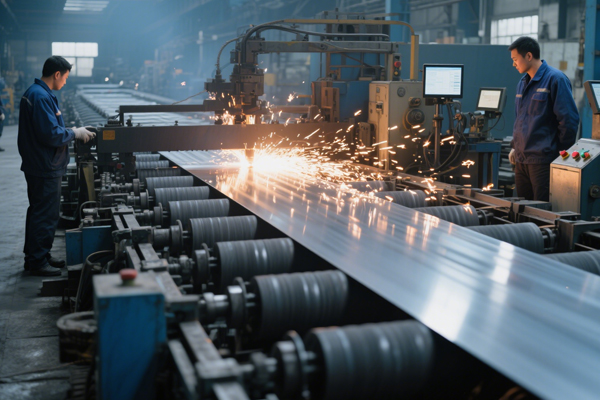
Key Takeaways
- Surface finish affects the appearance, reflectivity, and surface condition of SS COIL. Common options include 2B, BA, No. 4, and 8K mirror finishes.
- Thickness influences stiffness, material weight, forming force, and compatibility with downstream processing equipment.
- Choosing the right coil requires more than selecting a finish and thickness. Width, dimensional tolerances, edge condition, material standard, and processing requirements also matter.
- Matching material specifications to the intended application helps reduce fabrication problems, surface defects, and unnecessary processing costs.
- Material performance depends on the grade, service environment, fabrication methods, and maintenance—not thickness or surface finish alone.
Introduction
304 stainless steel coil is widely used in architectural decoration, elevator panels, kitchen equipment, metal fabrication, and industrial components. Its combination of corrosion resistance, formability, and surface finish options makes it suitable for products that require both functional performance and a consistent appearance.
Two specifications deserve particular attention when selecting stainless steel: surface finish and thickness. The finish determines how the material looks and influences the visibility of scratches and handling marks. Thickness affects stiffness, forming behavior, component weight, and processing requirements.
This guide explains how surface finishes and thickness specifications affect 304 stainless steel coil applications, with practical guidance on material selection, quality checks, and sourcing requirements.
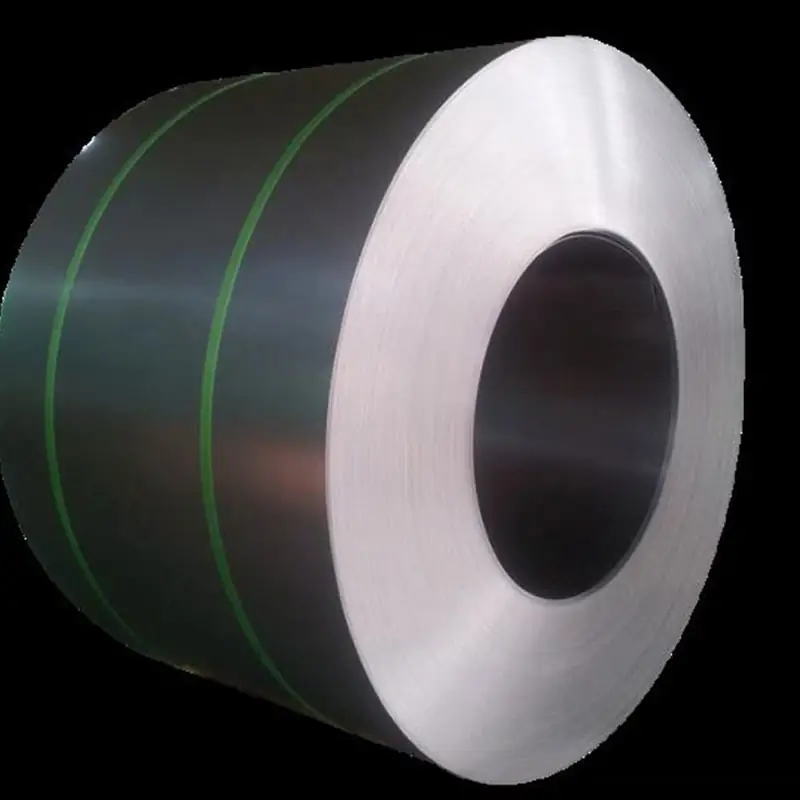
How Do Surface Finishes Affect 304 Stainless Steel Coil Applications?
Surface finish is an important part of stainless steel selection, particularly when the finished component remains visible. Different finishes offer distinct levels of reflectivity and surface texture, so the choice should reflect both the intended appearance and the demands of fabrication.
What Are the Differences Between 2B, BA, No. 4, and 8K Mirror Finishes?
| Surface finish | Appearance | Common applications | Important considerations |
| 2B | Smooth, relatively reflective, with a uniform cold-rolled appearance | Industrial components, equipment panels, general fabrication | Check surface uniformity and suitability for the final treatment |
| BA | Bright, smooth, and more reflective | Decorative components, visible equipment surfaces | Handle carefully to avoid scratches and fingerprints |
| No. 4 | Brushed, directional satin appearance | Elevator panels, kitchen equipment, architectural surfaces | Confirm grain direction and acceptable surface variation |
| 8K mirror | Highly reflective, mirror-like surface | Decorative panels, luxury interiors, display components | Requires careful handling and stricter appearance control |
2B finish is a practical choice for general fabrication where a smooth surface is required without a highly decorative appearance. It is commonly used for industrial equipment and components that may receive further processing.
BA finish, produced through bright annealing under controlled conditions, offers a brighter and more reflective appearance. It can be appropriate when the material remains visible and a clean, bright surface is preferred.
No. 4 finish has a brushed texture with a clear grain direction. It is often selected for elevator interiors, kitchen equipment, and architectural panels because it provides a restrained decorative appearance.
8K mirror finish is intended for applications requiring strong reflectivity. Its appearance makes surface damage more noticeable, so protection during handling, fabrication, and transportation is particularly important.
Finish names alone do not establish an exact visual result. Production methods and supplier specifications can affect reflectivity, texture, and consistency. For appearance-critical projects, approved samples and written acceptance criteria provide a more reliable basis for quality control.
How Does Surface Finish Influence Fabrication and Maintenance?
A finish can affect how easily surface defects are noticed after fabrication. Scratches, dents, fingerprints, and handling marks may be relatively inconspicuous on some industrial surfaces but highly visible on mirror-polished panels.
Protective film can reduce damage during cutting, forming, and transportation. However, film type, adhesive characteristics, removal timing, and compatibility with subsequent processing should be confirmed before production.
Brushed surfaces also require consistent grain direction when several panels are installed together. A change in direction can create visible differences even when the material grade and finish designation are identical.
Maintenance requirements depend on the service environment and the type of contamination encountered. Regular cleaning with suitable products helps preserve the surface, while aggressive chemicals or unsuitable cleaning tools can cause damage. For decorative projects, consistency between production batches is also important because slight differences in texture or reflectivity may be visible after installation.
Which Surface Finish Is Suitable for Different Applications?
The following are common starting points rather than fixed rules:
- 2B: General industrial fabrication, equipment housings, and components requiring a smooth surface.
- BA: Bright surfaces and components where reflectivity is desirable.
- No. 4: Brushed elevator panels, kitchen equipment, and architectural interiors.
- 8K mirror: Decorative applications requiring a mirror-like appearance.
The final selection should account for forming, welding, polishing, cleaning, and the visibility of the finished component. If the part will receive additional surface treatment, confirm that the selected starting finish is compatible with the intended process.
How Does Thickness Affect 304 Stainless Steel Coil Performance?
Thickness affects the way stainless steel behaves during fabrication and in the finished component. Choosing a suitable gauge requires balancing stiffness, weight, forming requirements, and the dimensional limits of the production equipment.
How Does Thickness Influence Strength, Stiffness, and Formability?
Increasing thickness generally increases bending stiffness and material weight per unit area. This can be useful for panels and components that need greater rigidity, but it also increases material consumption and may affect forming operations.
Thicker material often requires greater forming force. The achievable bend radius and the risk of cracking depend on several factors, including material condition, tooling, bend geometry, and the direction of forming relative to the rolling direction.
Thickness should not be treated as a direct measure of tensile strength. Tensile properties depend on the material specification and condition, while corrosion resistance is influenced by the grade and service environment.
For manufacturers, the practical question is whether the selected thickness can meet the component’s mechanical and dimensional requirements while remaining compatible with the intended production process. A thickness that works well for one design may be unsuitable for another, even if both use 304 stainless steel.
What Thickness Ranges Are Commonly Used in 304 Stainless Steel Coil Applications?
The available 304 stainless steel coil range discussed here is 0.25–3.0 mm. Actual availability depends on the required width, finish, tolerance, quantity, and production schedule.
Thin-gauge material may suit formed decorative components and lightweight enclosures. Thicker material may be more appropriate for parts requiring greater stiffness or a more substantial structure. These are general selection principles, not universal thickness recommendations for specific industries.
A product’s maximum available thickness does not automatically mean that every finish and width can be supplied at that thickness. Availability should be checked against the complete specification.
Before ordering, confirm:
- Nominal thickness and permitted tolerance.
- Required coil width and surface finish.
- Material standard and grade.
- Forming requirements and equipment limitations.
Standard sheet sizes and coil dimensions should also be distinguished. Sheet dimensions such as 1219 × 2438 mm and 1219 × 3048 mm are not interchangeable with the width and length characteristics of a coil. For the coil offering discussed here, the stated maximum width is 1219 mm; confirm current availability for the specific order.
Why Do Thickness Tolerances Matter in Coil Processing?
Nominal thickness does not describe every point across a coil. Actual dimensions must fall within the tolerance permitted by the governing specification and purchase agreement.
Thickness variation can affect roll forming, stamping, bending, component fit, and material consumption. In automated production, even small deviations may influence tooling settings or the consistency of finished parts.
Tolerance requirements depend on the applicable standard, product condition, dimensions, and order terms. If the component has tight fit-up requirements or uses precision forming equipment, the tolerance should be stated explicitly rather than left to assumption.
It is also useful to distinguish thickness tolerance from width tolerance, flatness, and edge quality. Each controls a different aspect of material suitability, and all may affect downstream production.
How Should Buyers Match Surface Finish and Thickness to the Intended Application?
Finish and thickness should be selected together. A visually suitable finish may not meet the forming requirements of a component, while a mechanically suitable thickness may still create problems if the surface is easily marked or difficult to maintain.
The table below provides a practical starting point for material selection.
Surface Finish and Thickness Comparison by Application
| Application | Possible finish | Thickness considerations | Key checks |
| Elevator panels | No. 4, BA, 8K | Panel size, stiffness, and forming geometry | Scratch acceptance, grain direction, protective film |
| Kitchen equipment | 2B, No. 4 | Cleaning requirements, forming, and rigidity | Surface condition, fabrication method, cleaning compatibility |
| Decorative doors and architectural panels | No. 4, 8K, colored finishes | Panel dimensions, supports, and forming method | Appearance consistency, film protection, treatment compatibility |
| Industrial fabricated components | 2B, BA, or specified finish | Component loads, bending, and equipment capacity | Grade verification, dimensional tolerances, edge condition |
| Metal enclosures and formed parts | 2B or specified decorative finish | Bend radius, stiffness, and forming limits | Thickness consistency, tooling compatibility, surface damage |
These combinations are examples, not mandatory specifications. Final suitability depends on engineering drawings, fabrication methods, service conditions, and applicable material requirements.
For decorative applications, finish consistency and surface protection may be major acceptance criteria. For industrial components, dimensional accuracy, material properties, and compatibility with production equipment may take priority.
How Do Width, Coil Dimensions, and Edge Condition Affect Processing?
Coil dimensions must match the equipment used for unwinding, slitting, feeding, or forming. Three details are especially important:
- Inner diameter (ID): Must fit the uncoiler mandrel or other handling equipment.
- Outer diameter (OD) and coil weight: Must remain within equipment capacity and handling limits.
- Edge condition: Mill edge and slit edge have different characteristics and may require different levels of edge preparation.
Slit-width tolerance and burr control can be important in precision fabrication. Edge defects may interfere with feeding, create handling risks, or affect the finished component.
The maximum width and available dimensions should be confirmed for the specific coil rather than inferred from sheet-size listings. Protective film, interleaving, and packaging requirements should also be agreed upon when the surface is appearance-sensitive.
For a STAINLESS STEEL processing order, checking these details before shipment helps avoid receiving material that meets the nominal grade but cannot be handled efficiently by the intended production line.
What Quality Checks and Specifications Should Be Confirmed When Sourcing 304 Stainless Steel Coil?
A reliable sourcing process begins with a complete specification. Grade, dimensions, finish, tolerances, documentation, and packaging should be clearly defined so that the delivered material can be checked against the order.
Which Material Standards and Documents Are Relevant?
The purchase specification should identify the material grade, product form, governing standard, and applicable edition. ASTM A240/A240M is relevant to chromium and chromium-nickel stainless steel plate, sheet, and strip for pressure vessels and general applications. Its applicability should be verified against the exact product and intended use.
A material test certificate (MTC) can provide information on chemical composition and mechanical properties. Heat-number traceability helps link the supplied coil to its production and test records.
Additional testing or inspection may be required by the contract, industry, or end application. These requirements should be stated in advance rather than assumed to be included with every order.
An ISO 9001 quality management certification indicates that a supplier operates a quality management system within its certified scope. It does not, by itself, prove that an individual coil meets every requirement in a purchase specification. The material documentation and inspection results must still be reviewed.
How Should Surface Quality and Thickness Be Inspected?
Inspection should focus on the characteristics that determine whether the coil is suitable for its intended use.
Typical checks include:
- Thickness and width against the specified tolerances.
- Surface finish, scratches, dents, and visible inconsistencies.
- Edge condition and slit-edge quality where applicable.
- Grade identification and consistency of material documentation.
For decorative panels, an agreed sample or written appearance standard can help prevent disputes over reflectivity, grain direction, and acceptable surface marks. Third-party inspection may be appropriate when required by the contract or when independent verification is important.
Inspection criteria should be established before production or shipment. A general description such as “mirror finish” or “tight tolerance” is not as useful as a clearly defined requirement that both parties can verify.
What Should a Stainless Steel Coil RFQ Include?
A complete request for quotation (RFQ) helps the SS COIL Manufacturer evaluate the order accurately and reduces the risk of receiving an unsuitable specification.
Include the following information:
- Material: 304 or 304L grade, governing standard, and required documentation.
- Dimensions: Thickness, width, tolerances, coil ID, approximate OD, and target coil weight.
- Surface and edge: 2B, BA, No. 4, 8K, or another specified finish; mill edge or slit edge; protective film requirements.
- Quantity and application: Order quantity, intended fabrication process, and any special acceptance criteria.
- Delivery: Packaging, destination, delivery terms, required lead time, and inspection requirements.
Available options include grades such as 304 and 304L, finishes such as 2B, BA, No. 4, and 8K, and seaworthy export packaging. Payment arrangements may include L/C or T/T with a 30% deposit, subject to confirmation in the individual quotation.
A qualified STAINLESS STEEL Supplier should be able to clarify the specification, confirm available dimensions, and identify any limitations before the order is finalized.
Frequently Asked Questions
What Is the Difference Between 2B and BA Finish on 304 Stainless Steel Coil?
2B is a smooth, relatively reflective cold-rolled finish commonly used in general fabrication. BA is bright annealed and generally has a brighter, more reflective appearance. The appropriate choice depends on the desired appearance, downstream processing, and surface acceptance requirements.
What Thickness Is Best for 304 Stainless Steel Coil?
There is no single best thickness for every application. The correct choice depends on component dimensions, required stiffness, bend geometry, forming method, equipment capability, and the applicable specification. The available coil range should be confirmed for the required width and finish.
Is 304 Stainless Steel Coil Suitable for Outdoor Applications?
It can be suitable for many outdoor applications, but performance depends on the environment. Chloride exposure, coastal conditions, pollution, moisture, surface contamination, and maintenance practices can affect corrosion behavior. Grade 304 should not be assumed suitable for every marine or chloride-rich environment.
What Information Is Needed to Request a 304 Stainless Steel Coil Quotation?
Provide the grade, material standard, thickness, width, finish, tolerances, edge condition, quantity, coil dimensions, certification requirements, packaging, and delivery destination. Including the intended application and processing method can also help the supplier assess suitability and confirm availability.
Conclusion
Selecting 304 stainless steel coil involves more than choosing a grade. Surface finish determines the required appearance and affects how visible defects may be, while thickness influences stiffness, forming behavior, weight, and equipment compatibility. Width, tolerances, edge condition, documentation, and packaging complete the specification.
Defining these details before ordering helps manufacturers improve material consistency, reduce fabrication problems, and make more reliable sourcing decisions.
Contact Runfei for 304 stainless steel coil specifications, finish options, and a quotation tailored to your requirements.