1. Why Wear Resistance Matters in Industrial Equipment
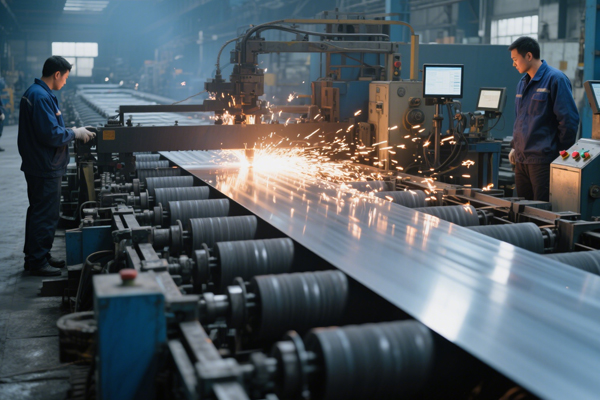
In industries such as mining, cement production, coal processing, and power generation, equipment must withstand high-pressure material flows, abrasion from sharp particles, and severe impacts. This continuous wear and tear can lead to degradation of critical components, driving up maintenance costs. But what really kills industrial machinery ahead of time is a one-two punch: abrasion plus impact. Hard materials like ore, coal, or cement clinker slide across metal surfaces, gradually scraping away the material. Add high-impact forces, and components may also deform or crack. Without the proper abrasion resistant steel, even the best-designed equipment can fail within months.The Cost of Wear and Downtime
Failures caused by wear and tear result not only in direct costs—such as parts replacement and labor—but also in indirect losses stemming from production interruptions. In industries such as mining or cement production, just one hour of downtime can translate into tens of thousands of dollars in lost output. Precisely for this reason, selecting the appropriate wear-resistant steel is not merely a technical decision, but also a financial one.
2. What Is NM500 Wear-Resistant Steel?
NM500 wear-resistant steel from Runfei Steel Group is a high-manganese austenitic steel built to handle severe impact and high-pressure abrasion. Unlike conventional plates that rely on initial hardness, NM500 work-hardens to maintain its surface durability under impact.
This product is also referred to as high-manganese wear-resistant steel (HIGH MANGANESE STEEL) and conforms to standards including AISI, ASTM, BS, DIN, GB, and JIS.
2.1 Key Mechanical Properties of NM500 Steel
In its as-supplied condition, NM500 steel measures about HB200 on the surface—relatively soft. But under heavy impact or high contact stress, its surface rapidly work hardens to above HB500 (and up to 550 BHN under severe impact). A hard, abrasion-resistant surface, while the inner austenitic core remains tough enough to absorb heavy blows without breaking.
Key characteristics include:
Work hardens rapidly under impact
Remains ductile throughout its service life
Non-magnetic properties
Can be welded and cut with oxy-acetylene torch, plasma, water jet, or laser
Hadfield grade material
2.2 Chemical Composition and High-Manganese Characteristics
High-manganese wear-resistant steel has a high carbon content, with a carbon mass fraction of wC=0.9%∼1.45%wC=0.9%∼1.45% and wMn=11%∼14%wMn=11%∼14%.
This high manganese content is what enables the work-hardening behavior. Because this steel is very easy to deform under cold working, it is difficult to machine by conventional cutting. Traditionally, high-manganese steel parts were mostly cast. However, in 2002, a rolled steel plate with Mn13 was developed and produced in Shanghai, offering performance much higher than castings and general wear-resistant steel. Runfei now supplies rolled NM500 steel plates with consistent quality.
3. How NM500 Wear-Resistant Steel Extends Equipment Service Life
3.1 Exceptional Resistance to Abrasion
Once the surface layer work hardens to above HB500, NM500 offers outstanding resistance to sliding and gouging abrasion. This makes it ideal for chutes, hoppers, and liners—where material constantly scrapes across the steel.
3.2 Superior Performance Under High Impact Loads
Many wear-resistant materials tend to become brittle as they attain high hardness, making them less than ideal for applications involving impact loads. NM500 ingeniously circumvents this drawback by utilizing an austenitic matrix structure that inherently possesses high toughness and ductility. When subjected to impact, only the surface of the steel undergoes hardening, while its internal core retains excellent toughness. This characteristic enables the steel to withstand severe impacts without cracking or spalling.
3.3 Self-Work Hardening Capability
The stronger the external impact, the higher the wear resistance of its surface. This “self-hardening” capability is unmatched by other wear-resistant materials. When components made of NM500 steel are subjected to repeated impacts, their surface hardness increases with the increase of stress, thus providing the most critical protection in the areas where it is most needed.
3.4 Maintaining Toughness While Increasing Surface Hardness
NM500 maintains an internal structure that is both soft and tough. This combination of properties is critical for applications involving the dual effects of abrasion and impact. Its tough core resists the initiation and propagation of cracks, while its hard surface effectively prevents material loss.
3.5 Continuous Renewal of Hardened Surface Layer
As the surface-hardened layer wears away, a new work-hardened layer continuously forms during the wear process. The result is evident: the material is able to continuously self-protect over time. It is precisely this self-renewing characteristic that enables NM500 to deliver a service life far exceeding that of traditional wear-resistant steels.
4. Industries That Benefit from NM500 Wear-Resistant Steel
NM500 is widely used in industries where equipment is exposed to strong impact and high-pressure material wear.
4.1 Mining and Quarrying Equipment
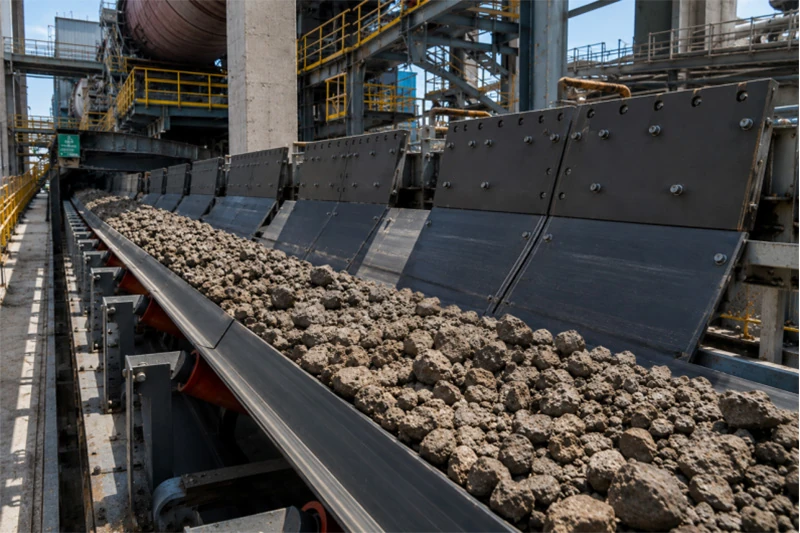
Ore processing involves the crushing, screening, and conveying of highly abrasive materials. As a steel for mining applications, NM500 liners and components withstand the combined effects of sharp rocks and severe impact.
4.2 Cement Production Facilities
Cement plants utilize grinding mills, air classifiers, and material conveying systems—all of which experience very rapid wear. That’s why NM500 is used for components that contact clinker and raw materials.
4.3 Coal Processing Plants
Coal contains quartz and other hard minerals that cause rapid abrasion on chutes, crushers, and screens. NM500 provides long-lasting protection.
4.4 Power Generation Equipment
In coal-fired power plants, pulverizers and material handling systems benefit from NM500’s ability to resist both impact and sliding wear.
5. Typical Applications of NM500 Wear Plate
NM500 steel plates have been widely used in shot blasting machines, ball mills, pulverizers, and other parts that are easily damaged by strong impact. They have also been widely adopted by high-end users in shipbuilding, automotive, machinery, power generation, cement, mining, and coal industries.
Specific applications include:
Crusher liners
Ball mill components
Pulverizers and grinding equipment
Shot blasting machines
Material handling systems such as chutes, hoppers, and transfer points
6. NM500 vs Standard Wear-Resistant Steel Plates
Understanding the difference between NM500 (high-manganese) and standard abrasion-resistant plates such as NM400 or NM450 is important for correct material selection .
6.1 Impact Resistance Comparison
Standard low-alloy NM plates (NM400, NM450) achieve their hardness through martensitic heat treatment. They are hard but have limited toughness, making them susceptible to cracking under high-impact conditions. NM500 high-manganese steel, by contrast, is designed specifically for high-impact applications. Its low initial hardness and high toughness allow it to absorb impact without failure.
6.2 Wear Life Comparison
Under purely sliding abrasion with no impact, standard NM plates may perform adequately. However, in impact-dominated environments, NM500’s work-hardening capability provides superior wear life. The harder the impact, the harder the surface becomes — an advantage that conventional NM plates cannot offer.
6.3 Maintenance and Replacement Costs
Because NM500 provides continuous renewal of its hardened surface layer, components last longer. This reduces the frequency of maintenance shutdowns and replacement part purchases. Over a multi-year equipment lifecycle, the total cost of ownership is significantly lower compared to using conventional wear plates.
7. Factors to Consider When Selecting NM500 Steel Plates
Proper selection of NM500 steel plates requires attention to several application-specific factors.
7.1 Plate Thickness Requirements
Runfei offers NM500 plates in thicknesses from 35mm to 150mm, widths from 1000mm to 4500mm, and lengths from 3000mm to 18000mm. Thicker plates are generally used in high-impact zones or where long service life is required.
7.2 Operating Environment
While NM500 performs exceptionally well under impact and abrasion, operating temperature and the presence of corrosive materials should also be considered. The material is non-magnetic, which may be an advantage in certain applications.
7.3 Fabrication and Welding Considerations
High-manganese steel is very easy to deform by cold deformation, making it difficult to perform cutting and forming. However, NM500 plates from Runfei can be cut with oxy-acetylene torch, plasma, water jet, or laser. Welding is possible when proper procedures and filler materials are used. For complex fabrications, consultation with Runfei’s technical team is recommended.
8. Why Choose Runfei NM500 Wear-Resistant Steel
8.1 Wide Range of Sizes and Specifications
Runfei supplies NM500 plates in thicknesses from 35mm to 150mm, lengths up to 18000mm, and widths up to 4500mm. Supply conditions include As Rolled, Normalized Rolling, Furnace Normalizing, Vacuum Degassing, Simulated Post-Weld Heat Treatment, or as per customer requirement. Impact testing is available at -52°C.
8.2 Strict Quality Control Standards
All Runfei NM500 products are manufactured to international standards including AISI, ASTM, BS, DIN, GB, and JIS. The production process uses hot rolled steel, ensuring consistent mechanical properties.
8.3 Custom Manufacturing Solutions
These products can be customized according to customer requirements. Whether you need specific dimensions, special heat treatment conditions, or custom fabrication support, Runfei provides tailored solutions.
8.4 Over 20 Years of Experience
Established in 1998, Runfei Steel Group has developed into a large-scale enterprise located in Tianjin, the economic center and major port in north China. With convenient transportation, an intellectual marketing network, powerful storage and distribution systems, and a good reputation, Runfei has successfully built strong relationships between mills and clients.
9. Frequently Asked Questions About NM500 Wear-Resistant Steel
Q1: What makes NM500 steel suitable for high-impact applications?
The work-hardening characteristic. Under large impact or high contact stress, the surface layer hardens from HB200 to above HB500 while the inner austenitic structure retains excellent impact toughness.
Q2: Can NM500 wear-resistant steel be welded?
Yes, NM500 can be welded. The product information confirms that the steel can be welded, and proper procedures should be followed to maintain performance.
Q3: How does work hardening improve wear resistance?
The greater the external impact, the higher the wear resistance of the surface layer. As the hardened layer wears, a new work-hardened layer forms continuously, providing ongoing protection.
Q4: Which industries commonly use NM500 steel plates?
Mining, cement, coal processing, power generation, shipbuilding, automotive, general machinery, and shot blasting equipment.
Q5: What thickness options are available for NM500 plates?
Thicknesses range from 35mm to 150mm. Widths from 1000mm to 4500mm, and lengths from 3000mm to 18000mm.
Q6: Is free sample available?
Yes, free sample is available.
Q7: What are the payment terms?
T/T and L/C are available.
10. Conclusion
NM500 wear-resistant steel from Runfei combines high-impact toughness with work-hardening surface protection. Unlike conventional low-alloy wear plates, its high-manganese austenitic structure grows harder under impact while staying ductile at the core. With continuous surface renewal, NM500 components last longer in demanding applications—mining, cement, coal processing, and power generation.
Runfei Steel Group, established in 1998, offers a wide range of sizes (35–150mm thick, up to 18000mm long) and supply conditions, backed by strict quality control and custom manufacturing. For equipment facing severe impact and high-pressure abrasion, NM500 is a proven, cost-effective choice.