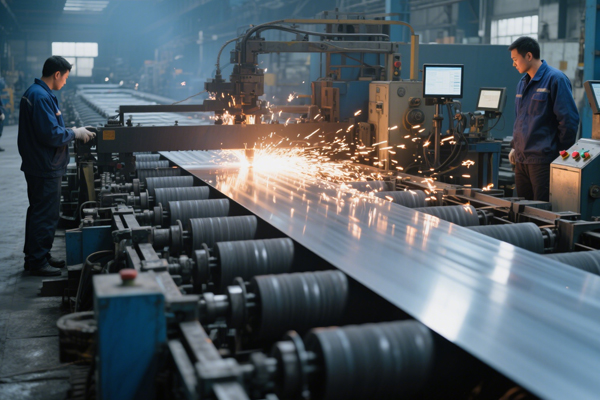
Introduction: The EV Revolution and the Critical Role of CRNGO
The rapid growth of electric vehicles is driving major changes in automotive manufacturing. According to industry forecasts, the global Cold Rolled Non-Oriented Electrical Steel market is projected to reach USD 22.87 billion by 2032, with the automotive sector representing a significant growth driver. At the heart of every EV lies the drive motor, which converts electrical energy into mechanical motion. The efficiency of this conversion process depends largely on the magnetic materials used in the motor core.
Among these materials, non-oriented silicon steel (CRNGO) is widely used in EV traction motors. This choice is mainly driven by motor design requirements. Motor stators and rotors require magnetic materials that perform consistently in multiple directions, and CRNGO delivers exactly that.
Runfei Steel Group, established in 1998, has grown into a large-scale steel processing and distribution enterprise with substantial capabilities in the automotive steel and cold rolled silicon steel sectors. With a 70,000-ton indoor steel storage capacity and an annual processing capacity of one million tons, the company serves global clients through its integrated procurement, sales, and distribution network. This article examines how different steel types contribute to EV motor manufacturing, from core laminations to structural components.
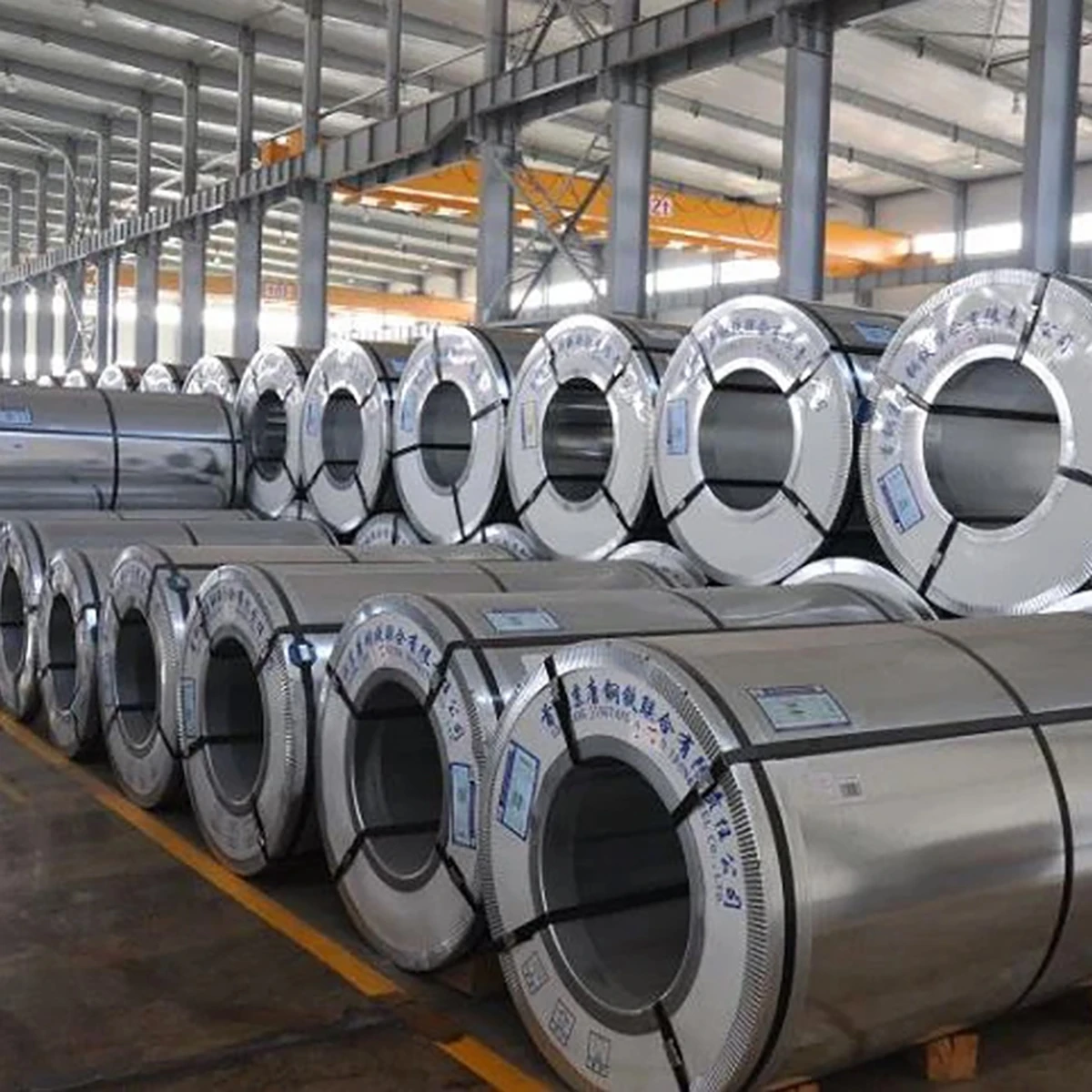
Decoding CRNGO: Why Non-Oriented Silicon Steel is Preferred for EV Motors
Electric vehicle motors operate under a rotating magnetic field. This means that as the rotor turns, the magnetic flux inside the stator core changes direction constantly. For a material to perform well in such an environment, it must exhibit isotropic magnetic properties, meaning consistent performance in all directions.
This is where non-oriented silicon steel comes into play. Unlike grain-oriented silicon steel (CRGO), which is optimized for magnetic flux in a single direction and used primarily in transformers, CRNGO provides uniform magnetic properties across all orientations. This characteristic makes it the logical choice for rotating electrical machines, including EV traction motors, compressors, and industrial drives.
The material contains approximately 1.5 to 3.2 percent silicon, which increases electrical resistivity and reduces eddy current losses. When electrical steel is subjected to alternating magnetic fields, energy losses occur in the form of heat. These losses reduce motor efficiency. Ultra-thin CRNGO grades help reduce core losses under high-speed operating conditions. In some cases, energy losses can be lowered by 30 to 50 percent, improving overall motor efficiency.
Motor manufacturers also pay close attention to the consistency of silicon steel supplies. The steel tolerance of CRNGO products directly affects the electromagnetic performance of finished motor cores. High-quality CRNGO coils maintain thickness tolerance within ±0.005mm, which helps ensure consistent magnetic properties across the entire coil length. This level of precision reduces variability in motor assembly and contributes to more predictable energy conversion efficiency.
Synergistic Manufacturing: Alloy and Carbon Steels for EV Rotor Shafts & Speed Rotors
While CRNGO forms the magnetic core of an EV motor, the mechanical components that support high-speed rotation demand a different set of properties. The rotor shaft, in particular, must withstand substantial mechanical stress, torsional loads, and fatigue over the life of the vehicle.
alloy steel grades such as 42CRMO provide the necessary combination of static strength, fatigue strength, toughness, and machinability required for drive technology applications. A study on high-strength tempered 42CrMo4 steel found that shafts made from this material exhibit significantly increased load-bearing capacity without the risk of abrupt brittle failure during normal operation. This finding challenges conventional design assumptions and suggests that the strength potential of quenched and tempered steels may be underutilized.
For smaller or surface-hardened components, carbon steel grades like C45 or C60 serve as practical alternatives. These materials offer adequate performance for less demanding applications while maintaining cost effectiveness. In high-speed rotors, where peripheral speeds exceed 50 meters per second, forged shafts made from 42CrMo4 help ensure structural integrity under extreme operating conditions.
The selection between alloy and carbon steel depends on the specific performance requirements of each motor design. In both cases, stable material quality and supply reliability are critical. Runfei Steel Group supplies both alloy and carbon steel products to meet these mechanical component requirements.
Enclosing the Powertrain: Cold Rolled, Galvanized, and Coated Steels for Motor Enclosures & Battery Packs
The protective enclosures that house EV motors and battery packs serve multiple functions. They must shield sensitive electrical components from environmental exposure, provide structural support, and in the case of battery packs, maintain a sealed environment to prevent moisture ingress.
Cold rolled steel grades such as DC1 and DC04 are commonly used for motor housings and end covers due to their formability and surface quality. These automotive-grade cold rolled steels enable precision stamping operations that produce complex housing geometries with tight dimensional tolerances. A single 2mm-thick cold rolled steel coil can cover more than 1,000 square meters after processing. Producing such coils without surface defects requires strict process control and high steel cleanliness standards.
When it comes to battery pack enclosures, corrosion resistance becomes a primary concern. EV battery packs are mounted on vehicle underbodies, where they face road salts, moisture, debris, and temperature fluctuations. ZAM steel —a zinc-aluminum-magnesium alloy coated steel—offers superior protection against these harsh conditions. ZAM coating provides corrosion resistance that is several times that of ordinary galvanized sheet. The addition of aluminum and magnesium elements creates a fine protective film that suppresses corrosion even on cut edges, where unprotected steel would typically be vulnerable.
This level of corrosion resistance is not merely a convenience; it is a safety requirement. Battery pack enclosures must maintain their integrity over the vehicle‘s entire service life to prevent environmental exposure of high-voltage components.
Structural Integrity: Stainless and Structural Steels in EV Chassis & Tooling
Beyond the powertrain itself, EV manufacturing relies on a range of steels for chassis structures and production tooling. Stainless steel , particularly grades 304 and 316, finds application in components that demand both strength and exceptional corrosion resistance. In EV cooling systems, stainless steel pipes circulate coolant through motors, power electronics, and battery thermal management loops. Grade 316 stainless steel provides enhanced resistance to chloride-induced corrosion, making it suitable for applications where coolant chemistry or environmental exposure might otherwise degrade lesser materials.
For chassis structures and frames, Q355 high-strength structural steel offers a yield strength of 355MPa and tensile strength ranging from 470 to 630MPa. This low-alloy, high-strength steel provides the load-bearing capacity required for EV underbodies while maintaining good weldability and formability. In applications such as battery pack frames and suspension mounting points, Q355 structures help balance strength and weight considerations.
duplex stainless steel , with its mixed austenitic-ferritic microstructure, offers higher strength than standard austenitic grades while maintaining good corrosion resistance. Although less common in volume production vehicles, duplex grades are sometimes specified for specialized components in high-performance or heavy-duty EV platforms.
For the tooling and dies used to stamp motor laminations and chassis components, mold steels and tool steels provide the wear resistance and dimensional stability required for high-volume production. These materials enable the precision manufacturing operations that make modern EV production feasible.
Supporting Infrastructure: Steel Pipes and Solar Brackets in Gigafactories & EV Charging Stations
The EV ecosystem extends beyond vehicles themselves. Gigafactories that produce EV batteries require extensive piping networks for cooling media circulation. Steel pipes , including seamless pipe variants, form the backbone of these thermal management systems. Seamless pipes offer uniform wall thickness and absence of weld seams, which reduces the risk of leakage in high-pressure cooling circuits. In battery production facilities, maintaining precise temperature control is essential for cell quality and production yield.
At the charging infrastructure level, the integration of solar power with EV charging stations, often referred to as “solar-storage-charging” systems, demands durable outdoor steel structures. Solar bracket systems for photovoltaic panels must withstand wind loads, snow loads, and long-term UV exposure without significant degradation. Zinc-aluminum-magnesium coated steel, the same ZAM material used for battery enclosures, has become a preferred choice for solar mounting structures due to its corrosion resistance and extended service life.
These corrosion-resistant properties also make ZAM steel suitable for outdoor charging infrastructure. ZAM-coated solar brackets can support the same structural loads with thinner sections compared to conventional galvanized steel, offering material savings without compromising durability. This contributes to the overall lifecycle economics of clean energy infrastructure.
Conclusion: Partnering with Runfei Steel Group for Advanced EV Steel Solutions
Different steel products are used in EV motors to meet magnetic, structural, and corrosion-resistance requirements. Cold rolled silicon steel in the form of CRNGO provides the magnetic properties essential for efficient energy conversion in rotating motors. Alloy steel and carbon steel grades support the mechanical demands of high-speed rotor shafts. Cold rolled steel forms protective enclosures, while ZAM steel and other coated products deliver the corrosion resistance required for underbody applications. Stainless steel and Q355 structural steel complete the material ecosystem, contributing to thermal management and chassis integrity.
As a cold rolled steel supplier with over two decades of experience, Runfei Steel Group provides integrated procurement and distribution services for the steel grades discussed in this article. The company‘s position as a silicon steel manufacturer and processor enables efficient sourcing for global clients in the EV sector. With a facility spanning 170 mu in the Tianjin Hangu Industrial Zone and export operations dating back to 2004, Runfei offers practical solutions for manufacturers seeking consistent, specification-compliant steel products.
As the EV market continues to expand, the demand for high-quality automotive steel across all product categories—from motor laminations to chassis structures and infrastructure—will grow correspondingly. Reliable steel supply and stable material quality will remain important as EV production continues to expand.