Key Takeaways
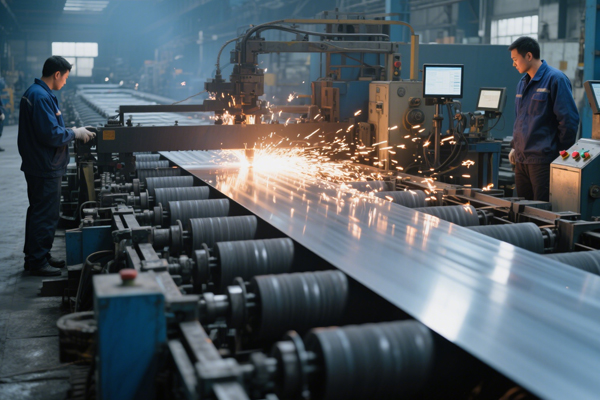
PPGI steel coil is a prepainted galvanized steel product designed for applications where corrosion protection, surface appearance, and forming performance are all important. It is commonly processed into roofing sheets, wall cladding, sandwich panels, and other building components.
Material selection goes far beyond choosing a color or shopping by price. Every aspect—from substrate thickness and coating quality to finishing processes, mechanical properties, dimensional specifications, and regulatory compliance—must be carefully vetted against the project’s technical requirements.
Regional conditions also matter. In hot regions such as the Middle East, solar reflectance and coating weatherability can influence roof performance. In humid or coastal areas, corrosion protection and moisture control deserve greater attention. The U.S. Department of Energy notes that roof surface properties such as solar reflectance and thermal emittance affect heat gain and cooling demand.
What Is PPGI Steel Coil?
PPGI stands for Prepainted Galvanized Steel. It is produced by applying an organic coating system to galvanized steel, creating a material that combines the protective function of a zinc coating with the appearance and additional barrier protection of paint.
A typical production sequence is:
Steel substrate → zinc coating → surface treatment → primer → top coat/back coat → recoiling
The resulting coil is not normally the finished roofing product. Instead, it is supplied to fabricators and roll-forming companies, which process the coil into roofing sheets, wall panels, and other profiles.
This distinction is important for procurement. A ROOFING SHEETS Supplier may supply finished profiled sheets, while a steel coil supplier provides the material from which those sheets are formed.
For construction projects, however, the performance of PPGI is not determined by the paint layer alone. The galvanized substrate and prepainted steel itself may need to comply with specific material standards. For example, ASTM A653/A653M covers hot-dip zinc-coated steel sheet, while ASTM A755/A755M addresses metallic-coated steel sheet that is coil-coated for exterior building applications (ASTM International). These standards can therefore serve as useful references when buyers define the required substrate and prepainted steel specification.
PPGI and PPGL: What Is the Difference?
PPGI and PPGL are similar in that both use a prepainted steel system, but their metallic substrates differ.
| Feature | PPGI | PPGL |
| Substrate | Galvanized steel | Galvalume/aluminum-zinc coated steel |
| Main metallic protection | Zinc | Aluminum-zinc alloy |
| Typical strength | Corrosion protection plus paint barrier | Barrier protection plus zinc sacrificial protection |
| Common applications | Roofing, cladding, construction | Roofing, cladding, demanding outdoor applications |
| Main selection factor | Project exposure and forming needs | Exposure, temperature, corrosion and project requirements |
PPGL commonly uses an aluminum-zinc alloy containing approximately 55% aluminum, 43.4% zinc, and 1.6% silicon. However, a higher alloy content does not automatically make PPGL the better choice for every project. The appropriate substrate depends on exposure conditions, design requirements, forming, and applicable specifications.
PPGI Steel Coil Applications in Roofing
Roofing is one of the most established applications for prepainted steel. Coils can be roll-formed into corrugated, trapezoidal, sinusoidal, and tile-effect profiles.The geometric design of the profile determines the stiffness, drainage performance, load-bearing capacity, and installation convenience of the sheet. This requires the selection of the coil to be considered in conjunction with the overall design of the sheet, without being separated.
For industrial and commercial buildings, PPGI roofing can be used for warehouses, factories, workshops, agricultural buildings, and other structures where large roof areas need relatively standardized materials.
Exposed to prolonged and intense solar exposure, roofs depend heavily on the performance of their coating systems. Solar reflectance measures the fraction of sunlight reflected by the surface, while thermal emittance indicates the efficiency of heat release. These two parameters collectively determine the roof’s temperature behavior. In hot regions, therefore, color and coating selection should go beyond visual appeal and take into account their actual contribution to surface temperature reduction.
Environmental conditions should also influence specification:
- High-UV regions: consider color retention, chalking resistance, and coating durability.
- Coastal areas: consider metallic coating, paint performance, and cut-edge exposure.
- Humid regions: consider condensation, storage conditions, and protection during transportation.
- Industrial environments: review potential chemical exposure before selecting the coating system.
PPGI Applications in Building Construction
PPGI is not limited to roof panels. Its combination of a galvanized substrate and factory-applied coating also makes it suitable for exterior wall cladding, facade panels, sandwich-panel skins, ceilings, partitions, and other formed building components.
One major advantage of pre-painted coatings lies in the controllability of the process. The painting is completed on the assembly line before forming, ensuring greater consistency in the appearance of large batches of materials.
For building-envelope applications, buyers may also consider color, gloss, surface finish, forming requirements, and installation conditions. A lighter-colored roof or facade may have different solar characteristics from a dark surface, but the actual thermal performance still depends on the complete roof assembly, climate, insulation, and other design factors.
For large construction projects, this makes specification discipline important. A GALVANIZED STEEL Manufacturer should be evaluated not only on its ability to supply steel but also on its ability to maintain consistent dimensions, coating quality, and documentation across production batches.
How to Specify PPGI Steel Coil for Roofing Projects
A practical procurement process starts with the project requirements and works backward to the coil specification.
Confirm BMT and Mechanical Requirements
Base Metal Thickness refers to the steel substrate before coatings are included. Buyers should confirm whether drawings and quotations specify BMT or total coated thickness.
Mechanical requirements may include yield strength, tensile strength, elongation, and forming performance. ASTM A653/A653M, for example, covers multiple steel designations and grades with different mechanical requirements .
Select the Metallic Coating and Paint System
Zinc coating mass is commonly specified according to the applicable standard. ASTM A653/A653M, for example, includes coating designations such as Z90, Z120, Z180, and Z275 in SI units .
The paint system should then be selected according to exposure and design requirements.
| Paint System | General Consideration |
| PE | General construction applications |
| SMP | Improved weathering performance |
| HDP | Higher durability requirements |
| PVDF | Demanding UV and architectural applications |
These categories should be treated as selection guidance rather than fixed service-life guarantees, as actual performance depends on coating formulation, thickness, substrate, climate, installation, and maintenance.
Confirm Dimensions, Color and Forming Requirements
A complete RFQ should normally state thickness, width, coil requirements, color, gloss or finish, forming requirements, coating specification, and applicable standard.
For color-coated construction materials, standard RAL colors are often more practical for repeat orders because they provide a defined reference for color matching.
Verify Testing and Documentation
Depending on the project, buyers may request coating-thickness inspection, bending or T-bend testing, impact resistance, paint adhesion, hardness, mechanical testing, and relevant mill documentation.
Prepainted Galvanised Steel Coil for Roofing and Construction
After defining the required substrate, coating system, dimensions, and application environment, buyers can evaluate individual products against these technical requirements.
Runfei’s Prepainted Galvanised Steel Coil is designed for applications including structural use, roofing, and building construction. The product is manufactured in Tianjin, China, and is available to international buyers under multiple recognized standards, including AISI, ASTM, BS, DIN, GB, and JIS.
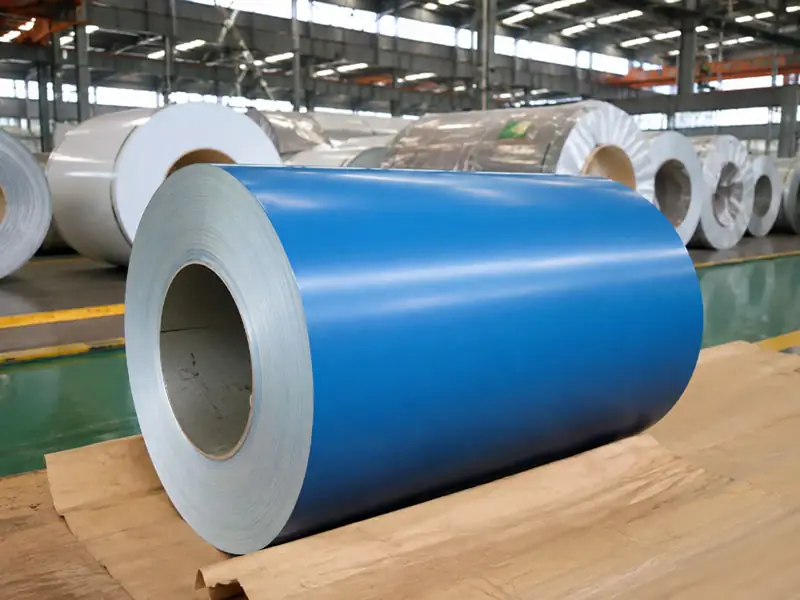
For procurement teams, the available specification range is particularly important because roofing and construction projects can have different requirements for thickness, width, coating mass, surface treatment, and paint system.
| Parameter | Runfei Prepainted Galvanised Steel Coil |
| Zinc coating | 20–275 g/m² |
| Thickness | 0.13–2.0 mm (±0.03 mm) |
| Width | 600–1250 mm (+5/-0 mm) |
| Coil ID | 508 mm / 610 mm |
| Coil weight | 3–8 MT/coil |
| Grades | CGCC, TDX51D, TDC51D, CGLCC |
| Paint systems | PE, SMP, PVDF |
| Surface treatment | Anti-fingerprint, oiled, dry |
| Standards | JIS G3302, ASTM A653, EN 10346 |
| Applications | Structure, roofing, building construction |
The range of zinc coating from 20 to 275 g/m² allows buyers to specify the metallic coating according to project requirements rather than using a single coating level for every application. Likewise, the 0.13–2.0 mm thickness range provides options for different forming and construction requirements. These values should still be matched with the structural design, roofing profile, environmental exposure, and applicable project standard.
The product is available with PE, SMP, and PVDF paint systems. This gives buyers flexibility when balancing general construction requirements, weathering performance, appearance, and project-specific coating requirements. The listed paint suppliers include AKZO NOBEL, PPG, BECKER, KCC, and NIPPON PAINT.
For export orders, the product is standard seaworthy packaging with waterproof paper, an external steel cover and strips, and edge protection with ventilation holes. The listed delivery time is 20–35 days, while third-party inspection is also accepted.
FAQ
Q1: What is the difference between PPGI and PPGL for roofing?
A: PPGI uses a galvanized substrate, while PPGL uses an aluminum-zinc-coated substrate. Their corrosion behavior and suitability can differ by environment. The choice should consider project exposure, forming requirements, coating system, and applicable standards. ASTM International provides specifications for galvanized and prepainted metallic-coated steel products.
Q2: What PPGI thickness is suitable for roofing sheets?
A: There is no single thickness suitable for every roof. The required BMT should be determined from the roofing profile, purlin spacing, structural design, wind loading, span, and local building requirements.
Q3: Which paint system is suitable for high-UV roofing?
A: PE, SMP, HDP, and PVDF can serve different performance requirements. For high-UV or architecturally demanding applications, buyers may consider higher-durability systems, but the final choice should be based on the specified exposure and required service performance. The U.S. Department of Energy also identifies solar reflectance and thermal emittance as important roof-performance properties.
Q4: How should PPGI coils be protected during sea transportation?
A: Moisture condensation can contribute to corrosion and surface problems during storage or transport. Buyers should confirm suitable seaworthy packaging, moisture barriers, protective wrapping, secure strapping, and appropriate container-loading procedures with the supplier.
Conclusion
PPGI steel coil provides a practical combination of a galvanized steel substrate, prepainted surface, formability, and appearance for roofing and construction applications. However, the right specification depends on more than the product name. BMT, metallic coating, paint system, environment, forming requirements, standards, and quality documentation should all be considered together.
For buyers comparing a GALVANIZED STEEL Manufacturer or ROOFING SHEETS Supplier, a clear technical specification is the best starting point for evaluating product suitability, quality, and total procurement cost. If you are sourcing prepainted galvanized steel coil for roofing or construction, contact us with your required thickness, width, zinc coating, paint system, color, applicable standard, and order quantity to discuss the appropriate specification and request a project-specific quotation.