In the steel purchasing market in 2026, it is very important to understand the differences between hot rolled steel and cold rolled steel for making cost-effective and performance-matching decisions. With the transformation of global steel industry to high added value and low carbon development, the choice of steel processing methods directly affects project budgets, product quality and market competitiveness. The guide comprehensively analyzes the definitions, processes, characteristics, applications and purchasing strategy of these two kinds of steel, and provides authoritative data sources and practical suggestions to help buyers navigate the complex choices.
What is hot rolled steel?
Hot rolled steel refers to steel processed by rolled billets at temperatures higher than recrystallization temperature (usually higher than 1700 degrees Fahrenheit/926 degrees Celsius) This high temperature treatment reduces the resistance of the steel, making it easier to form various shapes. Because of its cost-effectiveness and excellent basic performance, it is one of the most widely used steel in this industry.
Explain the hot-rolled process
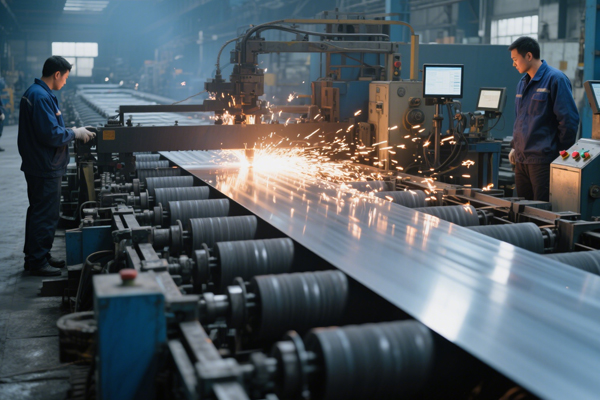
The production process of hot rolled steel follows the workflow of the system, ensuring efficiency and expansibility.
1. Billet heating: Firstly, the billets is heated to a temperature between 1700 degrees Fahrenheit and 2300 degrees Fahrenheit in a heating furnace, which is much higher than the recrystallization temperature of steel. This heating step softens the steel and prepares it for forming.
2. Initial rolled: The heated billets passes through a series of roughing mills to reduce its thickness and form its initial shape, such as slabs, initial rolled billet or billets.
3. Finishing rolled: The semi-finished products are then sent to finishing mills for further rolled, so as to reach the required size and specifications. The rolled speed and pressure are accurately controlled to ensure uniform thickness.
4. Cooling and Cutting: After rolled, the hot rolled steel is cooled by air or water. For coiled products, it is wound when it is still hot; For plates, beams or pipes, it is cut to a fixed lengths, and then packaged for transportation.
Main characteristics of hot rolled steel
Hot rolled steel has unique characteristics, which makes it suitable for specific applications:
- Cost-effective Production: The high-temperature process simplifies the molding, and reduces the production time and energy consumption compared to cold rolled, thus reducing the price.
- Good plasticity and weldability: The recrystallization during heating improves the plasticity of steel and makes it easy to weld, bend and form large structures.
- Rough surface finish: Due to oxidation at high temperatures, hot rolled steel will form a rough surface with scales. If a smooth finish is needed, additional treatment (such as pickling) is required.
- Medium dimensional accuracy: The cooling process may lead to slight dimensional deviations, so it is not ideal for applications that require strict tolerances.
What is cold rolled steel?
Cold rolled steel is a kind of high-precision steel which is further processed by hot rolled steel coils at room temperature (below the recrystallization temperature). It is very popular in industries requiring high surface quality and dimensional accuracy, and a reliable cold rolled steel manufacturer can ensure the consistency of product performance.
Explanation of cold rolled technology
The production process of cold rolled steel is more complicated and requires strict quality control, which usually includes the following steps (source: SSAB Steel Processing) :
1. Raw material Preparation: Hot rolled steel coils is used as the base material. After pickling, they remove surface oxides and scales to ensure the clean surface of the subsequent processing.
2. Cold rolled: The steel coils after pickling is rolled by a series of cold rolled mills at room temperature. High pressure is applied in the rolled process to reduce the thickness to the required specification, and improve the strength and surface smoothness of steel.
3. Degreasing: Degreasing is used to remove the grease used in the rolled process to prevent surface pollution.
4. Annealing: The cold rolled steel is subjected to heat treatment (annealed) to eliminate work hardening caused by cold deformation and restore its toughness and extensibility. A professional manufacturers of cold rolled steel adjust annealing parameters to meet different performance requirements.
5. Finishing: The last steps includes leveling, cutting and surface treatment (such as zinc plating or painting) to achieve the required surface finish and size.
Main characteristics of cold rolled steel
Cold rolled steel provides unique advantages, which justifies its high cost, especially when purchased from a reputable cold rolled steel manufacturer:
- Excellent surface finish: It is characterized by smooth, clean and scale-free surface, and no additional surface treatment is required in many applications.
- High dimensional accuracy: room temperature rolled and accurate process control ensure strict tolerances, making it suitable for precision parts.
- Improve strength and hardness: Compared with hot rolled steel, strain hardening during cold rolled improves tensile strength and hardness by about 20%.
- Limited formability: Although its strength is high, its toughness and plasticity are lower than those of hot rolled steel, and it is more difficult to weld and bend without preheating.
Main Differences between hot rolled steel and cold rolled steel
The following table summarizes the main differences between hot rolled steel and cold rolled steel, which is helpful for buyers to quickly determine the correct choice to meet their needs:
| Coefficient of comparison | Hot rolled steel | Cold rolled steel |
| Production technology | High temperature rolled (above 1700 degrees Fahrenheit) | Rolled at room temperature (lower than recrystallization temperature) |
| Surface polishing | Rough and graduated | Smooth clean |
| Dimension accuracy | Low, may have a slight deviations | Higher and tighter tolerances |
| Power | Lower tensile strength (67,000 psi) | Higher tensile strength (85,000 psi) |
| Expenses | Cheaper and lower production cost | More expensive and complicated treatment |
| Processability | Easier and more malleable | More difficult, need special tools |
| Typical table | Plates, beams, pipes and corner | Sheet, strips, precision tube and coils |
Applications of hot rolled steel
Hot rolled steel is widely used in industries where cost, weldability and large-scale production take precedence over surface smoothness and strict tolerances.
Building and Infrastructure
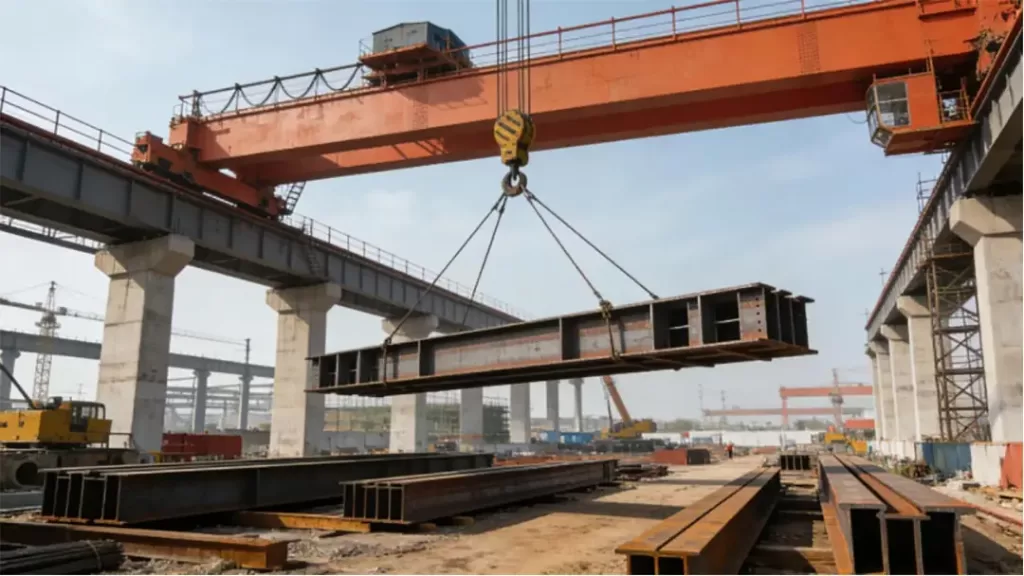
It is the main material in building engineering, including bridges, buildings, highways and railways. Its high plasticity and weldability make it suitable for manufacturing structural components, such as I-beams, H-beams and stiffeners. In 2026, with the implementation of global infrastructure renewal plans, the demand for hot rolled steel products in this field will remain stable (source: American Iron and Steel Institute (AISI)).
Steel Pipes and Large Fabrication
Hot rolled steel is the main material for producing large diameter steel pipes for water supply, gas transmission and oil pipelines. It is also used in large-scale manufacturing, such as industrial boilers, storage tanks and heavy machinery frames, and its cost-effectiveness and formability are very important.
Applications of cold rolled steel
Cold rolled steel, especially cold rolled steel supplied by reliable cold rolled steel manufacturer, is ideal choice for applications requiring precision, surface quality and high strength.
Automobile Parts
It is widely used in the automotive industry for manufacturing body panels, door frames, chassis components, and engine parts. Its smooth surface reduces the need for paint, while its high strength improves the safety of vehicles. A reliable cold rolled steel manufacturer can provide customized specifications to meet the standards of the automotive industry.
Precise manufacture
In electronics, electrical appliances and medical equipment, cold rolled steel is used to produce precision parts, such as refrigerator panels, computer housings and surgical instruments. Its precise dimensional precision ensures consistent performance of these small and high-precision components.
Which is better, hot rolled or cold rolled steel?
There is no absolute “better” option between hot rolled steel and cold rolled steel—the choice depends on specific application requirements, budget constraints, and performance needs.
Choose Hot Rolled Steel If You Need
- Cost savings for large-volume projects with no strict surface finish requirements.
- High weldability and formability for bending, welding or forming into complex structures.
- Large-sized components such as structural beams, pipes, or plates.
- Applications in which surface roughness can be solved by additional machining (e.g., painting or galvanizing).
Choose Cold Rolled Steel If You Need
- High surface smoothness and precise dimensional accuracy for precision parts.
- Parts subject to wear or load have higher strength and hardness.
- Applications requiring minimal post-processing (for example, Auto body parts or electronic housings).
- Small and medium-sized components that require consistent performance.
Price difference between hot rolled steel and cold rolled steel
Price is a key factor in steel procurement, and the gap between hot rolled steel and cold rolled steel is influenced by production costs, market demand and raw material prices.
Why Cold Rolled Steel Costs More
Due to several factors, cold rolled steel is usually 20% to 40% more expensive than hot rolled steel.
- Additional processing Steps: The pickling, cold rolled, annealing and finishing increase labor, energy and time costs.
- Raw Material Quality: It requires high-quality hot rolled steel coils as the base material, increasing the initial cost.
- Quality control: Strict process control and testing to ensure dimensional accuracy and surface quality increase the production costs of cold rolled steel manufacturer.
Comparison of typical price ranges (market insight in 2026)
In 2026, the global price of hot rolled steel is between 600-800 US dollars per ton, and the price of cold rolled steel is between 800-1200 US dollars per ton (source: World Iron and Steel Association). The price difference may be caused by the cost of raw material (e.g., Iron ore prices, which are expected to average around $ 90 per ton in 2026) and regional supply-demand dynamics.
Strength and mechanical properties comparison
The mechanical properties of hot rolled steel and cold rolled steel are significantly different due to their different processing methods, which directly affecting their application scope.
Tension intensity
Tensile strength refers to the maximum stress that a material can bear before fracture. Cold rolled steel has a tensile strength of approximately 85,000 psi (585 MPa), while hot rolled steel has a tensile strength of 67,000 psi (460 MPa) —a 26.9% increase for cold rolled products (source: Metal Supermarkets).
Yield strength
Yield strength is the stress when the material begins to permanently deform. The yield strength of cold rolled steel is 000 psi (480 MPa), compared with that of hot rolled steel, which is 000 psi (310 MPa), increasing by 55.6%. This makes the cold rolled steel more resistant to deformation under load.
Hardness
Hardness is measured using the Brinell Hardness Tester. The Brinell hardness of cold rolled steel is 167, while the hardness of hot rolled steel is 137, which is increased by 18%. The high hardness of cold rolled steel makes it suitable for applications requiring wear resistance.
B2B purchased hot rolled and cold rolled steel
For B2B buyers, factors such as bulk order suitability, lead time, and export logistics play a crucial role in choosing between hot rolled steel and cold rolled steel.
What kind of steel is better for large orders?
Hot rolled steel is more suitable for batch orders because of its simpler production process and higher productivity. Most steel mills can complete a large number of hot rolled orders in a shorter time. For large orders of cold rolled steel, it is very important to cooperate with a large-scale cold rolled steel manufacturer with enough production lines to meet demand.
Delivery time and availability
The delivery time of hot rolled steel is short (usually 7-14 days) because it requires fewer processing steps. Due to the extra pickling, annealing and finishing processes, the delivery period of cold rolled steel is longer (14-30 days). The supply of hot rolled steel is also high, while the supply of cold rolled steel may be limited in the peak demand seasons.
Matters needing attention in export and transportation
In 2026, with the implementation of export license management policies for steel in many countries, hot rolled steel exports may face higher compliance costs for low-value products, while high-value cold rolled steel products are more popular (data source: World Steel Association). During transportation, cold rolled steel needs better packaging to protect its smooth surface from scratching, which increases transportation costs compared with hot rolled steel.
Frequently asked questions
Q 1: Is cold rolled steel better than hot rolled steel?
A 1: Yes, cold rolled steel is stronger than hot rolled steel. Due to strain hardening during the cold rolled, its tensile strength and yield strength are higher by about 20% to 55%. However, this is at the expense of reducing plasticity and weldability (source: SSAB steel foundation).
Q 2: Can hot rolled steel be used as a precision parts?
A 2: Generally speaking, it is not necessary. Hot rolled steel is not suitable for making precision parts because of its low dimensional accuracy and a rough surface. However, it can be used as a non-precision part or as a basic material for further processing (for example, Machining) to achieve the desired accuracy.
Q 3: What kind of steel is good for welding?
A 3: Hot rolled steel products are more suitable for welding. Its high plasticity and low hardness reduce the risk of cracks in the welding process, and in most cases, preheating is not needed. Cold rolled steel can be welded, but preheating and post-weld annealing may be needed to eliminate internal stress.
Q 4: Is the quality of cold rolled steel always good?
A 4: Not necessarily, the “better quality” depends on application requirements. Cold rolled steel is excellent in surface smoothness and precision, while hot rolled steel is excellent in weldability and cost-effectiveness. For large-scale structural projects, although the accuracy is low, hot rolled is a more practical choice.
Q 5: Can the hot rolled steel be cold rolled later?
A 5: Yes. In fact, cold rolled steel is produced using hot rolled steel as the base material. Hot rolled steel coils are pickled and then cold rolled to obtain the required thickness, strength and surface finish. This process is usually used by cold rolled steel manufacturers to produce high-precision products.
Conclusion: Hot Rolled vs Cold Rolled Steel
Hot rolled steel and cold rolled steel each have their own unique advantages and limitations, and their applicability depends on the specific needs of the project. For large-scale and low-precision applications requiring weldability and formability, hot rolled is an economical and effective choice. Cold rolled steel purchased from a reliable cold rolled steel manufacturer is very suitable for high precision and high strength applications where surface quality is critical.
The key to making the right choice is to balance the cost and performance. For B2B buyers in 2026, understanding market dynamics, cooperating with reliable suppliers and adjusting the steel type according to the application requirements will ensure the best purchasing effect. Whether choosing hot rolled steel or cold rolled steel, the goal is to achieve the best balance between budget, performance, and market competitiveness.