Common Products, Standards, and Procurement Considerations
Hot-rolled steel is a vital element of Djibouti’s infrastructure development, supporting construction, energy, and logistics projects. we’re going to explore the key product forms, grades, standards, and procurement strategies critical for sourcing steel in Djibouti.
Common Product Forms
Structural Sections:
I-beams, H-beams, Angles, Channels: Widely used in construction for frameworks, bridges, and industrial facilities. These are essential for load-bearing applications due to their strength-to-weight ratio.
Hot-Rolled Coil/Sheet:
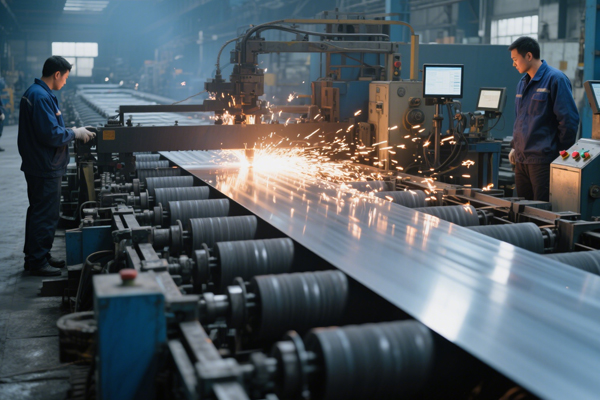
Used in roofing, cladding, and automotive parts. General carbon grades like SS400/SM490 equivalents dominate, while structural coils cater to pipeline and machinery projects.
Merchant Bars & Flats:
Rebar (reinforcing bars) and flat bars are critical for civil engineering, such as roadways and public buildings. These are often imported due to limited local production.
Typical Grades
Structural Grades:
· S235/S275/S355 (EN 10025): Compliant with European standards, these grades are prevalent in construction. Local distributors often provide EN 10204 3.1/3.2.1 certificates for quality assurance.
· A36 Equivalents: Imported from global suppliers, these align with ASTM standards for flexibility in cross-border projects.
Sheet/Coil Grades:
· General carbon steels (e.g, SS400) dominate, while weathering steel (e.g., A588) is reserved for corrosion-prone environments
· like coastal installations.
Standards & Certifications
European Standards:
· EN 10025 governs structural steel, with EN 10204 3.1 (third-party inspection) or 3.2.1 (mill test certificate) required for compliance.
Regional Adaptations:
· Local labels may mirror international standards but require verification through Djiboutian authorities. Certifications like ISO 9001 are increasingly demanded for government tenders.
Procurement Considerations
Project Specifications:
· Define load-bearing requirements, corrosion resistance, and code compliance (e.g., Eurocode or ASTM).
Supplier Verification:
· Confirm grade accuracy (e.g., S235JR vs. A36), delivery formats (e.g., coils vs. plates), and certification validity.
Logistics:
· Djibouti’s Port of Djibouti is the primary entry point, but lead times may require sourcing from UAE, Kenya, or Ethiopia. Regional stockpiling mitigates delays.
Commercial Terms
· Minimum Order Quantities (MOQs): Suppliers often mandate bulk orders (e.g., 50+ tons) for structural sections.
·(L/C) is standard for large contracts.
In conclusion, navigating Djibouti’s hot-rolled steel market requires a blend of technical knowledge (grades, standards) and strategic logistics. By prioritizing certified suppliers and understanding regional trade dynamics, businesses can ensure efficient procurement and compliance with local regulations.
References:
- EN 10025 Standards:
· EN 10025-2 specifies technical delivery conditions for non-alloy structural steels (e.g., S235/S275/S355), including mechanical properties and chemical composition. - Regional Trade Dynamics:
· Djibouti’s reliance on imports for steel products, particularly from COMESA member states, influences tariff structures and supply chain strategies
· Port infrastructure in Djibouti, including the mandatory ECTN/BESC documentation for shipments, is critical for logistics planning. - Certifications and Compliance:
· Suppliers often provide ISO 9001, MTC (Material Test Certificate), and third-party inspections (e.g., SGS, BV) to meet international standards.
· ASTM A36 and SAE1006 grades are commonly cited in global trade, aligning with both European and American specifications. - Procurement Practices:
· Minimum order quantities (MOQs) and pricing tiers reflect industry norms, with bulk orders (e.g., 50+ tons) often required for structural sections.
· Regional stockpiling in the UAE or Kenya mitigates delays from Djibouti’s port congestion. - Quality Control:
·!– /wp:list-item –>