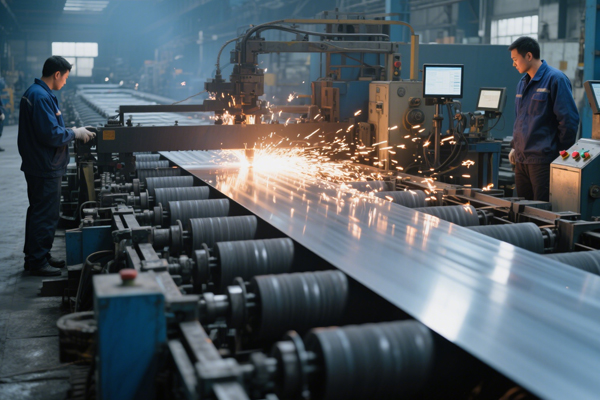
When purchasing materials for manufacturing, building or various consumer goods, the word “stainless steel” can be found everywhere. But not all stainless steel are alike. Among the various grades, 201 steel has emerged as a highly sought-after material, particularly when delivered in the versatile coil form. If you are asking, “What is a 201 stainless steel coil and what are its advantages?” You’ve come to the right place.
This comprehensive article will uncover the mystery of 201 steel coils, exploring their unique characteristics and specifications, and why they might be the perfect economic solution to meet your needs.
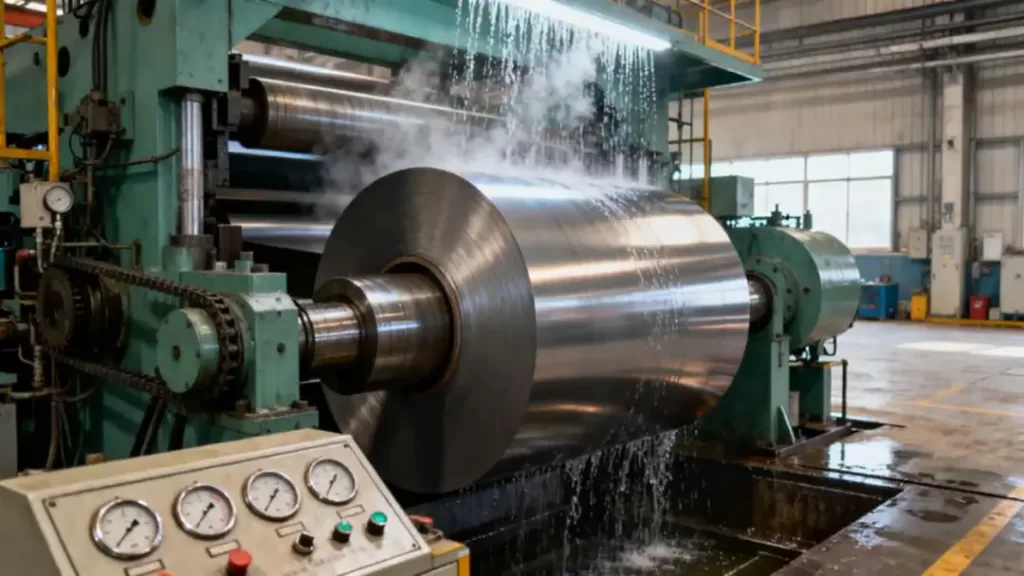
What’s a 201 stainless steel coil?
At its core, stainless steel is a kind of iron alloy, containing at least 10.5% chromium, which makes it have symbolic rust and corrosion resistance. A 201 stainless steel coil is a special type of austenitic stainless steel, which is provided in the form of continuous winding tape. This form factor is ideal for high-volume manufacturing processes.
The main difference of 201 steel is its chemical composition. Developed as a cost-effective alternative to the classic 304 grade, 201 stainless steel partially replaces nickel with manganese and nitrogen. Nickel is a relatively expensive element which contributes to corrosion resistance and formability. By reducing the nickel content, 201 steel becomes more economical, while still maintaining good mechanical properties and sufficient corrosion resistance, which is suitable for many environments.
Definition: A 201 stainless steel coil is a continuous, rolled strip of austenitic stainless steel alloy (Grade 201), characterized by a lower nickel and higher manganese/nitrogen content compared to Type 304, making it a budget-friendly option for a wide range of applications.
The unique advantages of selecting 201 stainless steel coil
Why do manufacturer or builder choose 201 steel instead of other brands? These advantages are noticeable, especially for specific use cases.
1. Cost-Effectiveness: This is the primary advantage. The reduction of nickel content directly translates to a lower price point, making 201 stainless steel an excellent choice for projects where budget is a key constraint, without sacrificing the appearance and basic properties of “stainless steel”.
2. Good strength and durability: 201 steel has a higher yield strength and work hardening rate than 304 steel. This means it can withstand greater force and becomes stronger when cold-worked, which is beneficial for applications like sink bowls and structural components.
3. Excellent formability and weldability: In its annealed (softened) state, 201 stainless steel coils can be easily formed, deep-drawn and welded by using standard technology, making them suitable for complex manufacturing processes.
4. Aesthetic attraction: Like all austenitic stainless steels, 201 steel can be processed into bright and charming appearance. It accepts various surface finishes, such as 2 b, BA, No.4 (wiredrawing) and even 8 k mirror, to ensure that it meets the decoration requirements.
Our 201 stainless steel coils from the Runfei brand come with additional peace-of-mind advantages:
- Strict quality control: We keep strict quality inspection throughout production process to ensure consistency and reliability.
- Certifications: Our products conform to international standards, including ISO 9001 and SGS, to ensure that the 201 steel you receive meets specific chemical and mechanical properties.
- Flexible sources: We accept small order and provide various payment methods, making it easier to establish cooperative relations.
Understanding the production flow of 201 steel coil
The quality of a stainless steel coil depends on the manufacturing process. The following is the step-by-step decomposition of how our 201 steel coils is produced:
1. Hot rolling: Raw materials are sent to hot rolling mill and rolled into slabs with required initial dimensions.
2. Annealing and pickling: Annealing (heating and cooling) the hot rolled material to soften it. It then undergoes pickling, where it is bathed in an acid solution to remove scale (surface oxides) that formed during hot rolling. [this process is based on the standard production steps for austenitic stainless steels outlined by the International Stainless Steel Forum (ISSF)]
3. Cold rolling and grinding: Then the material is cold rolled to obtain accurate final thickness and surface finish. All mill rolls are precision-ground to ensure a smooth, uniform surface on the 201 steel coil.
4. Final annealing and straightening: The coils is annealed again to eliminate the stresses caused by cold working. Then, they are sent to the leveler to ensure flatness.
5. Quality Inspection: Experienced employees conduct Inspections at every stage from rolling and annealing to pickling to ensure that the final product meet all specifications.
Detailed product specifications of our 201 stainless steel coil
When you buy 201 stainless steel coil from us, you can see the following specifications, which highlight the versatility of the product:
| Commodity | 201 Stainless Steel Coil |
| Grade | 201 (Other grades like 202, 304, 316, 430 are also available) |
| Brand | TISCO, BAOSTEEL, POSCO, JISCO, LISCO |
| Thickness | 0.2mm – 150mm |
| Width | 1000mm, 1219mm, 1250mm, 1500mm, or customized |
| Length | Customized as per your requirements |
| Surface Finish | No.1, 2B, BA, 8K Mirror, Hairline, Satin, Embossed, Brush, No.4, HL, Matt, PVC Film |
| Standard | AISI, ASTM, BS, DIN, GB, JIS, etc. |
| Certification | ISO 9001, SGS, RoHS Directive-compliant |
| Delivery Time | 5-7 days after order confirmation |
| MOQ | 1 Ton |
Data Source: The mechanical properties and standard specifications of Class 201 are defined by ASTM A 240/a 240 m, covering pressure vessels and chromium and chromium-nickel stainless steel plate, sheets and strip for general use.
Main application scenarios of 201 stainless steel coils
The combination of cost, strength and beauty make 201 steel coils suitable for a wide range of applications. Common applications include:
- Kitchen utensils and Appliances: Sink bowls, cooking utensils, concave utensils, and decorations.
- Decorative and architectural Uses: Elevator panels, wall coverings, handrails and window frames.
- Automobile interior: Wheel covers, decorative lines and exhaust system components (for non-critical components).
- Consumer Goods: Tableware, catering equipment and storage tanks for non-aggressive environment.
- Hardware and pipe: usually used in the production of welded pipe for furniture and railings.
It is worth noting that 201 stainless steel is not recommended to be used in highly corrosive environments, such as coastal areas with salt fog or chemical processing plants. In these places, higher grade stainless steel, such as 316, would be more suitable.
Summary
In short, the 201 stainless steel coil represents a clever balance between performance, aesthetics and cost. By understanding its characteristics, advantages and ideal applications, you can make a wise decision on whether this multifunctional material is the key to the success of the next project.
Frequently Asked Questions
Question 1: What are the main difference between 201 and 304 stainless steel?
Answer: The main difference is the chemical composition. 201 stainless steel has a lower nickel content (around 3.5-5.5%) and a higher manganese content, making it more economical but generally less corrosion-resistant than 304 stainless steel, which typically contains 8-10.5% nickel.
Question 2: Is stainless steel magnetic?
Answer: Yes, steel 201 can have slight magnetism, especially after cold working (such as bending or cutting). Although austenitic steels usually has no magnetism, the unique chemical properties of 201 steel makes it easier to forming magnetic martensite in the manufacturing process.
Question 3: Can stainless steel coils be used for outdoor applications?
Answer: Yes, but be careful. 201 steel is suitable for outdoor applications in mild inland environment. However, in coastal or industrial areas with high chloride pollution, pitting corrosion and rust are more likely to occur compared with grade 304 or 316. Proper cleaning and maintenance is recommended.
Question 4: Does your 201 steel coils meet the RoHS standard?
Answer: Yes, our Runfei brand 201 stainless steel coils are fully compliant with the RoHS Directive, meaning they are free from hazardous substances like lead, mercury, and cadmium, making them safe for consumer goods and electronics applications.
Question 5: What is the minimum order quantity?
Answer: Our MOQ is 1 Ton, which provides flexibility for both small and large-scale projects.