1. Introduction
For steel distributors, the current market environment is under pressure from frequent fluctuations in the prices of zinc, aluminium and hot-rolled coils. Every procurement decision requires a repeated and careful balancing act between the immediate cost of the steel coils and downstream customers’ expectations regarding their long-term value. When selecting roofing materials, this decision becomes particularly challenging when traditional hot-dip galvanised steel is compared side-by-side with zinc-aluminium alloy products. If distributors base their decisions solely on the initial quotation, they run a high risk of ending up with excess stock in their warehouses, facing quality disputes arising from improper storage, or even finding themselves at a disadvantage in highly competitive project tenders due to damage to their reputation.
In the current market climate, establishing a partnership with a manufacturer of coated and galvanised steel sheets that offers integrated capabilities is a practical choice for ensuring supply stability. As a specialist galvanized steel manufacturer, Runfei Group has consistently acted as a partner providing bespoke solutions, assisting regional distributors in adapting to fluctuations in the construction cycle, flexibly adjusting their inventory structures, and ensuring that their product portfolios remain aligned with actual market demand. Professionalism is not only reflected in technical expertise and reliable production capacity, but also in a keen insight into and proactive adaptation to the operational rhythms of our partners—this mutual understanding and rapport form the most valuable foundation for long-term collaboration.
2. Decoding Technical Specs & Performance Profiles
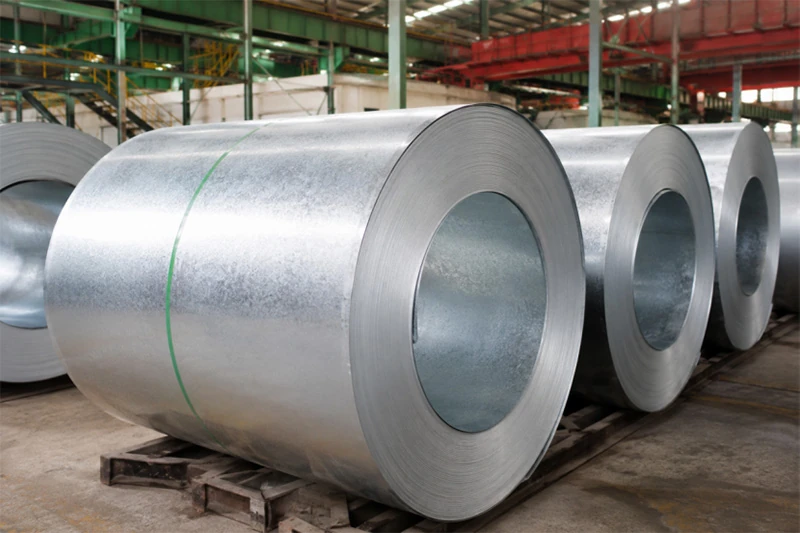
The most widely traded commercial quality for hot-dip coated sheet is defined by the grade DX51D Z. This grade of steel is a formed-grade sheet product manufactured using a continuous hot-dip galvanising process. The surface of this grade of product is coated with a layer of zinc formed through a continuous hot-dip galvanising process, which acts as a ‘sacrificial anode’ in terms of its protective mechanism—when scratches or cuts occur on the sheet during handling or installation, the zinc layer corrodes first, thereby protecting the underlying steel substrate. The corrosion rate of pure zinc exhibits an approximately linear relationship with humidity; under mild inland climatic conditions, the service life of this material is therefore highly predictable, providing a reliable basis for durability assessments during the engineering design phase and for the formulation of subsequent maintenance plans. For distributors, including such specification-compliant steel coils in their standard stock not only enables construction teams to work more calmly and efficiently on site, but also provides projects with clear budgetary constraints with an option that strikes a reasonable balance between performance and cost control—a balance that is often the most important factor for results-oriented purchasers when evaluating different solutions.
Faced with increasingly harsh operating environments, the performance shortcomings of traditional galvanised coatings are gradually coming to light, which will inevitably affect customers’ long-term returns. The continuous effects of marine salt spray, industrial emissions and high-humidity climates constantly erode the zinc coating, significantly shortening the effective service life of roof and wall protection. In response to these practical challenges, steel manufacturers have developed an aluminium-zinc alloy composite coating system, the protective mechanism of which differs fundamentally from that of traditional galvanisation.
The aluminium-zinc alloy coating, commonly referred to as GL steel, contains approximately 55% aluminium, 43.4% zinc, and 1.6% silicon. Unlike a pure zinc layer, the aluminium component forms a stable, passive oxide film that significantly retards corrosion, while the zinc continues to offer sacrificial protection at exposed edges. Industry exposure studies indicate that in severe marine and high-rainfall environments, GL steel roofing can outlast conventional galvanized sheet by a factor of two to four times for an equivalent coating mass. Beyond longevity, the surface reflects more than 80% of solar radiant heat, a property that helps meet modern energy code requirements for cool roofing. By stocking this product, a distributor equips contractors with a material that demonstrably lowers lifecycle costs for building owners.
3. Sourcing Dilemma: Upfront Acquisition Costs vs. Inventory Risk
A narrow focus on mill invoice price can obscure the carrying costs that accumulate inside a distributor’s own warehouse. The table below lays out a comparative matrix for assessing the total cost of ownership.
Table 1: Warehouse and Lifecycle Comparison — Standard Galvanized vs. GL Steel Roofing Coils
| Attribute | Standard Hot-Dip Galvanized (GI) | Galvalume (GL) | Supply Chain Implication |
| Corrosion Protection Mechanism | Sacrificial zinc layer | Al-Zn passive barrier + zinc sacrificial edge protection | GL specification lowers call-back risk on coastal projects. |
| Shelf-Stacking Stability | Susceptible to white rust in humid storage | Harder, more inert surface film | GI coils demand climate-controlled inventory management. |
| Post-Processing Surface Integrity | Softer coating; prone to light scuffing during slitting | More scratch-resistant during handling | GL stock retains its visual and functional value through processing. |
| Projected Field Lifespan | Baseline for inland applications | 2–4 times longer in aggressive atmospheres | GL supports distributor margin by justifying a premium project price. |
| Thermal Reflectivity | Moderate | Over 80% solar reflection | Aligns with the growing market for energy-efficient building envelopes. |
Data on relative corrosion rates and field longevity are supported by published atmospheric exposure research from the GalvInfo Center, a program of the International Zinc Association.
A pallet of standard galvanized sheet left in an unheated shed during monsoon season can quickly develop white rust, forcing a discount sale or a costly reconditioning process. That margin erosion wipes out whatever initial price advantage the coil may have offered. By contrast, the harder surface of aluminium-zinc coated sheet reduces mechanical damage during transit and slitting, preserving the product’s grade for the end customer. This difference in storage resilience becomes a direct contributor to inventory turnover rate, allowing a distributor to maintain higher demand velocity on premium-coated coils even when market prices dip.
4. Mitigating Market Volatility with a Strategic Supply Chain Partner
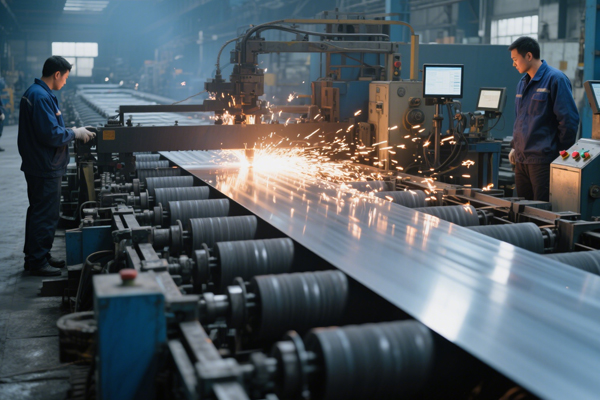
When zinc and aluminium premiums lurch from quarter to quarter, the traditional multi-tier distribution chain amplifies price uncertainty. Engaging directly with an established galvanized steel manufacturer that operates its own coating lines helps bypass these layers of intermediation. A source with integrated slitting and cut-to-length capabilities can deliver finished blanks ready for a contractor’s roll-forming machines, eliminating a full step of secondary processing and its associated scrap loss. This means the distributor’s working capital is not tied up in excess stock awaiting local conversion, and the order cycle shortens enough to react to sudden shifts in end-user demand without resorting to expensive spot-market purchases.
Beyond the technical data sheet, the commercial terms set by a mill determine how smoothly a distributor can navigate a volatile quarter. Runfei Group structures flexible minimum order quantities that respect a buyer’s cash-flow constraints, and it leverages Tianjin’s deep-water port to compress ocean freight lead times. By offering custom coil widths and precise gauge tolerances directly from the production line, the arrangement reduces the need for in-country resizing and the material waste that accompanies it. For a distributor watching raw material indices jump, this direct manufacturer linkage converts procurement from a speculative gamble into a programmable supply function.
The value of a capable roofing sheets supplier extends beyond the coil itself. When a supplier can provide precision-blanked sheets cut to exact project lengths, the contractor eliminates on-site cutting waste and speeds up installation. A knowledgeable partner also consults on substrate selection, guiding a distributor between standard galvanized and aluminium-zinc coated options depending on whether the end project sits on a coastal esplanade or a dry inland plain. This consultative layer transforms the supply chain from a simple buy-sell relationship into a joint effort to reduce the total installed cost for the building owner.
5. Extending the Portfolio: The Profit Margins of Color-Coated Coils
Moving beyond bare metallic-coated sheet, the market for prepainted products represents a significant margin opportunity for regional distributors. The architectural and pre-engineered building sectors increasingly specify colour-coated roofs and walls, drawn by the combination of immediate visual appeal and factory-controlled paint durability. When a distributor can offer both prepainted galvanized and prepainted aluminium-zinc options, they transform their role from a commodity volume seller into a solutions provider capable of matching a project’s specific climatic and aesthetic brief.
The strategic distribution of PPGI and PPGL depends heavily on the project’s microclimate. A stockist can offer prepainted galvanized as a high-visual-appeal option for dry, inland construction where cost-efficiency is paramount. Conversely, for coastal resorts, agricultural buildings with high ammonia exposure, or regions with persistent rainfall, they can specify prepainted Galvalume, which marries the extreme corrosion resistance of a zinc-aluminium substrate with a high-durability polyester or PVDF paint system. This dual-stock strategy not only boosts the average selling price but also brands the distributor as a specialist capable of solving regional environmental challenges, thereby locking in customer loyalty far more effectively than selling commodity bare coils alone.
6. Runfei Group’s Value Proposition for Steel Distributors
Navigating these market complexities requires more than a transactional supplier; it demands a collaborative manufacturing partner. Runfei Group supports distributor ROI through a comprehensive and technically rigorous product portfolio. The company’s offerings encompass the full spectrum of coated steel: hot-dip galvanized coils, Galvalume coils, and high-performance colour-coated products. Additionally, Runfei supplies advanced Zinc-Aluminium-Magnesium (ZAM) coated steel for extremely aggressive environments, allowing a distributor to cover every project specification from a single, vetted source.
This product breadth is backed by strict adherence to international quality standards, including ASTM A653, ASTM A792, and EN 10346. Products are manufactured under a quality management system verified by independent third-party inspections from SGS and Bureau Veritas (BV), and fully certified under ISO standards. These certifications give the distributor a defensible position when delivering products to high-specification terminal projects. The group’s integrated production base near Tianjin Port further streamlines logistics, compressing lead times and reducing the landed cost that ultimately determines a distributor’s competitive pricing envelope in their home market.
7. Conclusion: Striking the Procurement Balance in a Fluctuating Market
Maximising return on investment in today’s steel distribution landscape is not simply a hunt for the lowest per-tonne invoice price. It demands a deliberate mix of standard galvanized sheet for fast-turning budget projects and GL steel coil for applications that demand superior longevity and resistance to harsh weather. By balancing these two categories and layering in prepainted options where the market commands higher design value, a distributor insulates its earnings from both commodity price slippage and costly post-delivery quality disputes. For a confidential discussion on inventory allocation, current coating extras, and tailored supply programmes, contact the Runfei Group team to review the latest pricing and risk-hedging strategies designed for today’s unpredictable steel cycle.
Frequently Asked Questions
Q1: What exactly are PPGI and PPGL, and how do they differ from bare coils?
PPGI and PPGL stand for prepainted galvanized steel and prepainted Galvalume steel, respectively. They are colour-coated coil products that arrive with a factory-cured paint system, offering a finished architectural material rather than an industrial semi-finished good. This upgrade eliminates on-site painting, reduces labour costs for the contractor, and allows a distributor to command a significantly higher margin per tonne compared with selling uncoated galvanized or Galvalume coil.
Q2: How should a distributor decide between holding standard galvanized and zinc-aluminium coated inventory?
The decision should be driven by the end-user geography and building type. For inland warehouses with rapid turnover, standard galvanized sheet keeps entry-level pricing competitive. For customers building in coastal, high-humidity, or industrial-fallout zones, holding an adequate buffer of aluminium-zinc coated coil protects against premature corrosion complaints and strengthens the distributor’s reputation for specifying fit-for-purpose materials.
Q3: Does the DX51D Z specification still have a place in a modern distributor’s stock list?
Absolutely. The DX51D Z grade remains a core volume product for non-exposed structural decking, interior framing, and light industrial cladding in benign environments. Its widespread availability and lower alloy surcharge make DX51D Z the sensible choice for price-sensitive tenders where the building’s design life does not demand an extended coating warranty.
Q4: What processing services can a distributor expect from a full-service coil supplier?
A full-service partner typically provides slitting to precise widths, cut-to-length sheeting, and, in many cases, tension levelling to improve flatness. These services allow a distributor to bypass investment in in-house processing lines and receive job-ready packs that can be cross-docked directly to a contractor’s site, reducing both handling damage and the lead time from port to project.
Q5: Why is the aluminium content in GL steel so critical for roof durability?
The performance of GL steel hinges on the approximately 55% aluminium content in its coating. This aluminium forms a dense, adherent oxide layer that acts as a barrier to moisture and chlorides, dramatically slowing the corrosion rate compared to a pure zinc layer. For roofing exposed to constant UV radiation and salt-laden air, GL steel consistently delivers a longer maintenance-free interval, which directly supports the lifecycle cost analysis that large project developers require.