In today’s manufacturing industry, material quality and processing performance directly affect production efficiency, costs, and product quality. Black annealed cold-rolled steel coils are widely used where reliable forming performance and consistent quality are required. This material suits applications that need high plasticity, tight flatness tolerances, and a uniform microscopic surface chemistry. Industries ranging from automotive parts stamping and home appliance manufacturing to heavy industrial metal roll forming rely on this material. Its main purpose is to relieve the high residual stress in full hard cold-rolled steel. Controlled annealing improves ductility and formability, reducing the risk of cracking and deformation during forming.
Selecting the right black annealed cold-rolled steel coil involves more than choosing the right size. In addition to size, factors such as mechanical properties and applicable standards are equally important. To clarify the purchasing process, this guide covers the key factors that support better decision-making.
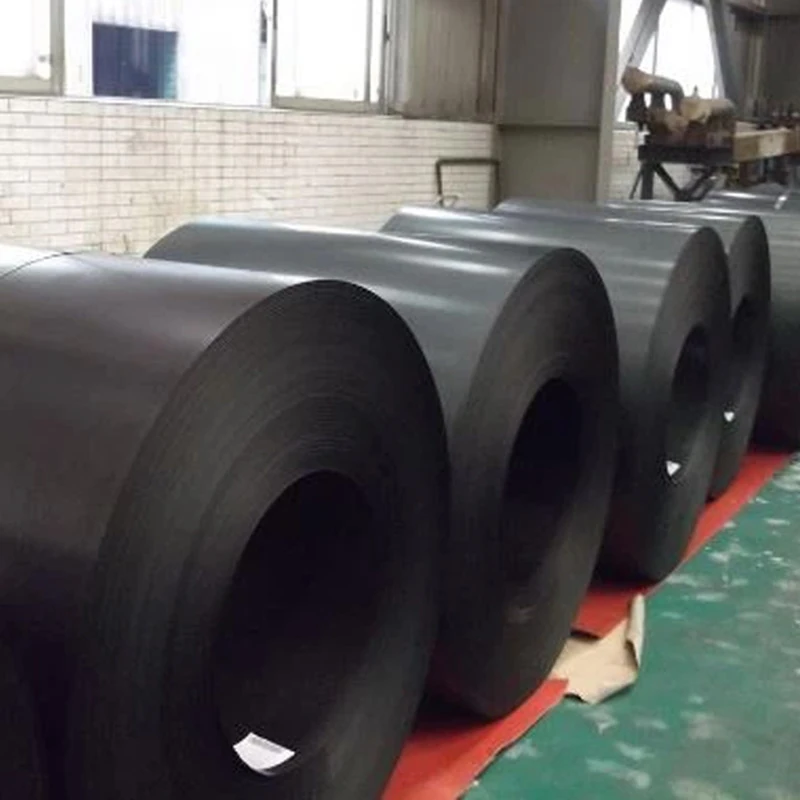
What Is Black Annealed Cold Rolled Steel Coil?
Definition of Black Annealed Cold-Rolled Steel Coil
Black annealed cold-rolled steel coil refers to steel coils made from low-carbon or ultra-low-carbon cold-rolled steel sheet substrates through a controlled subcritical thermal recrystallization process in an oxygen-deficient or unprotected furnace/bell furnace. Unlike bright annealed steel coils, which are treated in a hydrogen atmosphere to obtain a bright metallic surface, black annealed steel coils retain a thin black oxide layer (Fe₃O₄) after annealing, which helps protect the surface during storage. Annealing also softens the steel, making it suitable for forming processes such as deep drawing and bending.
Manufacturing Process: From Cold Rolling to Annealing
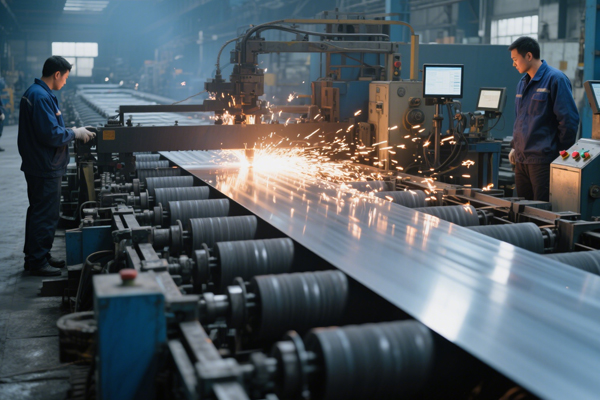
The manufacturing route of black annealed cold-rolled coils starts with hot-rolled steel and includes several stages, such as pickling, cold rolling, annealing, and surface finishing.
- Continuous Industrial Pickling: Before cold rolling, hot-rolled strips are treated in HCl pickling lines to remove surface scale generated during the hot rolling process. Oxides including FeO, Fe₂O₃, and Fe₃O₄ are removed during this stage, leaving the strip ready for further processing.
- High-Pressure Reduction Cold Rolling: The pickled strip is then rolled at room temperature using a multi-stand cold rolling mill. Depending on the required thickness, the reduction rate can reach 50%–85% or higher. The rolling force increases dislocation density and introduces work hardening, resulting in a fully hard condition with Rockwell hardness of B ≥ 85 before annealing.
- Subcritical Batch/Bell Annealing: To reverse work hardening, tightly wound cold-rolled steel coils are loaded into a sealed batch bell furnace. Under a carefully controlled low-oxygen inert carrier gas environment, the temperature is gradually increased to a subcritical holding temperature range of 650°C to 720°C. The holding phase lasts 12 to 24 hours, depending on the coil quality and target grain size.
- Controlled Surface Oxidation: During the controlled cooling phase, precisely metered atmospheric oxygen is introduced. It reacts uniformly with the high-temperature iron surface to form a continuous, non-peeling magnetic Fe₃O₄ (magnetite) coating, sealing the steel without altering the dimensional accuracy of the cold roll.
How Annealing Improves Steel Properties
Cold rolling changes the ferrite grain structure and creates internal stress along the rolling direction. During annealing, the steel gradually releases this stress as its internal structure returns to a more stable condition.
- Recovery: In the initial annealing stage, dislocations begin to move and reorganize, reducing residual stress while the grain appearance remains almost unchanged.
- Recrystallization: Cold rolling leaves the ferrite structure stretched and the steel under internal stress. At 550°C–600°C during annealing, the deformed structure gradually disappears as new grains develop inside the material. The steel then returns to a more workable condition for forming.
- Grain Growth: After new grains are formed, they continue to adjust during cooling and create a more even structure. Black annealed cold-rolled steel coils are commonly produced with ASTM 7–9 grain sizes to maintain consistent performance during processing.
Why Choose Black Annealed Cold-Rolled Steel Coils?
Superior Stamping and Machining Performance
The fully recrystallized equiaxed ferrite microstructure ensures an optimized plastic strain ratio (r-value up to 1.4–1.8 for deep-drawn forms) and an excellent strain hardening index (n-value ≥0.20). In high-speed automated progressive stamping dies, this allows the sheet metal to withstand significant biaxial tension and localized material flow, helping prevent localized necking, microcracks, or catastrophic structural failure.
Higher Ductility and Lower Internal Stress
By completely eliminating internal dislocation stresses accumulated during cold rolling, this material exhibits isotropic mechanical properties. Its elastic rebound is close to zero during thick-gauge roll forming or V-bending. This eliminates unpredictable part deformation in secondary precision manufacturing processes such as high-energy fiber laser cutting, high-speed slitting, and robotic GMAW/GTAW structural welding.
Thickness Accuracy and Production Consistency
The thickness of black annealed steel coils is mainly controlled during cold rolling. Gauge control equipment is used during production to keep the strip thickness within the specified range.
A Practical Material for Industrial Production
Black annealed coils use low-carbon steel with C≤0.12% and Mn≤0.60%. The material normally reaches elongation levels of 30% or higher and is used for deep drawing parts and other high-volume applications.
Common Applications of Black Annealed Cold-Rolled Steel Coils
Automotive Parts Manufacturing
Black annealed steel strips are widely used in automotive components such as body reinforcements, seat frames, crossbeams, fluid housings, and welded structures. Their fatigue resistance, weldability, and forming performance make them suitable for non-exposed structural parts.
Home Appliance Manufacturing
In the appliance industry, black annealed steel coils are used for compressor housings, chassis parts, motor brackets, and internal supports. Stable thickness control helps improve structural reliability and reduce vibration issues.
Metalworking and Industrial Products
This material is applied in warehouse racks, industrial tubes, transformer housings, agricultural equipment parts, and solar mounting systems. Its good formability and thickness consistency support complex fabrication processes
Main Specifications of Black Annealed Cold-Rolled Steel Coils
Available Steel Grades and Standards
Black annealed steel coils are supplied according to major international standards, including:
- JIS G3141 (SPCC steel/SPCD/SPCE): Japanese standards covering commercial, drawing, and deep-drawing grades. SPCC is used for general forming, while SPCE is designed for complex deep-drawn parts.
- EN 10130 (DC01 steel/DC03/DC04): European cold-rolled steel grades, with DC04 offering enhanced deep-drawing performance for demanding forming applications.
- ASTM A1008/A1008M: North American standards defining chemical composition and mechanical requirements for cold-rolled carbon steel sheets.
- GB/T 700 & GB/T 5213: Chinese standards covering carbon structural steel and deep-drawing steel grades with reliable forming and welding performance.
Metallurgical & Mechanical Property Target Matrix
The following table provides a precise engineering breakdown of target performance parameters across these international standards:
| Standard | Grade | Carbon Max (C%) | Manganese Max (Mn%) | Yield Strength (Re, MPa) | Tensile Strength (Rm, MPa) | Min Elongation (A80mm, %) |
| JIS G3141 | SPCC | ≤0.15 | ≤0.60 | ≤240 | ≥270 | ≥32 (for ≤0.6mm gauge) |
| EN 10130 | DC01 | ≤0.12 | ≤0.60 | 140−280 | 270−410 | ≥28 |
| EN 10130 | DC04 | ≤0.08 | ≤0.40 | 140−210 | 270−350 | ≥38 |
| ASTM A1008 | CS-B | 0.02−0.15 | ≤0.60 | 140−275 | ≥270 | ≥30 |
| GB/T 5213 | SC1 | ≤0.12 | ≤0.60 | ≤250 | ≥270 | ≥32 |
Thickness, Width and Coil Weight Range
Runfei supplies black annealed steel coils with flexible processing options:
- Thickness: 0.20–1.0 mm, with customized thickness tolerance down to ±0.01–±0.02 mm.
- Width: Standard widths of 1000–1500 mm, with narrow strip slitting available from 30 mm and edge tolerance of ±0.2 mm.
- Coil ID: Available in 508 mm and 610 mm to fit standard decoiler systems.
- Coil Weight: 3.0–8.0 MT, suitable for both automotive stamping lines and general industrial production
Packaging and Delivery Requirements
Because the un-galvanized magnetite Fe₃O₄ surface layer remains susceptible to condensation-induced oxidation under extreme thermal cycles (such as equatorial ocean transit), heavy industrial export packaging is mandatory. Runfei utilizes a multi-layer protective barrier:
- VCI Anti-Rust Film: An initial wrap using high-efficiency Vapor Corrosive Inhibitor paper to continuously neutralize acidic moisture molecules within the package volume.
- Radially Wrapped HDPE Shielding: A high-density polyethylene polymer layer protecting against liquid ingress.
- Galvanized Steel Core & Outer Sheet Shielding: Outer structural protection utilizing heavy structural galvanized steel sheets to buffer against localized port mechanical handling impacts.
- Heavy-Duty High-Tensile Strapping: Minimum of 4 radial and 3 circumferential high-tensile steel bands locked over edge-protection rings. Coils are fixed onto reinforced steel or fumigated wooden skids configured for “Eye-to-Sky” or “Eye-to-Wall” maritime loading profiles.
Black Annealed Cold Rolled Steel Coil vs Other Steel Products
Black Annealed Steel vs Regular Cold Rolled Steel (Full Hard)
Full hard cold-rolled steel has high strength but limited ductility due to its work-hardened structure, making complex forming difficult. After annealing, black annealed steel achieves lower yield strength (≤240 MPa) and higher elongation (≥30%),which provides better formability for bending and stamping.
Black Annealed Steel vs Galvanized Steel (Hot-Dip / Electro-Galvanized)
Galvanized steel offers strong corrosion protection through its zinc coating but may create challenges during welding and further processing. Black annealed steel provides a clean surface for powder coating, painting, and plating, making it suitable for indoor and coated structural applications.
How to Select a Reliable Black Annealed Cold Rolled Steel Coil Supplier?
Check Manufacturing Capability and Quality Control
A reliable cold rolled steel supplier should have strong production capability, advanced annealing equipment, and a certified quality management system such as ISO 9001:2015. Proper control of the annealing process is essential to maintain stable hardness, ductility, and mechanical properties between different steel coils.
Evaluate Quality Documentation
Professional suppliers should provide traceable Mill Test Certificates (MTC) according to EN 10204 Type 3.1 or 3.2 standards. These documents should include chemical composition, tensile strength, elongation, hardness, and other key quality data to ensure material consistency.
Consider Delivery Capability and Export Experience
For global buyers, stable supply capacity and export experience are important factors. A qualified supplier should understand international shipping procedures, customs requirements, and provide flexible payment solutions to support long-term cooperation.
Why Choose Runfei Black Annealed Cold Rolled Steel Coil?
Factory Supply and Professional Export Service
Founded in 1998, Runfei Steel Group has extensive experience as a cold rolled steel manufacturer in steel processing and international supply. Runfei combines its direct processing capabilities with global export services to help customers reduce procurement costs and improve supply efficiency.
Strict Quality Control and International Standards
Runfei applies strict inspection procedures for raw materials and finished coils. Each shipment is supported by detailed Mill Test Certificates and complies with major standards including JIS, ASTM, EN, and GB, ensuring reliable performance for stamping, forming, and industrial applications.
Flexible Orders and Reliable Delivery
With strong supply chain resources and export experience, Runfei supports customized requirements, including different thicknesses, widths, slitting options, and mixed-order shipments. This flexibility helps customers maintain stable production schedules.
Frequently Asked Questions
What deep drawing performance can black annealed steel coils achieve?
Using grades such as EN 10130 DC04 and JIS G3141 SPCE, black annealed steel can provide high elongation and excellent formability for deep-drawn parts.
Is black annealed steel suitable for welding?
Yes. The thin Fe₃O₄ surface layer provides a stable surface condition for processes such as resistance spot welding and laser welding.
Can black annealed steel coils be customized?
Yes. Suppliers can adjust mechanical properties, thickness, width, and other parameters according to specific production requirements.
Conclusion
Black annealed cold-rolled steel coils are widely used in applications requiring high ductility, formability, and cost-effectiveness. Choosing an experienced supplier with reliable quality control, export capabilities, and customized services is crucial. Runfei Steel Group, with decades of experience in steel processing, provides reliable solutions to industrial customers worldwide.