If you have worked with cold rolled steel products, you may have seen materials with a dark matte finish. These products often use a protective surface that does not require additional painting. That material is likely black annealed cold rolled steel coil. This article explains what this product is, how it differs from other steel coils, what specifications are available, and where it is commonly used.
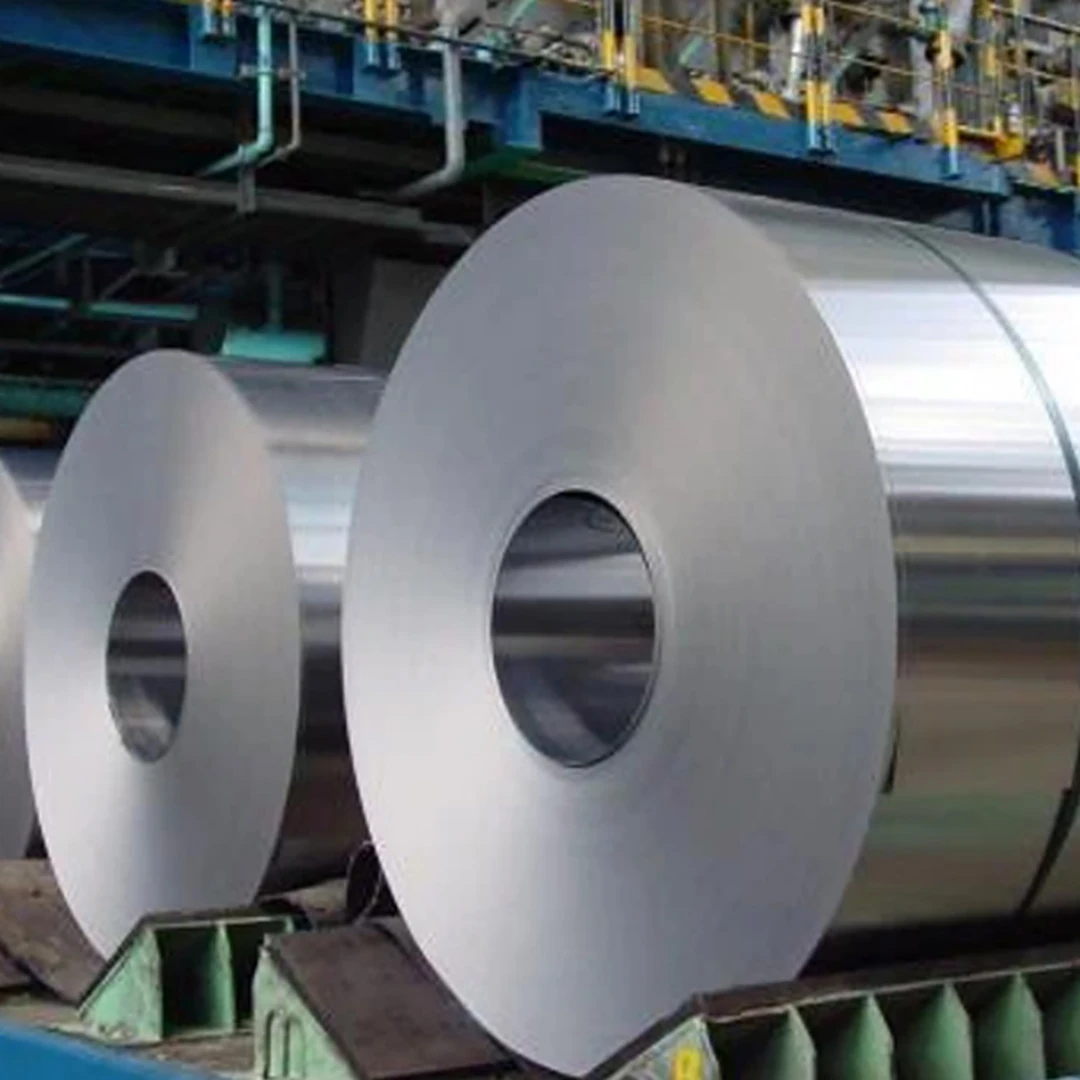
What Is Black Annealed Cold Rolled Steel Coil?
Black annealed cold rolled steel coil (sometimes called Cold-Rolled Black Annealed, or CRBA) starts as ordinary cold rolled steel. The key difference lies in the final heat treatment. After the cold rolling process, the steel is placed in a controlled annealing furnace. During annealing, the furnace atmosphere is carefully controlled. This process creates a thin magnetite (Fe₃O₄) layer instead of loose oxide scale.
According to industry technical notes, this magnetite layer is generally less than 1 μm thick. It is a stable, dark blue-black oxide that adheres tightly to the steel surface. The layer gives the coil its characteristic appearance and provides a degree of corrosion protection that is not available on plain uncoated cold rolled steel. The annealing also relieves internal stresses introduced during cold working, improving the material‘s ductility and formability.
Common base grades include Q195, Q235, SPCC, DX51D, and SGCC. Typical thickness ranges from 0.5 mm to 3 mm, while width ranges from 50 mm to 1300 mm. The product complies with international standards such as AISI, ASTM, DIN, GB, and JIS, making it widely used in export markets.
Market Context of Cold Rolled Steel
To understand the relevance of black coil, it helps to look at the larger market. Cold rolled steel is used across many industries, from automotive to appliances to construction. According to a 2025 market report published by Fortune Business Insights, the global cold rolled coil steel market was valued at USD 83.51 billion in 2025. It is projected to grow to USD 88.35 billion in 2026 and reach USD 134.71 billion by 2034, with a compound annual growth rate of 6.2% during the forecast period. Asia Pacific held the largest market share in 2025, accounting for 51% of global demand.
Another report from Global Growth Insights noted that the broader cold rolled steel market value stood at USD 194.98 billion in 2025. The data shows continued growth in demand for cold rolled steel products, especially in Asia-Pacific manufacturing markets.
Unique Advantages of Black Annealed Cold Rolled Steel Coil
- Black annealed cold rolled steel coil has several specific advantages. Corrosion protection without painting: The magnetite layer provides protection against atmospheric corrosion for parts whose surfaces cannot be protected by normal painting or metallic coating processes. This is useful for components that will be used in dry or moderately humid indoor environments.
- Compatible with moderate forming: The magnetite layer can withstand moderate bending and drawing operations without cracking or peeling. This makes the material suitable for stamped or formed parts that do not require severe deformation.
- Clean and attractive surface: The sheet surface remains clean during storage and handling. The uniform black finish has a professional appearance that does not require further finishing in many applications.
- Cost-effective for economical items: For products where further painting is not needed, black coil offers lower cost compared to coated or painted steel. There is no extra step for surface preparation or coating application.
- Suitable for certain food contact: Under defined conditions, black annealed cold rolled steel is considered suitable for direct contact with food, particularly for items like cake molds and baking trays. The magnetite layer remains stable under normal baking temperatures. Some suppliers offer factory-direct pricing, flexible MOQ options, and export support services for overseas buyers.
Product Specifications
A cold rolled steel manufacturer typically offers black annealed cold rolled steel coil with the parameters listed in the following table. The data below reflect actual product offerings available from verified suppliers.
| Parameter | Specification |
| Product name | Black Annealed Cold Rolled Steel Coil |
| Base materials | Q195, Q235, Q235B, Q215, DX51D, SGCC, SPCC |
| Thickness range | 0.50 mm – 3 mm |
| Width range | 50 mm – 1300 mm |
| Standards | AISI, ASTM, BS, DIN, GB, JIS (including GB/T 13912 2002, ISO 1464, JIS H8641, BS 729:1971, ASTM A123 1989) |
| Tolerance | ±0.02 mm |
| Surface finish | Regular spangle, mini spangle (for galvanized variations) |
| Zinc coating (if applicable) | 90 – 220 g/m² (both sides) |
| Process sequence | Rolling → Annealing → Dip Coating → Straightening → Crop → Coiling |
| Certifications | ISO 9001, BV, SGS, RoHS Directive compliant |
| Packaging | Wrapped with waterproof plastic, tied with steel belts, wooden pallet. Horizontal and vertical packing are both available. |
Step–by–step production of black annealed coil
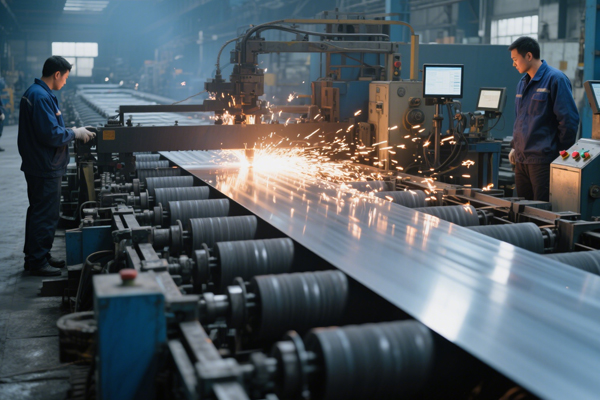
- Cold rolling: The pickled hot-rolled strip is passed through a series of rolling stands at room temperature to achieve precise thickness (±0.02 mm tolerance) and a smooth surface.
- Annealing: The cold-rolled coil is loaded into a bell-type or continuous annealing furnace. The furnace atmosphere is controlled to produce the black magnetite (Fe₃O₄) layer on the surface. The steel is heated to a temperature that relieves internal stresses without causing grain growth. The annealing temperature and soak time are selected based on the base material grade.
- Controlled cooling: The black coil is cooled slowly in a protective atmosphere. Slow cooling prevents the formation of brittle oxide scales and ensures the magnetite layer adheres properly.
- Skin pass (optional): A light temper rolling step may be applied to improve flatness and surface uniformity.
- Slitting and cutting: The coil is slit to customer-specified widths (from 50 mm to 1300 mm). Plate cutting is also available for non-coil applications.
- Inspection and packaging: Each coil is inspected for dimensional accuracy, surface quality, and coating integrity. The finished coils are wrapped with waterproof plastic, secured with steel belts, and placed on wooden pallets for shipment.
Where Is Black Annealed Cold Rolled Steel Coil Used?
Black annealed coil is mainly used in products that require moderate formability and a dark surface finish.
- Steel pipes and tubes: The material is commonly used for stove pipes and other welded tubular products where the black finish is either retained or later painted. The magnetite layer provides temporary corrosion protection during storage and handling.
- Food contact items (excluding packaging): Under certain conditions, black annealed cold rolled steel is suitable for food contact. Common examples include cake and biscuit molds, baking trays, and linings of industrial bread ovens. The magnetite layer is non-toxic and does not transfer to food products.
- Furniture and construction components: Cold rolled steel in black annealed form is used for light steel keels, structural framing elements, and indoor furniture parts. The dark finish is sometimes left exposed for aesthetic reasons.
- Economical general items: For products where painting is not required, black coil offers a low-cost solution. Examples include metal stamping parts, fire-rated roller shutter components, and backing plates for appliances.
- Galvanized steel baseband: The material can serve as the base strip for hot-dip galvanizing. The magnetite layer does not interfere with zinc adhesion and can even improve coating uniformity in some cases.
- Steel structure workshops: Light structural components such as purlins, wall girts, and bracing members are often fabricated from black annealed cold rolled steel.
Cold rolled steel manufacturer and trading companies that offer black coil typically provide these products to converters and fabricators across many industries. It is often selected as a lower-cost alternative to painted or galvanized steel in indoor applications.
Frequently Asked Questions (FAQ)
Q1: Is black annealed cold rolled steel coil rust–proof?
A1: No. The magnetite layer provides mild corrosion resistance for indoor or temporary outdoor exposure. It is not intended for prolonged exposure to moisture or corrosive environments. For heavy corrosion protection, a galvanized or painted coating is required.
Q2: Can black annealed cold rolled steel coil be welded?
A2: Yes, the material can be welded using standard methods for low-carbon steel. The magnetite layer may need to be removed from the weld area for certain processes (such as spot welding). For arc welding, the layer typically burns away without special treatment, but proper ventilation is recommended.
Q3: What is the difference between black annealed and bright annealed cold rolled steel?
A3: Bright annealed steel is processed in a protective atmosphere (such as hydrogen or dissociated ammonia) to prevent oxidation, resulting in a clean, shiny surface. Black annealed cold rolled steel is processed in a controlled atmosphere that allows the formation of a magnetite (Fe₃O₄) oxide layer, giving it the characteristic black finish.
Q4: What materials are available for black annealed cold rolled steel coil?
A4: Common base materials include Q195, Q235, SPCC, DX51D, and SGCC. Each grade offers different mechanical properties. For example, Q195 has lower carbon content and better formability, while Q235B offers higher strength. Refer to the chemical composition and mechanical property tables provided by your cold rolled steel manufacturer.
Q5: Can black annealed cold rolled steel coil be painted directly?
A5: In most cases, yes. The magnetite layer accepts paint without special pretreatment. However, for demanding applications or outdoor use, a primer coat is recommended. Surface oils or contaminants should be removed before painting.
Conclusion
Black annealed cold rolled steel coil is widely used in applications that require a clean dark surface and moderate corrosion resistance. It is not a replacement for heavy-duty corrosion protection, but it offers a practical solution for applications where a clean, dark surface and moderate corrosion resistance are sufficient. The material is formable, weldable, and suitable for food contact under defined conditions. As manufacturing demand grows, black annealed coil continues to be used in furniture, construction, appliance, and light industrial applications.
For specifications, pricing, or samples of black annealed cold rolled steel coil, contact verified cold rolled steel manufacturer such as Runfei. Certifications including ISO 9001, SGS, and RoHS Directive-compliance are available upon request.