Introduction
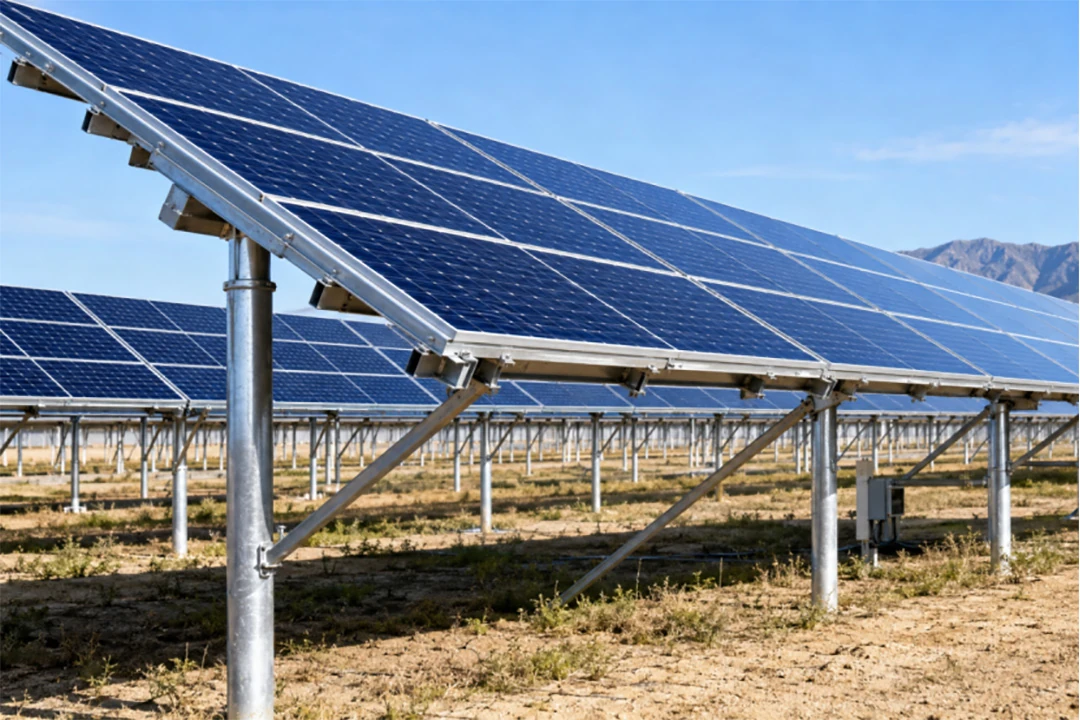
Global demand for solar energy continues to grow as governments and developers invest more heavily in renewable infrastructure. A solar installation depends on many components. Among them, the Photovoltaic Bracket plays a central role. It supports panels for decades under sun, wind, and rain. If the Mounting System fails, the entire solar array can collapse or lose efficiency.
Selecting the right material is not a minor decision. Engineers must consider wind loads, snow pressure, and environmental erosion. Two common choices are Carbon Steel and Galvanized Steel. Each has distinct properties. But high-strength options often provide the best balance of durability and cost. This guide explains how high-strength structural steel improves Solar Bracket performance. It also covers material grades, corrosion resistance, and structural components.
Primary Materials for Solar Brackets: From GI to ZAM Steel
Solar Bracket systems rely on several base materials. Different materials are selected based on project conditions such as wind load, humidity, and installation environment.
Galvanized Steel and Galvalume Steel
GI steel (Galvanized Steel) is a common choice for many ground-mounted projects. The zinc coating provides basic protection against moisture. GL steel (Aluzinc Steel or Galvalume) adds aluminum to the coating. This improves corrosion resistance in moderate climates. Typical grades include DX51D+Z, DX52D+Z, and S355JR. These grades offer a balance of formability and strength.
For projects with higher load demands, high-strength Galvanized Steel grades are preferred. They resist bending under heavy snow or strong winds.
Advanced Corrosion-Resistant Options
ZAM steel (zinc-aluminum-magnesium) delivers better edge protection than traditional GI steel. Magnesium in the coating helps protect exposed edges. This makes ZAM steel a strong candidate for Anti Corrosion Steel applications in humid or industrial areas.
Aluminized Steel is another option. It performs well under high heat reflection. Some rooftop systems use it to reduce thermal expansion issues.
Stainless Steel for Harsh Environments
Coastal photovoltaic projects often require stainless steel components because salt exposure accelerates corrosion on standard galvanized materials. 304 Steel offers good general corrosion resistance. 316 Steel adds molybdenum for better protection against chlorides. Duplex Stainless Steel combines strength and corrosion resistance. It is used for critical fasteners and brackets in aggressive environments.
High-Strength Steel Grades and Technical Standards
Material strength directly impacts the Mounting System design. Thinner sections can be used when steel strength is higher. This reduces weight and material cost.
Hot Rolled Structural Steel
Large utility-scale solar projects commonly use hot rolled structural steel such as S355JR, S420, and S460, which provide yield strengths ranging from 355MPa to 460MPa. Chinese standards offer equivalent grades such as Q355 and Q460C. These high-strength grades allow longer spans between support posts.
Hot Rolled Steel also includes S235JR for lighter duty. But for ground-mounted systems in windy regions, S355JR is more common. The material is available as HR Coil and cut-to-length plates.
Cold Rolled Steel for Precision Parts
Cold Rolled Steel (CR) is used for connecting brackets and small components. The cold rolling process improves surface finish and dimensional accuracy. Common grades include SPCC steel, ST12 steel, and DC01 steel. For parts that require bending or deep drawing, DC04 and DC06 steel are selected. These deep-drawing grades prevent cracking during complex forming.
Weathering Resistant Steel
In dry climates with limited rainfall, Weathering Resistant Steel (Corten-A or SPA-H) can be used without coating. The material forms a stable rust layer that prevents further corrosion. This reduces initial coating costs. However, it is not suitable for wet or salt-rich environments.
Structural Components: Steel Pipes, Tubes, and Sections
A Photovoltaic Bracket is an assembly of different shapes. Each component has a specific structural role.
Support Columns and Piles
Steel Pipes are widely used as vertical supports or driven piles. Square Tube sections offer easy connection to rails. ERW (Electric Resistance Welded) pipes are common for smaller racks. For large ground-mounted plants, SSAW and LSAW pipes provide larger diameters and thicker walls. Grades like A106GR and ASTM A106 are referenced for high-temperature or high-pressure applications, though solar supports typically use structural grades.
Beams and Connecting Elements
Steel Flat (Flat Bar) is used for cross-bracing and purlins. Checkered steel plates are commonly installed on maintenance walkways because their textured surface improves slip resistance. Pattern Steel Plate serves the same purpose on access platforms.
The connection between these parts must be precise. Small deviations in hole location or section size create assembly problems in the field.
Manufacturing Tolerances
Steel Tolerance affects how well a Mounting System Product fits together. Poor tolerance leads to misaligned panels. This adds stress to both the bracket and the modules. Reputable suppliers follow standards like EN 10219 or ASTM A500 to ensure consistent dimensions.
Why Corrosion Resistance is the Lifecycle Decider
A Solar Bracket may last 25 years or more. Corrosion is the main reason for early replacement. Protecting the steel surface is therefore a key design step.
Surface Treatment Methods
Electro-Galvanizing applies a thin zinc layer through an electrical process. The coating is smooth and uniform. But it is relatively thin. For outdoor solar racks, Electro-Galvanizing is suitable only for indoor or very dry locations.
Hot-dip galvanizing immerses the steel in molten zinc. The resulting coating is thicker and more durable. It bonds metallurgically to the base steel. For most Mounting System applications, hot-dip Galvanized Steel is the standard choice.
Anti-Corrosion Technologies
Anti-Corrosion treatments go beyond basic galvanizing. Some suppliers add sealers or topcoats. Others use duplex systems: galvanizing plus a paint layer. These methods extend service life in aggressive soils or coastal air.
The selection starts with the environment. Mild Steel without coating corrodes quickly outdoors. Alloy Steel with chromium or nickel offers better inherent resistance. But for most projects, Coated Steel with a proven zinc or zinc-aluminum-magnesium layer is the practical solution.
Runfei Group: Your Trusted Mounting System Supplier
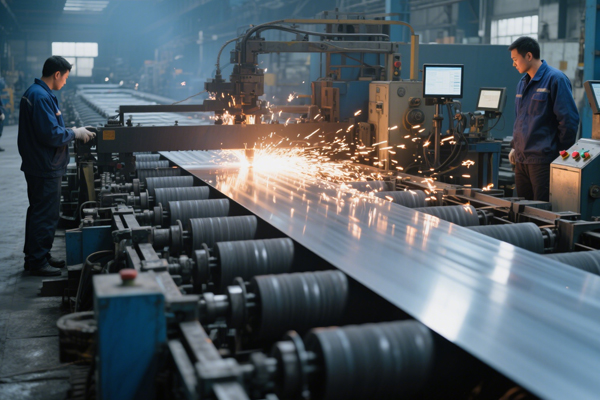
Runfei, as a mounting system supplier, can control material quality from the coil stage to the finished part.
Manufacturing Strength
The company produces Hot Rolled Sheet, Cold Rolled Steel, and various coated products. Galvanized Steel coils are available in multiple coating weights. For specialized needs, ZAM steel and Aluminized Steel can be supplied. Runfei also processes Steel Pipes including Square Tube and round pipes for structural use.
Global Supply Chain
As a Mounting System Exporter, Runfei ships to projects worldwide. The company provides Mounting System Pricelist information upon request. Logistics are arranged for both full containers and less-than-container loads. China Steel Pipes and Roofing Sheets are part of the regular product line.
Additional Products
Beyond solar applications, Runfei supplies Automotive Steel and electrical Silicon Steel for motors and transformers. This broad manufacturing base ensures technical expertise across different steel grades and processes.
Conclusion
The long-term performance of a solar mounting system depends heavily on material selection. High-strength grades like S355JR and Q355 reduce material weight while maintaining load capacity. Corrosion-resistant options like Galvanized Steel and ZAM improve corrosion resistance and extend service life. Proper selection of Steel Pipes, Flat Bar, and other sections ensures reliable assembly.
Runfei Group invites project developers and engineering firms to review detailed specifications for S355J2+N, SAE 1006, and other materials. Contact the team to request the latest SS Coil Supplier pricing or technical data sheets. Selecting qualified structural steel and corrosion-resistant coatings is essential for ensuring long-term solar mounting reliability.