Key Takeaways
Non-oriented electrical steel is designed for applications where magnetic flux changes direction, making it suitable for rotating electrical machines.
Core loss, thickness, surface insulation, and dimensional consistency are important factors when selecting electrical steel for motor laminations.
Cold-rolled processing can provide the dimensional control needed for thin laminated motor cores.
Buyers should evaluate both material performance and supplier capabilities before placing a production order.
Runfei supplies cold rolled non-grain-oriented steel coils in multiple thicknesses and widths for motor and other electrical equipment applications.
Why Silicon Steel Matters in Motor Manufacturing
The U.S. Department of Energy explains that motor core losses include hysteresis losses and eddy-current losses, both of which appear as heat in the electrical steel components of a motor. Electric motors convert electrical energy into mechanical motion, but part of the input energy is lost inside the motor. The magnetic core is one source of these losses. Electrical steel is therefore selected for its magnetic properties .
SILICON STEEL is generally processed into thin laminations that are stacked to form the stator and rotor cores. Separating the magnetic core into insulated laminations limits the paths available for circulating currents. This approach helps manufacturers manage electrical losses while maintaining the magnetic function required by the motor.
Why Non-Oriented Steel Is Suitable for Rotating Machines
Unlike transformer cores, motor cores operate with magnetic flux that changes direction as the rotor turns. This makes relatively uniform magnetic behavior in different directions particularly useful.
NON-ORIENTED SILICON STEEL is produced with magnetic properties that are not concentrated in one preferred rolling direction. It is therefore commonly associated with rotating electrical equipment such as motors, generators, and AC alternators.
The choice between oriented and non-oriented electrical steel depends on the magnetic circuit and operating conditions of the equipment. What the motor manufacturer needs to consider is whether its magnetic characteristics and processing performance meet the design requirements of the core.
Main Motor Manufacturing Applications
Electrical steel can be found in a wide range of rotating electrical equipment. Typical applications include:
- Industrial motors
- Electric generators
- AC alternators
- Traction and mobility motors
- Other rotating electrical machines
The importance of electrical steel is also reflected in current industrial development. World Steel Association reports that non-grain-oriented electrical steel is being developed for applications including electric motors, generators, automotive and mobility systems, and renewable electricity equipment.
Key Material Properties for Motor Core Performance
Core Loss and Magnetic Performance
Core loss describes energy dissipated in the magnetic core during repeated magnetization. It mainly consists of hysteresis and eddy-current components. Lower core loss can help reduce heat generation and improve the efficiency of the motor.
The U.S. Department of Energy identifies the use of electrical steel with lower losses and thinner laminations as established approaches for reducing motor core losses. However, material selection should consider the complete motor design.
A practical evaluation should therefore consider:
- Core loss under the intended test condition
- Magnetic flux density
- Magnetic permeability
- Operating frequency
- Required motor efficiency
Thickness and Eddy-Current Control
Thickness is another important consideration in motor-core design. When electrical steel is divided into thinner laminations, the induced eddy currents can be reduced. DOE analysis specifically recognizes thinner steel laminations as one method of reducing eddy-current losses in electric motors.
COLD ROLLED SILICON STEEL is relevant here because cold-rolled electrical steel can be produced in thin gauges suitable for laminated magnetic cores. The appropriate thickness, however, depends on the motor design, operating frequency, manufacturing process, and required balance between electrical performance and production cost.
Surface Insulation and Stamping Quality
Individual laminations must remain electrically separated after stacking. Surface insulation therefore has a direct relationship with interlaminar resistance and the control of circulating currents.
For manufacturers, surface quality also interacts with stamping. Poor edge conditions or excessive burrs can affect lamination stacking and may damage insulation between layers. Dimensional consistency, flatness, and edge quality should therefore be evaluated together with magnetic properties.
How to Select Cold Rolled Silicon Steel for Motor Production
Match Material With Operating Conditions
Different motors place different demands on their magnetic cores. A conventional industrial motor may prioritize a balanced combination of core loss, magnetic performance, stamping behavior, and cost. A high-speed or traction motor may place greater emphasis on high-frequency losses, thin laminations, thermal behavior, and dimensional precision.
A simple selection framework is:
| Motor Application | Main Material Considerations |
| Industrial motors | Core loss, magnetic properties, stamping |
| Generators | Magnetic performance and dimensional stability |
| AC alternators | Magnetic uniformity and lamination quality |
| Traction motors | Loss control, thickness, thermal and processing requirements |
| High-speed motors | Thin gauge and high-frequency performance |
The final grade should be confirmed against the motor’s design calculations and applicable material standard.
Consider Stamping and Processing Requirements
Motor cores are commonly manufactured by punching or stamping individual laminations and then stacking them. This means a material that performs well magnetically but is difficult to process may not be the most practical choice for mass production.
Manufacturers should review:
- Required lamination geometry
- Stamping speed and tooling
- Burr control
- Dimensional tolerance
- Stacking method
- Any post-stamping treatment or annealing requirements
A reliable specification should also distinguish between the properties guaranteed by the material supplier and those controlled during the customer’s downstream manufacturing process.
Evaluate the Supplier, Not Only the Material
For recurring B2B purchases, supplier consistency can be as important as the nominal grade. Buyers should check whether a SILICON STEEL Manufacturer can provide stable material properties across different production batches.
Important documents and capabilities may include material certificates, inspection reports, applicable standards, dimensional inspection, magnetic test data, packaging procedures, and the ability to maintain agreed specifications for repeat orders.
CRNGO Silicon Steel Coil for Motor Manufacturing
After establishing the material requirements, buyers can evaluate a specific coil supply against those criteria.
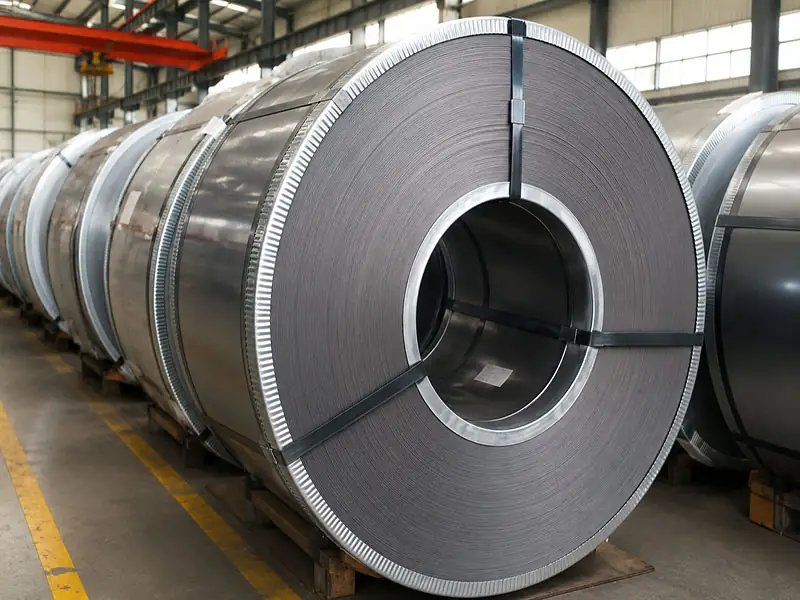
Runfei’s COLD ROLLED SILICON STEEL product is a cold rolled non-grain-oriented steel coil intended for applications including motors, power generators, and AC alternators. The product page identifies the material as CRNGO and states that it is manufactured to GB standard, with AISI, ASTM, BS, DIN, GB, and JIS standards listed for the product.
Product Specifications
The available product information gives the following basic specifications:
| Item | Runfei Product Information |
| Product | Cold Rolled Non-Grain-Oriented Steel Coil |
| Type | CRNGO |
| Standard | GB |
| Width | 800–1250 mm |
| Thickness | 0.20, 0.27, 0.30, 0.35, 0.50, 0.65 mm |
| Origin | Tianjin, China |
| Certifications | ISO 9001, SGS, RoHS Directive-compliant |
| Packing | Seaworthy horizontal or vertical packing |
| Stated shipment time | Maximum 45 days |
Product Features and Application Fit
The product uses a non-grain-oriented structure, which Runfei states is suitable for large rotating equipment. Its available thickness range also provides options for manufacturers that require different lamination gauges.
For international B2B purchasing, the product page specifies seaworthy packing, with waterproof plastic and steel belts described for export packing. The company also states that both horizontal and vertical packing are available. These details are relevant when evaluating the material for overseas shipment and subsequent motor-core production.
Runfei is a SILICON STEEL Manufacturer and supplier with factory resources and technical service support. For buyers considering repeat procurement, the more important point is to confirm the exact grade, thickness, width, magnetic requirements, tolerances, quantity, and delivery conditions for the intended motor application before ordering.
B2B Buying Checklist for Motor-Grade Silicon Steel
A practical purchasing process should connect engineering requirements with commercial specifications. Before requesting a quotation, buyers can prepare the following information:
- Required material type and applicable standard
- Target thickness and width
- Magnetic performance requirements
- Surface insulation requirements
- Stamping and slitting requirements
- Coil weight and order quantity
- Inspection and certification requirements
- Export packaging and delivery requirements
When comparing suppliers, it is useful to request the same technical information from each candidate. This makes differences in material quality, processing capability, documentation, and delivery conditions easier to identify.
FAQ
Q1: What is CRNGO silicon steel used for?
A: CRNGO, or cold rolled non-grain-oriented electrical steel, is commonly used for rotating electrical equipment such as motors, generators, and AC alternators. Its non-oriented magnetic structure makes it suitable for applications where magnetic flux changes direction.
Q2: Why is non-oriented silicon steel used in electric motors?
A: Motor cores experience changing magnetic flux as the rotor rotates. Non-oriented electrical steel provides magnetic behavior that is suitable for different directions of magnetization, making it a common material for stator and rotor laminations.
Q3: How does steel thickness affect motor core performance?
A: Thinner laminations can reduce eddy-current losses. However, thickness should be selected together with magnetic requirements, mechanical handling, stamping capability, and overall manufacturing cost.
Q4: What should buyers ask a silicon steel supplier before ordering?
A: Buyers should confirm the material standard, thickness, width, magnetic properties, dimensional tolerances, surface condition, inspection documentation, packing method, quantity, and delivery schedule. For repeat orders, batch-to-batch consistency should also be discussed.
Q5: Can Runfei supply CRNGO steel coils for motor manufacturing?
A: Yes. Runfei lists cold rolled non-grain-oriented steel coil for motors, power generators, and AC alternators, with thicknesses from 0.20 mm to 0.65 mm and widths from 800 mm to 1250 mm. Specific requirements should be confirmed with the supplier before purchase.
Conclusion
Choosing electrical steel for motor manufacturing requires more than comparing material grades. Core loss, magnetic performance, thickness, insulation, dimensional consistency, and stamping requirements all influence the final performance and manufacturing efficiency of the motor core. A suitable material should also be supported by stable quality, clear documentation, and dependable delivery.
For manufacturers looking for NON-ORIENTED SILICON STEEL for motors, generators, or other rotating electrical equipment, Runfei provides cold rolled non-grain-oriented steel coils in multiple thicknesses and widths. Contact us to discuss your required grade, dimensions, magnetic properties, quantity, and processing requirements, and request a suitable CRNGO steel coil solution for your application.