Key Takeaways
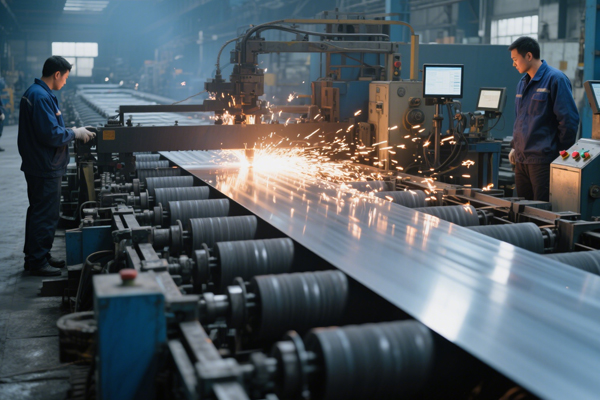
GALVANIZED STEEL uses a zinc coating to protect the steel substrate from moisture, oxygen, and other corrosive elements.
Compared with untreated CARBON STEEL, its main advantage is improved corrosion resistance, especially in many outdoor and humid environments.
Zinc coating primarily changes the surface protection of steel rather than fundamentally changing the mechanical properties of the base material.
For industrial buyers, the right choice depends on exposure conditions, fabrication requirements, maintenance expectations, and total cost over the service life.
Introduction
Steel selection involves more than comparing hardness and cost. In sectors like construction, manufacturing, appliances, and industrial equipment, the longevity of the material is frequently dictated by the effectiveness of its surface protection. The choice between galvanized steel and conventional carbon steel, therefore, warrants thorough evaluation.
The key difference is relatively straightforward: zinc creates a protective layer over the steel surface. According to the American Galvanizers Association, zinc protects steel through both barrier protection and cathodic protection, meaning it separates the steel from corrosive elements while also preferentially corroding when the coating is locally damaged.
What Changes When Carbon Steel Receives a Zinc Coating?
How Regular Carbon Steel Corrodes
Untreated CARBON STEEL is widely used because it offers a practical combination of strength, availability, machinability, and cost. However, when its surface is exposed to water and oxygen, oxidation can gradually produce rust. Salt, humidity, pollutants, and other environmental factors can accelerate this process.
For this reason, conventional carbon steel used outdoors or in humid environments often needs an additional protection system, such as paint, powder coating, or another surface treatment. Without adequate protection and maintenance, corrosion can progressively affect the surface and eventually the underlying material.
How Zinc Changes the Surface Protection Mechanism
After hot-dip galvanizing, the material of the steel itself does not become a different structural material; the true change lies in its surface acquiring a firm zinc-based protective layer.
The protection works in two ways. First, the zinc layer acts as a physical barrier between the steel and the surrounding environment. Second, zinc is more anodic than steel, so it can corrode preferentially and provide sacrificial protection to exposed steel in localized areas. The American Institute of Steel Construction describes these two mechanisms as barrier protection and sacrificial corrosion protection.
Buyers should be aware that although galvanization enhances corrosion protection, it does not alter the steel’s inherent strength and toughness, which continue to be determined by the base material grade and the processing it has undergone.
What Changes — and What Does Not?
| Property | Regular Carbon Steel | Zinc-Coated Steel |
| Base material | Carbon steel | Carbon steel or other suitable steel substrate |
| Surface protection | Requires separate protection when needed | Zinc coating provides integrated surface protection |
| Corrosion protection | Depends heavily on paint/coating and maintenance | Barrier plus sacrificial zinc protection |
| Mechanical strength | Determined by steel grade | Still primarily determined by substrate grade |
| Maintenance | May require recoating | Often reduced in suitable environments |
| Surface appearance | Bare steel or separately coated | Characteristic zinc-coated surface |
In other words, galvanizing should not be viewed as a method to simply make steel “stronger.” Its value lies mainly in changing how the steel surface interacts with its environment.
Galvanized Steel vs. Carbon Steel: What Are the Practical Differences?
The most useful comparison for procurement teams is not whether one material is universally better than the other, but how each behaves under the conditions of the intended application.
Corrosion Resistance and Service Environment
For exposed applications, GALVANIZED STEEL generally has an advantage because the zinc coating provides protection before the steel substrate itself becomes exposed to the environment. The AGA notes that the performance of galvanized coatings varies with environmental conditions and that coating thickness is an important factor in determining service life.
The difference becomes particularly relevant when components are exposed to rain, humidity, condensation, or atmospheric contaminants. In chemical environments, however, galvanized coatings are not suitable for every condition. AGA guidance indicates that galvanizing generally performs well in solutions with a pH above 4.0 and below 12.5.
Fabrication and Processing Considerations
Both materials can be cut, formed, and fabricated, but the presence of zinc introduces an additional consideration during downstream processing.
Cutting, drilling, bending, or welding can locally affect the zinc layer. Welding galvanized material also requires suitable ventilation and process controls because heating zinc-coated surfaces can generate zinc-containing fumes. After fabrication, damaged areas may require appropriate repair to restore corrosion protection.
Maintenance and Lifecycle Cost
Regular carbon steel may have a lower initial material cost, but exposed applications can require painting, inspection, recoating, and corrosion-related repairs. Zinc-coated steel may have a higher initial material cost while reducing the need for some subsequent surface-maintenance work.
Therefore, a practical purchasing calculation should consider:
- Initial material price
- Surface-treatment or coating requirements
- Fabrication and installation costs
- Inspection and maintenance frequency
- Potential repair or replacement costs
This is why CORROSION RESISTANCE should be considered as part of lifecycle cost.
When Should Buyers Choose Galvanized Steel Instead of Regular Steel?
Material selection should begin with the service environment. For a dry indoor application with limited exposure to moisture, conventional carbon steel may be sufficient and can be an economical choice. For outdoor or humid applications, the additional protection offered by a zinc coating may provide a more practical solution.
Match the Material to the Application
A simple decision framework is useful:
Low corrosion exposure: regular carbon steel may be appropriate when the environment is controlled and a separate coating system is acceptable.
Outdoor or humid exposure: zinc-coated steel can provide an additional layer of protection without relying solely on a subsequently applied paint system.
More aggressive environments: coating thickness, chemical compatibility, maintenance requirements, and potentially a duplex coating system should be evaluated rather than assuming that any galvanized product will provide the same performance.
The coating itself also matters. AGA technical guidance emphasizes that zinc coating life is influenced by coating thickness and environmental severity, so specification should be based on the actual service conditions.
What Should Buyers Specify?
For a galvanized coil purchase, the specification should normally cover the steel grade, thickness, width, zinc coating requirement, dimensional tolerances, surface condition, mechanical requirements, inspection documentation, packaging, and intended application.
Galvanized Steel Coil for Industrial Applications
For buyers who require galvanized steel in coil form, Runfei’s galvanized steel coil provides a specification framework covering hot-dip coated steel sheet and associated requirements. The standard includes requirements related to steel chemistry, mechanical properties, strength, formability, and coating designations.
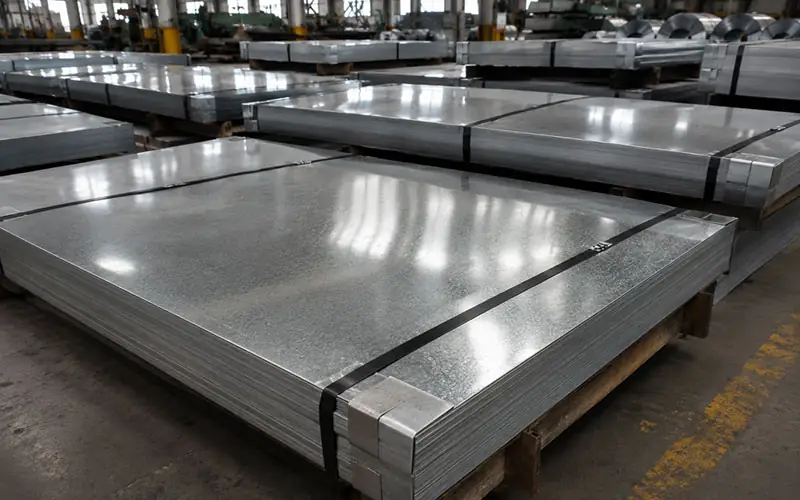
Runfei’s Galvanized Steel Coil is produced in Tianjin, China, and is listed with AISI, ASTM, BS, DIN, GB, and JIS standards.
Product Specifications
| Item | Runfei Product Information |
| Product | Galvanized Steel Coil |
| Available grades | CS.B, DX51D+Z, G550 |
| Zinc coating | Z80–Z275 g/m² |
| Standards | AISI, ASTM, BS, DIN, GB, JIS |
| Certifications | ISO 9001, SGS, RoHS Directive-compliant |
| Packaging | Standard seaworthy packing; horizontal and vertical types available |
| Origin | Tianjin, China |
The listed grades offer different mechanical characteristics. For example, the product gives G550 a listed tensile strength of 715 MPa and yield strength of 654 MPa, while CS.B is listed with a tensile strength of 386 MPa and yield strength of 205–380 MPa. These values illustrate why grade selection should be linked to the required forming and mechanical performance rather than coating alone.
The listed Z80–Z275 g/m² range also gives buyers room to specify different zinc-coating requirements. The appropriate level should be selected according to the intended environment and service expectations.
Common Applications
Zinc-coated steel is widely used where a combination of steel performance and surface protection is required. Typical application areas include construction materials, automotive components, household appliances, roofing products, and industrial fabrication.
For buyers considering this coil, the most useful information to provide when requesting a quotation is the required grade, thickness, width, zinc coating level, quantity, application, and destination. This helps the supplier evaluate the specification more accurately and avoid unnecessary substitutions.
Frequently Asked Questions
Q1: Is galvanized steel better than regular carbon steel?
A: It depends on the application. For environments where corrosion exposure is significant, galvanized steel generally provides stronger surface protection than untreated carbon steel because zinc offers both barrier and sacrificial protection. For dry, controlled environments, conventional carbon steel may remain a practical and economical option.
Q2: Does zinc coating make carbon steel stronger?
A: Not in the usual sense. Zinc coating primarily improves surface protection and CORROSION RESISTANCE. The fundamental mechanical properties of the steel are still mainly determined by the underlying grade and manufacturing condition.
Q3: What happens if the zinc coating is scratched?
A: A small area of exposed steel can receive some sacrificial protection from surrounding zinc because zinc is anodic to steel. However, significant coating damage should still be addressed appropriately to maintain long-term protection.
Q4: Is galvanized steel suitable for outdoor applications?
A: It can be suitable for many outdoor applications, but the coating requirement should be matched to the exposure environment. AGA notes that galvanized coating performance varies according to environmental conditions and coating thickness.
Conclusion
The choice between galvanized steel and conventional carbon steel ultimately depends on the application, exposure conditions, fabrication requirements, and expected maintenance costs. Zinc coating does not fundamentally change the base steel’s mechanical properties, but it provides an additional layer of protection that can significantly improve CORROSION RESISTANCE in many outdoor and humid environments.
For buyers seeking a balance between steel performance and surface protection, galvanized steel coil can be a practical option for construction, automotive, appliance, and industrial fabrication applications. Selecting the appropriate steel grade, coil dimensions, and zinc coating level is essential to achieving the expected performance.
Looking for galvanized steel coil for your next project? Contact us with your required grade, thickness, width, zinc coating, and quantity to discuss the right specification and request a quotation.