Two suppliers may offer galvanized steel coil with similar thickness, width and zinc coating specifications, yet quote very different prices. The reason often comes down to two important details: the base steel grade and the specified zinc coating weight. These determine how the material performs during forming and how well it resists corrosion in service.
For buyers sourcing galvanized steel, understanding these specifications is important before comparing quotations. A coil intended for deep drawing has different requirements from one used for structural components or exterior construction products. Even when two products have similar dimensions, differences in steel grade and coating weight can affect their suitability for a particular application.
This guide explains the ASTM A653 system. It covers the differences between common grades such as CS.B, DX51D+Z and G550, explains how coating designations are used across different standards, and looks at what buyers should check when comparing specifications.
Before looking at the specifications, it is useful to understand how hot-dip galvanizing protects steel. The zinc coating acts as a barrier against moisture and oxygen. If the coating is damaged, zinc can also provide sacrificial protection to the exposed steel because it corrodes preferentially. This helps protect the base material against rust, including around certain scratches and cut edges.
What ASTM A653 Covers — and What It Does Not
When purchasing galvanized steel coil, buyers sometimes assume that one standard covers every aspect of the product. In fact, different standards deal with different requirements, and understanding this distinction helps avoid confusion when preparing a purchase order.
ASTM A924 / A924M establishes the general requirements for hot-dip coated steel sheet, including applicable tolerances for thickness, width, camber and shape. ASTM A653 / A653M specifies the requirements for zinc-coated steel sheet, including steel designations, chemical composition, mechanical properties and coating weight classifications.
In simple terms, A653 identifies the steel grade and coating classification, while A924 covers general requirements for the delivered material, including dimensional tolerances. An order that only references ASTM A653 may leave some delivery and dimensional requirements unclear. Likewise, citing A924 alone does not identify the required steel grade or zinc coating.
Galvanized steel coil is specified under several international standards, including AISI, ASTM, BS, DIN, GB and JIS. In the ASTM system, A653 product designations and A924 general requirements are kept separate. When preparing a specification, buyers should clearly identify the required grade, coating designation and dimensional tolerances rather than relying on a single standard reference.
Three Grades, Three Different Jobs
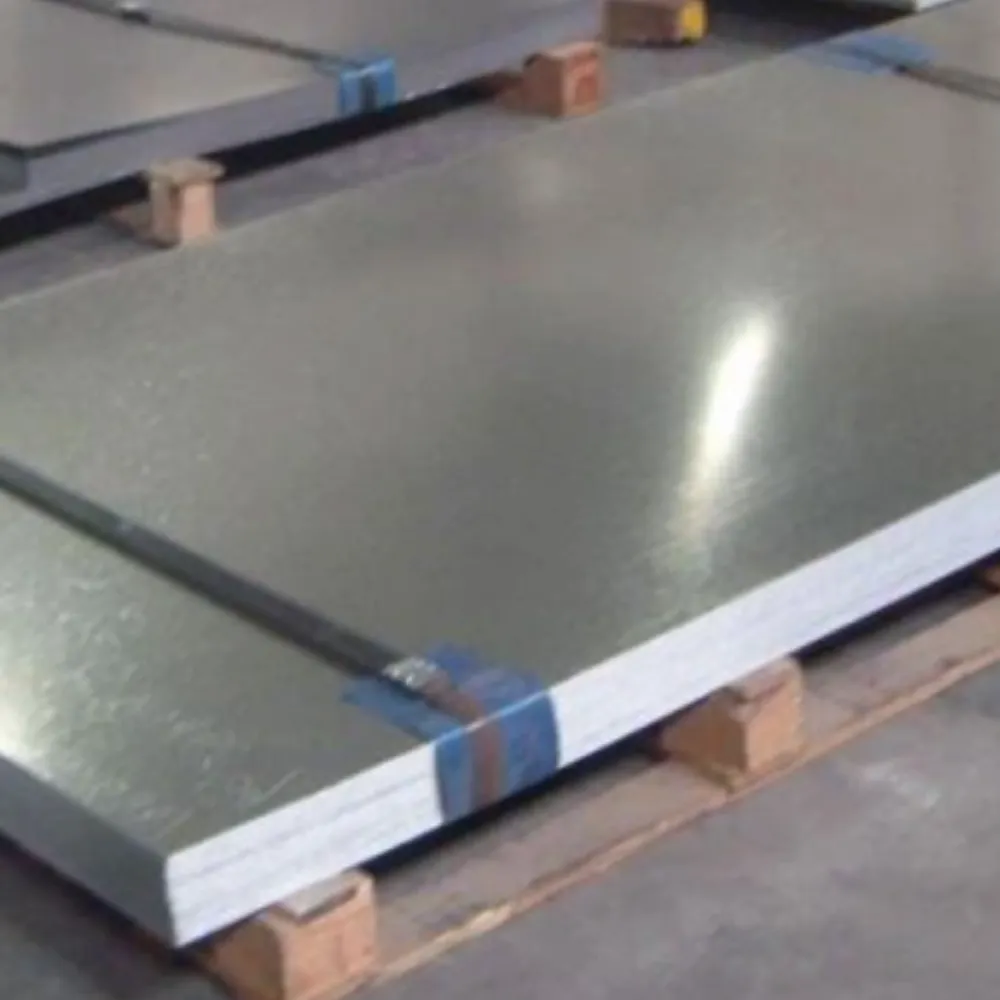
Three grades commonly seen in galvanized steel coil — CS.B, DX51D+Z and G550 — have different mechanical properties and are intended for different applications. Their main differences can be seen in tensile strength, yield strength and elongation.
| Grade | Tensile strength | Yield strength | Elongation |
| ASTM A653 CS.B | 386 MPa | 205–380 MPa | 20% |
| DX51D+Z | 355 MPa | 245 MPa | 38% |
| G550 | 715 MPa | 654 MPa | 8% |
Note: The values above are typical reference figures. Actual mechanical properties should be confirmed against the applicable standard, material thickness and mill test certificate.
Elongation is one of the key indicators when comparing the formability of these three grades. DX51D+Z, with an elongation of 38% in the reference figures, is more suitable for forming operations that require greater ductility. CS.B, at 20%, is suitable for general bending and moderate forming. G550 has much higher tensile and yield strength but lower elongation, making it more suitable for applications where strength is a priority and extensive forming is not required.
These grades should not be considered better or worse than one another in general. Their suitability depends on the finished product and the manufacturing process. For example, DX51D+Z may be a better option for components requiring more extensive forming, while G550 is more suitable for applications where higher yield strength is needed.
The intended forming process should be considered before selecting a grade. If the coil will be roll-formed into purlins or studs, G550 may be suitable because of its higher yield strength. For stamped appliance components that require more complex forming operations, a more ductile grade such as DX51D+Z may be a better choice.
When comparing different galvanized steel grades, buyers should also consider the material thickness, bend radius and forming conditions. These factors can affect the final performance of the material, even when the nominal grade is the same.
The Same Coil, Different Standard Names
A galvanized steel coil supplied to different markets may carry different grade designations depending on the standard used. This can sometimes make it difficult for purchasing teams to compare products from suppliers in different countries.
The same grade can carry several designations depending on the standard, including ASTM A653 CS.B, EN-style DX51D+Z and G550. Each designation belongs to a different standard system and describes specific material requirements.
CS.B belongs to the ASTM A653 commercial steel family and is generally used for applications requiring general forming performance. DX51D+Z is the European-style designation for hot-dip galvanized steel. In this designation, DX51D identifies the steel grade, while +Z indicates a zinc coating. Buyers searching for DX51D Z should also pay attention to the complete grade designation used in the supplier’s technical documents.
G550 is a high-strength steel designation commonly used for structural applications where higher yield strength is required. Unlike general forming grades, its main advantage is its higher strength rather than its ability to withstand extensive forming operations.
Buyers may also encounter the term GI steel in quotations, product descriptions and warehouse labels. GI stands for galvanized iron and is commonly used as a trade term for zinc-coated steel products. However, it describes the galvanized product category rather than a specific steel grade. When purchasing galvanized steel, the actual standard and grade should always be stated in the order.
Although some grades under different standards may be used for similar applications, they should not automatically be treated as direct equivalents. Their chemical composition, mechanical properties and applicable requirements need to be checked before making a substitution.
For international purchases, the inquiry should state the standard system, steel grade, required mechanical properties and coating designation. This gives the supplier a clearer basis for confirming whether the available material meets the buyer’s requirements.
Coating Weight: Reading G60, Z80 and “90/90”
Coating weight is another important factor affecting the price of galvanized steel coil. Coating is commonly specified in a metric range from Z80 to Z275 g/m², and a widely quoted note says the G60 coating category under ASTM A653 is approximately equal to a 90/90 category in metric terms.
ASTM G designations and metric Z designations both describe the mass of zinc on the sheet, but they come from different standard systems. One useful reference point: the G60 category under ASTM A653 is approximately equal to a 90/90 category in metric terms. Keep the word “approximately” — the two systems should not be treated as exact equivalents.
What matters in an order is naming the coating designation together with the standard it belongs to. G-series and Z-series labels may be broadly comparable in some references, but they are not interchangeable in a purchase contract. If a requirement applies to one side only, it should be stated explicitly.
The higher the coating weight, the more zinc is available to protect the base steel. However, actual corrosion resistance and service life also depend on the surrounding environment, surface treatment, storage conditions and exposure to moisture.
When ordering galvanized steel, buyers should specify the coating designation and the standard it follows. G-series and Z-series designations should not be treated as interchangeable labels in a purchase contract even when they are described as broadly comparable. If a specific coating weight is required on each side, this should also be clearly stated.
A lower coating weight is not necessarily unsuitable for every application. For indoor products with limited exposure to moisture, a lighter zinc coating may provide sufficient protection. For exposed construction products, particularly roofing sheets, heavier coatings may be preferred depending on the expected service environment.
The coating requirement should therefore be selected according to the intended application. Buyers should also confirm the coating mass with the supplier rather than relying only on local coating gauge readings.
Where the Coil Actually Goes
Galvanized steel coil is widely used in applications where steel components need corrosion protection without requiring a separate coating process. The main application areas include automobiles, household appliances and construction materials.
For automotive steel used in component manufacturing, grade selection depends largely on the forming process and the mechanical properties required for the finished part. Components produced through roll forming may require higher yield strength, while stamped parts involving deeper drawing operations generally require better ductility.
Household appliances also use galvanized steel as a base material for components that require forming and surface treatment. In these applications, the coating should remain in good condition during cutting, bending and other manufacturing operations. The selected grade must also provide suitable forming properties for the finished product.
In construction, galvanized steel is commonly used for framing systems, panels, roofing components and other building materials. Roofing sheets and structural profiles are two typical examples. Since these products may be exposed to rain, humidity and temperature changes, coating weight should be selected according to the expected service environment.
Across these applications, both the steel grade and zinc coating need to be suitable for the manufacturing process and the final operating conditions. Cutting, bending and roll forming can affect the coating, so the material’s ductility, bend radius and processing conditions should be considered before production.
For buyers using the same galvanized steel coil for multiple applications, it is worth checking whether one grade and coating specification can meet all the requirements. This is particularly important when purchasing larger quantities for automotive, appliance and construction manufacturing.
Why Source Your Galvanized Steel Coil from Runfei
Grades Matched to Different Forming Requirements
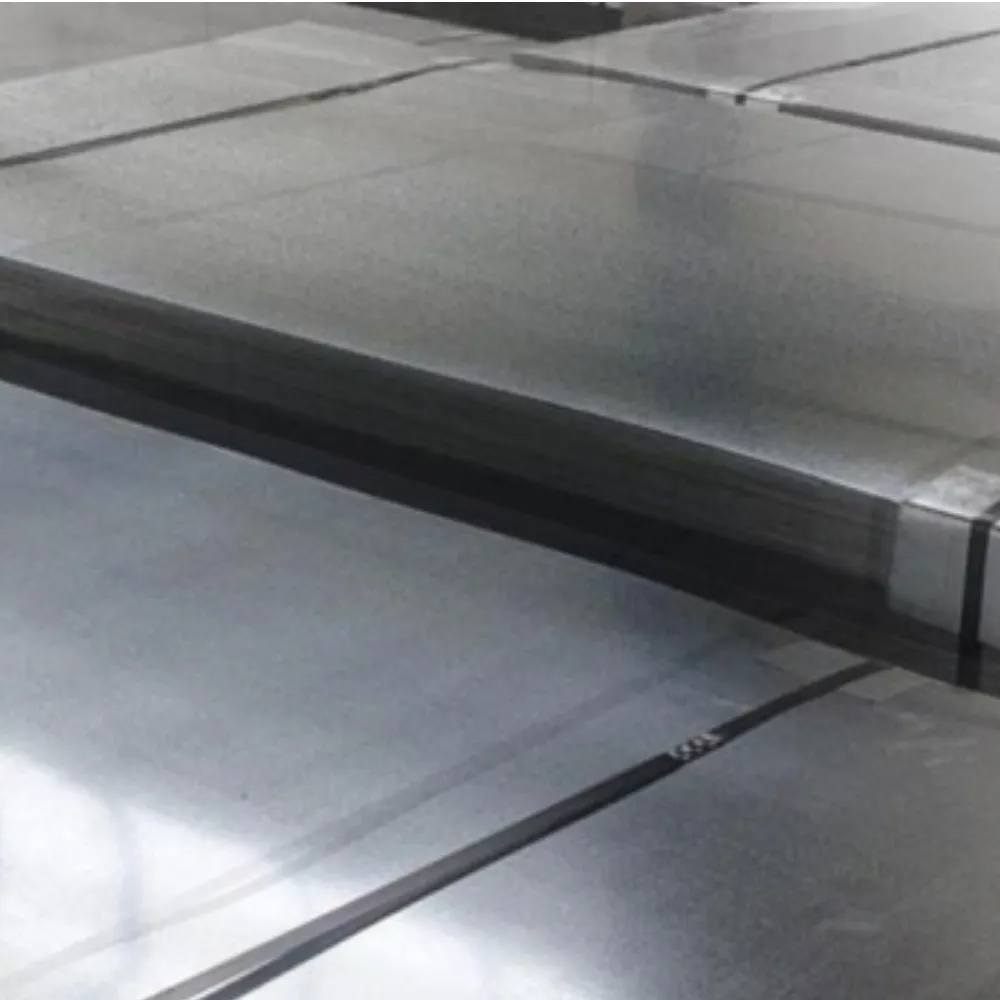
Runfei produces all three grades at its own processing facility, giving customers more flexibility when choosing materials for different applications. CS.B is suitable for general bending, while DX51D+Z offers up to 38% elongation for deeper drawing applications. For parts that require higher strength, G550 provides a tensile strength of 715 MPa.
Coating Weight and Available Dimensions
Coating weights range from Z80 to Z275 g/m², making the coils suitable for various applications, from indoor fabrication to outdoor construction. Thickness, width and coating weight can be selected according to your project requirements. Coils are available for horizontal or vertical loading and are packed in standard seaworthy packaging for export.
Factory Capacity and Lead Time
Runfei’s processing facility is located in Tianjin Hangu Industrial Park, covering 170 acres. The plant has 30,000 tons of indoor storage capacity and an annual processing capacity of 300,000 tons.
With export experience dating back to 2006, Runfei has established a production and service system for overseas customers. Our team responds to inquiries within 24 hours and aims to provide solutions within 48 hours, helping customers keep their purchasing and production schedules on track.
Certification and Order Protection
Runfei’s galvanized steel coil products are supported by ISO 9001, SGS and RoHS-related certification documentation. As an Alibaba credit-checked supplier, the company also offers Alibaba Trade Assurance to provide additional protection for payment, product quality and on-time delivery.
Payment terms include L/C and T/T, with a 30% deposit for T/T orders. Small trial orders are also welcome, allowing new customers to check product quality before moving on to larger orders.
| Item | Supply Information |
| Steel grades | ASTM A653 CS.B, DX51D+Z and G550; |
| Coating weight | Z80–275 g/m²; a G60 category (ASTM A653) is approximately equal to 90/90 (metric) |
| Tensile strength | 386 / 355 / 715 MPa for CS.B / DX51D+Z / G550, subject to material thickness |
| Yield strength | 205–380 / 245 / 654 MPa respectively |
| Elongation | 20% / 38% / 8% respectively |
| Bend test | OK at 180° (d=0) |
| Standards | AISI, ASTM, BS, DIN, GB, JIS; A653 product designations and A924 general requirements listed separately |
| Certifications | ISO 9001, SGS, RoHS Directive-compliant |
| Packing | Standard seaworthy packing; horizontal and vertical coils available |
| Payment terms | L/C or T/T with a 30% deposit |
| Service and support | Factory price with trading-company service; 24-hour response and 48-hour solution; small orders accepted before formal cooperation; |
Conclusion
When comparing galvanized steel coil prices, it’s important to check the steel grade, coating designation and dimensional tolerances rather than looking at price alone.
ASTM A653 covers the requirements for galvanized steel sheets, while ASTM A924 specifies general requirements such as thickness, width, camber and shape. Elongation is another important factor when selecting a grade for forming applications: DX51D+Z offers 38%, CS.B offers 20%, and G550 offers 8%.
Different standards may use different designations for similar materials, so it’s important to confirm the specifications before placing an order. For example, G60 is approximately comparable to a 90/90 metric coating designation, but the two should not be treated as exact equivalents.
The right coating weight and steel grade also depend on the forming process and the environment in which the finished product will be used. These factors are particularly important for applications in automotive manufacturing, household appliances and construction.
If you’re looking for galvanized steel coils for a specific application, send Runfei your required grade, coating weight, thickness and width. Our team can help you check the specifications and find a suitable option.
Frequently Asked Questions
What is the difference between ASTM A653 and A924?
ASTM A653 defines the requirements for zinc-coated steel sheet, including steel grades, mechanical properties and coating weight classifications. ASTM A924 covers general requirements for metallic-coated steel sheet, including dimensional tolerances and other delivery requirements. When purchasing galvanized steel coil, both standards should be referenced where applicable to make the product and delivery requirements clear.
Which grade should I choose for deep drawing — CS.B, DX51D+Z or G550?
DX51D+Z, with an elongation of 38% in the reference figures, is the grade to consider for forming operations that require greater ductility. CS.B, at 20%, is suitable for general bending and moderate forming. G550 has much higher tensile strength but lower elongation, making it more suitable for applications where strength is more important than extensive forming. Actual grade selection should also take material thickness and forming conditions into account.
What does the coating weight designation tell me?
The coating weight designation indicates the total mass of zinc applied to both sides of the sheet. A common metric range is Z80 to Z275 g/m². Under ASTM A653, a G60 coating is approximately equal to a 90/90 category in metric terms — approximately, not exactly. The coating designation indicates the amount of zinc applied, but actual service life also depends on exposure conditions, storage and surface treatment.
What does “GI steel” mean, and is it a grade?
GI stands for galvanized iron and is commonly used to describe zinc-coated steel products. It is a trade term referring to the galvanized product rather than a specific steel grade. Although GI steel is widely used in quotations and product descriptions, buyers should still identify the applicable standard and actual grade when placing an order, such as ASTM A653 CS.B or DX51D+Z.