Introduction
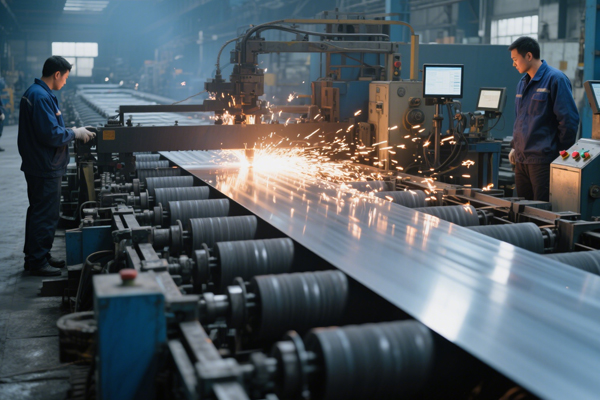
Choosing the right PREPAINTED GALVANIZED STEEL for a construction or industrial project involves more than selecting a thickness, color, or coil size. The steel substrate, zinc coating, paint system, mechanical properties, and forming requirements all affect how the material performs in its intended application.
For international buyers, sourcing also involves practical considerations such as applicable standards, quality documentation, inspection, packaging, lead time, and supplier reliability. Different environments may require different coating systems, while fabrication processes such as bending and roll forming place additional demands on coating flexibility and adhesion.
This guide explains the key PPGI specifications, coating options, quality checks, applications, export packaging, and purchasing considerations to help B2B buyers evaluate PREPAINTED GALVANIZED STEEL and communicate their requirements clearly with suppliers.
Key Takeaways
- PREPAINTED GALVANIZED STEEL (PPGI) combines a galvanized steel substrate with an organic coating system to provide corrosion protection, appearance, and formability.
- PPGI selection depends on the substrate grade, zinc coating, paint system, coating thickness, mechanical properties, and intended service environment.
- PE, SMP, HDP, and PVDF coatings offer different balances of flexibility, weather resistance, appearance, and cost.
- For international procurement, key considerations include MTCs, coating specifications, inspection procedures, traceability, seaworthy packaging, lead time, and delivery terms before placing an order.
What Is Pre-Painted Galvanized Steel (PPGI)?
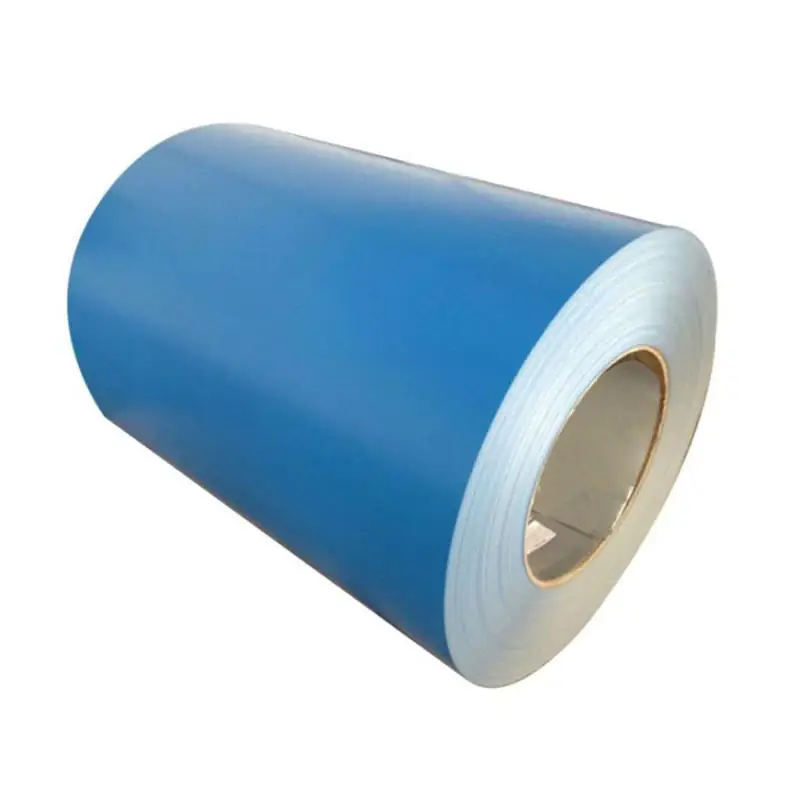
Pre-painted galvanized steel is steel sheet or coil that has first been coated with zinc and then treated with an organic paint system. The result is a finished material that combines the corrosion protection of galvanized steel with a controlled surface color and appearance.
For B2B buyers, PPGI is more than a colored steel product. Its performance depends on how the substrate, metallic coating, pretreatment, primer, and topcoat work together. The specification should therefore be selected according to the final application rather than based only on color or thickness.
Anatomy of a PPGI Coil
A typical PPGI coil contains several layers:
- Steel substrate – Provides the basic mechanical strength and determines much of the material’s forming behavior.
- Metallic zinc coating – Provides additional corrosion protection to the steel.
- Surface pretreatment – Improves adhesion between the metallic surface and paint system.
- Primer – Supports coating adhesion and overall corrosion resistance.
- Topcoat – Provides color, appearance, and protection against the service environment.
- Back coat – Used where reverse-side protection or specific fabrication requirements call for it.
This multilayer construction allows PPGI to serve applications where both surface appearance and material performance matter. Runfei supplies PPGI for international buyers and can work with different standards and purchasing specifications according to project requirements.
PPGI vs. PPGL vs. GI Steel
These materials should not be treated as interchangeable.
| Material | Metallic Coating/Substrate | Main Characteristics | Typical Consideration |
| GI | Zinc-coated steel | Established corrosion protection | General construction and industrial applications |
| PPGI | Pre-painted galvanized steel | Corrosion protection with a finished painted surface | Roofing, panels, appliances |
| PPGL | Pre-painted Al-Zn coated steel | Different metallic coating composition and corrosion behavior | Applications requiring specific performance characteristics |
The choice between PPGI and PPGL depends on the project environment, forming requirements, coating system, expected performance, and budget. A painted surface does not make PPGL the same material as PPGI.
PPGI Technical Specifications and Mechanical Properties
A good purchasing specification should connect material characteristics with the way the steel will be processed and used.
Substrate Grades and International Standards
Common standards used for coated steel include ASTM, EN, JIS, GB, and AISI. The applicable standard establishes requirements for material grades, dimensions, mechanical properties, coating characteristics, and testing.
The substrate grade can affect:
- Yield strength
- Tensile strength
- Elongation
- Forming performance
- Suitability for bending or stamping
There is no single PPGI specification that suits every application.
Runfei’s 30g PPGI offering can be supplied according to AISI, ASTM, BS, DIN, GB, and JIS standards, depending on the agreed purchasing specification.
Zinc Coating Mass and Paint Thickness
Two different coating parameters should be specified separately.
The first is the metallic zinc coating, which is generally expressed according to the applicable coating-mass or coating-designation system. The second is the organic paint coating, normally specified by thickness in micrometers.
A procurement specification may therefore need to identify:
- Zinc coating mass or designation
- Primer thickness
- Topcoat thickness
- Back-coat thickness
- Permitted tolerances
- Applicable measurement method
Surface appearance alone is not a reliable indication of coating performance. Designations such as “30g” should be interpreted according to the supplier’s formal specification rather than assumed to have a standardized meaning.
Mechanical Properties and Formability
Mechanical properties become particularly important when PPGI is roll-formed, bent, stamped, or fabricated into finished components.
| Parameter | Key Procurement Considerations | Why It Matters |
| Steel grade | Grade and applicable standard | Determines mechanical behavior |
| Zinc coating | Coating mass/specification | Influences corrosion protection |
| Topcoat | Paint type and thickness | Affects appearance and weather resistance |
| Back coat | Type and thickness | Supports reverse-side protection |
| Yield strength | Agreed minimum or range | Important for forming and structural use |
| Tensile strength | Grade-specific requirement | Indicates material strength |
| Elongation | Grade-specific requirement | Helps assess forming capability |
| T-bend | Test result or rating | Indicates coating flexibility |
For products that require tight bends or complex profiles, the coating system should be evaluated together with the substrate. A mechanically suitable steel grade can still perform poorly in fabrication if the coating is not appropriate for the forming operation.
PPGI Paint Systems and Performance Comparison
Paint selection should reflect the application’s environment and expected service conditions. Cost alone is not a reliable basis for choosing a coating system.
Polyester (PE) vs. Silicon Modified Polyester (SMP)
PE coatings are commonly considered for general-purpose applications where balanced flexibility, appearance, and cost are important. They can be suitable for roofing, wall panels, and other fabricated products when the exposure conditions are within the coating’s intended range.
SMP systems modify the polyester formulation to improve durability and weathering performance. They may be considered when the material will experience greater outdoor exposure while still requiring good processing characteristics.
Neither coating should be assigned a universal service life. Actual performance depends on formulation, coating thickness, substrate, installation, climate, and maintenance.
HDP vs. PVDF
HDP is generally considered when buyers need better weathering performance than conventional polyester systems can provide. It can be suitable for exterior applications where improved durability is important.
PVDF is a higher-performance architectural coating option. It is often selected where color retention and resistance to demanding outdoor exposure are priorities, particularly for visible architectural surfaces.
The appropriate coating should be agreed according to the project’s exposure conditions, appearance requirements, forming process, and expected maintenance cycle.
Expected Service Life and Environmental Exposure
Instead of assigning a fixed service life to a particular coating, the complete system should be evaluated based on its intended environment.
- Inland and general outdoor areas: Standard coating systems may meet the requirements of many applications.
- Coastal or high-humidity areas: Moisture and salt exposure require greater attention to coating selection and edge protection.
- High-UV regions: Color retention and weathering resistance become more important.
- Industrial or polluted environments: The chemical exposure should be considered when selecting the coating system.
Supplier warranty terms and test data should be reviewed alongside the actual installation conditions.
Quality Control, Testing, and Inspection for PPGI
For international buyers, quality control is not limited to checking whether the coils look acceptable. Testing and documentation should be linked to the agreed purchase specification.
Paint Adhesion, Flexibility, and Impact Resistance
Depending on the application and contract, QA/QC may include:
- T-bend testing
- Paint adhesion testing
- Impact resistance
- Pencil hardness
- Surface appearance inspection
- Coating-thickness measurement
These checks are particularly useful when the material will undergo bending or roll forming. Good adhesion and flexibility help reduce the risk of cracking, peeling, or other coating defects during fabrication.
Corrosion and Weathering Tests
Additional testing may be required for projects with demanding environmental conditions. Common examples include salt spray testing, humidity resistance, and accelerated UV or weathering tests.
ASTM B117 may be used for salt spray testing where applicable. However, laboratory test duration should not be treated as a direct prediction of field service life. Actual outdoor performance depends on exposure, coating construction, installation, and maintenance.
Mill Test Certificates and Third-Party Inspection
Documentation demonstrating compliance with the agreed specification is typically required. Depending on the contract, this can include:Mill Test Certificate (MTC)
- Heat or batch identification
- Material grade
- Mechanical properties
- Coating information
- Dimensional results
- Inspection records
Third-party inspection can also be arranged when required. Organizations such as SGS or Bureau Veritas may be used for independent verification according to the purchase contract.
Applications of Pre-Painted Galvanized Steel
Construction and Architecture
Construction is one of the major application areas for PPGI. Typical uses include:
- ROOFING SHEETS
- Wall panels
- Sandwich panels
- Building facades
- Interior and exterior panels
These applications require a balance of corrosion resistance, coating durability, color consistency, forming performance, and appearance. Roofing and wall products may also require different coating specifications based on local climate conditions and building design.
Home Appliances
PPGI can also be used for visible or fabricated components in appliances, including refrigerator components, washing-machine casings, and other sheet-metal panels.
Here, surface consistency is particularly important because scratches, uneven color, or coating defects can affect the final appearance. Formability and corrosion resistance also need to match the manufacturing process.
Automotive and Transportation
Coated steel may be selected for certain panels, fabricated components, and transportation-related parts. However, automotive applications often require specific grades and tightly controlled specifications. The applicable automotive standard and grade should be clearly defined, as general-purpose PPGI may not meet the specific requirements of automotive applications.
Packaging, Handling, and Export Logistics
Preventing Transit Damage and White Rust
PPGI requires appropriate protection during storage and transportation. Moisture trapped between tightly packed surfaces can contribute to white rust or other coating problems, particularly during long sea shipments.
Risk factors include:
- Condensation
- High humidity
- Seawater exposure
- Poor ventilation
- Damaged packaging
- Improper storage after delivery
For export orders, waterproof and seaworthy packaging should be discussed before production. Suitable storage conditions should also be maintained after arrival to help preserve the material’s quality and coating performance.
Horizontal vs. Vertical Coil Packing
The preferred packing configuration depends on the buyer’s handling equipment, transport method, warehouse arrangement, and unloading process.
Horizontal packing can be convenient for certain storage and handling systems, while vertical packing may be preferred where the buyer’s equipment and transportation arrangements support it. Coil stability and protection should be considered in either configuration.
Runfei provides standard seaworthy packing, with both horizontal and vertical packing options available according to order requirements.
How to Source Pre-Painted Galvanized Steel Safely
Understanding PPGI Pricing
A PPGI quotation is influenced by more than the base steel price. A practical cost structure can include:
Steel substrate + metallic coating + paint system + coating thickness + dimensions + quantity + processing + packaging + freight and market conditions
For this reason, quotations should be compared based on equivalent specifications to ensure a more accurate evaluation of overall cost and value. A lower price may reflect a different steel grade, coating system, coating thickness, packaging arrangement, or commercial term.
30g PPGI
Runfei offers 30g PPGI from Tianjin, China, with the following product specifications and sourcing details:
| Item | Product & Order Details |
| Product | 30g PPGI |
| Brand | Runfei |
| Origin | Tianjin, China |
| Standards | AISI, ASTM, BS, DIN, GB, JIS |
| Credentials | ISO 9001, SGS, RoHS Directive-compliant |
| Packaging | Standard seaworthy packing; horizontal or vertical |
| Payment | L/C or T/T with 30% deposit |
| Order support | Small-order quantities accepted before formal cooperation |
| Commercial service | Factory pricing with trading-company services |
| Response | 24-hour response / 48-hour solution service claim |
| Trade protection | Alibaba Trade Assurance and credit-checked supplier status |
The final specification, coating requirements, packaging, quantity, and commercial terms should be confirmed for each order before production.
Frequently Asked Questions
What is the difference between PPGI and PPGL steel?
PPGI uses a galvanized steel substrate with a zinc coating, while PPGL uses a different metallic coating system containing aluminum and zinc. Their corrosion behavior, forming characteristics, and cost can differ. The appropriate choice depends on the environment, application, required performance, and agreed specification.
How are paint thickness and zinc coating measured on PPGI coils?
Paint thickness and metallic coating are separate measurements and should be verified according to the applicable standard and purchase specification.The measurement method, required thickness or coating mass, tolerance, and inspection procedure should be confirmed with the supplier.
What causes white rust on PPGI during shipping?
White rust can develop when moisture or condensation becomes trapped between closely packed coated steel surfaces. Long sea transportation, high humidity, seawater exposure, and damaged packaging can increase the risk. Proper waterproof seaworthy packaging, moisture control, and suitable storage help reduce the problem.
Can PPGI be roll-formed or stamped without damaging the paint?
Yes, provided that the selected substrate and coating system are suitable for the forming process. T-bend performance, paint flexibility, forming radius, tooling, and processing conditions should all be considered.
Conclusion
Selecting PREPAINTED GALVANIZED STEEL requires evaluating the steel grade, zinc coating, paint system, mechanical properties, forming requirements, and service environment as a complete specification. Quality control, inspection, documentation, packaging, and logistics are also important for maintaining consistent material performance throughout international sourcing.
For applications ranging from construction and roofing to appliances and fabricated panels, the appropriate PPGI specification should match the required performance, processing conditions, and environmental exposure. Runfei supplies 30g PPGI from Tianjin, China, with multiple standards, packaging options, and international sourcing support available according to order requirements.
Contact Runfei for PPGI specifications, quotation, packaging requirements, and sourcing support.