Key Takeaways
- Checkered steel is a hot-rolled steel plate with a raised surface pattern used for flooring, walkways, stairs, platforms, vehicle applications, and industrial projects where additional surface traction is useful.
- Buyers should distinguish base metal thickness from total thickness because the raised pattern increases the overall height but does not replace the structural steel substrate.
- Grade, thickness, pattern type, dimensional tolerance, surface condition, corrosion protection, and applicable standards should be confirmed before issuing an RFQ or purchase order.
- For international sourcing, MTCs, traceability, dimensional tolerance, packaging, and shipping protection deserve attention alongside price.
- Runfei supplies Q195 and other checkered steel grades in 1.6–15 mm thickness, 1,000–2,000 mm width, and 2,000–12,000 mm length, with seaworthy packing and flexible commercial terms.
Introduction
Checkered steel is widely used as floor plate, tread plate, or diamond plate in construction, manufacturing, transportation, and industrial projects. Its raised surface pattern provides additional traction while the steel substrate provides a durable working surface.
For B2B buyers, however, selecting checkered steel is not simply a matter of choosing a thickness and sheet size. The quotation needs to define the steel grade, governing standard, base thickness, pattern, dimensions, tolerance, surface condition, and delivery requirements. One detail that often causes confusion is the difference between the flat steel substrate and the overall thickness measured across the raised pattern.
The manufacturing process also matters. Pattern formation takes place during rolling, so surface geometry and dimensional consistency need to be considered alongside the underlying steel grade. For procurement teams, these details affect fabrication, weight calculations, quality inspection, and ultimately the suitability of the material for the intended application.
This guide explains the main technical and purchasing considerations, followed by a closer look at Runfei’s Q195 checkered steel offering.
What Is Checkered Steel?
Checkered Steel vs. Floor Plate, Tread Plate, and Diamond Plate
In industrial purchasing, checkered steel, floor plate, tread plate, and diamond plate are often used to describe steel plate with a raised surface pattern. The exact terminology can vary by market, supplier, and pattern design.
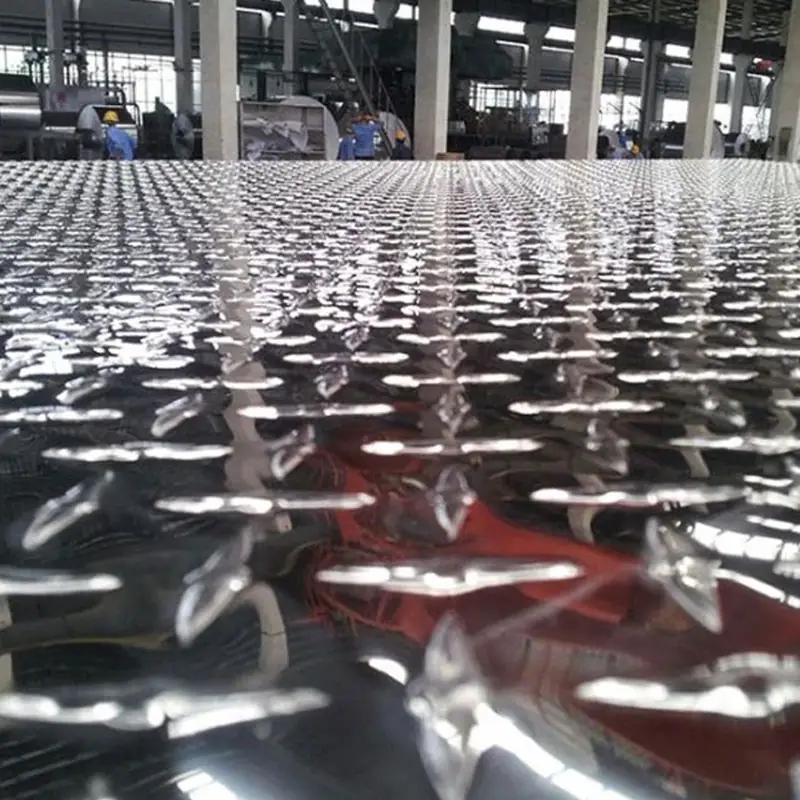
This specific pattern steel plate may consist of diamond-shaped or other raised features formed into the surface during rolling. Its main practical purpose is to provide additional mechanical traction compared with a smooth plate. This makes patterned plate useful for:Industrial floors and platforms.
- Walkways and stairs
- Machinery and equipment areas
- Vehicle and elevator applications
- Ship decks and marine working areas
The pattern should not be viewed as a substitute for proper structural design or formal slip-resistance testing. Actual performance depends on the pattern geometry, surface condition, contamination, footwear, installation, and operating environment.
How Checkered Steel Is Manufactured
Checkered steel is generally produced through a hot-rolling process. The steel is heated and passed through rolling equipment, with the raised pattern formed on the plate surface during the rolling operation.
The finished plate therefore consists of two important elements: the relatively flat steel substrate and the raised surface features. Rolling conditions influence the consistency of the pattern as well as the final dimensions and surface appearance.
Pattern consistency, dimensional tolerance, surface condition, and the applicable manufacturing standard should also be confirmed, particularly for large-volume or project-specific orders.
Base Thickness vs. Total Thickness
The base metal thickness refers to the flat steel substrate below the raised pattern. Total thickness includes the height of the raised surface.
This distinction matters because the two measurements serve different purposes. Structural calculations generally depend on the steel substrate and the design requirements of the application, while total thickness is important when checking physical clearance, fit-up, stacking, and installation space.
Checkered Steel Grades, Sizes, and Standards
Common Carbon Steel Grades
Grade selection should start with the project specification rather than the product name alone. Common grades referenced for checkered steel include:
- Q195
- Q235 and Q345
- SS400
- ASTM A36
- S235JR and S275JR
- Other project-specific grades
Q195 is a low-carbon steel grade included in Runfei’s product range. Other grades can be selected where a project requires different mechanical properties or follows a specific regional standard.
ASTM, EN, GB, JIS, and Other Standards
A project may refer to ASTM, EN, GB, JIS, BS, DIN, or another applicable standard. The standard provides the framework for defining material requirements and acceptance criteria.
When preparing an RFQ, the following should be identified:
- Required chemical composition and mechanical properties
- Applicable dimensional tolerances
- Surface requirements
- Inspection and testing requirements
- Required certification or MTC documentation
This approach is more reliable than specifying only a grade name. It also makes supplier quotations easier to compare because the material is being evaluated against the same technical basis.
Critical Technical Specifications for Checkered Steel
How to Calculate Checkered Steel Weight
A useful starting point for estimating the weight of a flat steel plate is:
Weight ≈ Thickness × Area × Steel Density
For carbon steel, a nominal density of approximately 7.85 g/cm³, or 7,850 kg/m³, can be used for preliminary calculations.
For example, a flat 1 m² plate with a 6 mm base thickness has an estimated substrate weight of:
0.006 m³ × 7,850 kg/m³ ≈ 47.1 kg
A checkered plate can weigh more than this because the raised pattern contains additional steel. The calculation is therefore useful for estimation, but it should not automatically be treated as the final invoicing weight.
Slip Resistance and Surface Safety
The raised pattern can improve mechanical traction, which is one reason checkered steel is commonly used for floors, steps, platforms, and walkways.
However, a patterned surface does not automatically meet every slip-resistance requirement. Performance can change with:
- Pattern geometry
- Water or oil contamination
- Footwear
- Surface condition
- Installation angle and drainage
- Operating environment
Where the application presents a higher slip risk, project-specific testing or additional anti-slip measures may be appropriate.
Fabrication, Welding, and Surface Treatment
Cutting and Brake Press Forming
Checkered steel can be cut using common industrial methods, but the raised pattern needs to be considered during positioning and clamping.
Shearing and thermal cutting may be selected according to plate thickness, equipment, grade, and production volume. Laser cutting can also be used in suitable conditions, although equipment capability and the surface pattern can affect the process.
For forming work, the pattern can influence clamping and tooling clearance. The required bending direction and forming radius should therefore be confirmed before production. For complex shapes, a trial piece can help verify the forming process before committing to a larger batch.
There is no single fabrication limit that applies to every checkered plate. Grade, thickness, pattern geometry, equipment, and forming method all influence the result.
Welding Checkered Steel
Welding requirements depend primarily on the steel grade and project specification.
Before welding, fabricators should consider joint preparation, heat input, distortion control, and the effect of the raised surface on fixtures or automated equipment. For structural grades, checking the material’s carbon equivalent can also help determine appropriate welding procedures.
The welding procedure should follow the applicable grade and project requirements rather than relying on a generic procedure for all checkered steel.
Galvanizing, Painting, and Other Surface Treatments
Surface treatment should be selected according to the service environment and required protection.
| Treatment | Main Purpose | Key Consideration |
| Hot-dip galvanizing | Corrosion protection | Coating thickness and dimensional effects |
| Painting | Barrier protection / appearance | Surface preparation is critical |
| Pickling/passivation | Stainless surface treatment | More relevant to stainless grades |
| Prepainting | Factory-applied coating | Confirm coating system and handling requirements |
Cut edges may require additional protection depending on the selected coating system and service environment.
Q195 Checkered Steel Plate: Product Specifications and Applications
Q195 Checkered Steel Plate at a Glance
Runfei’s Q195 Checkered Steel Plate is a premium hot rolled steel designed for applications that require a durable steel substrate together with a raised surface pattern. The product is supplied from Tianjin, China, with options covering multiple grades, dimensions, standards, and commercial arrangements.
The available range is particularly useful for buyers handling different project specifications. Instead of working around one fixed plate size or grade, procurement teams can discuss a combination of material grade, dimensions, surface treatment, quantity, and delivery requirements that better matches the project.
Applicable standard options include AISI, ASTM, BS, DIN, GB, and JIS. This gives international buyers a broader basis for specifying material according to their project documentation and regional purchasing requirements.
Available Grades, Dimensions, and Treatments
| Specification | Available Options |
| Product | Q195 Checkered Steel Plate |
| Available Grades | Q195, Q235, Q345, SS400, A36, S235JR, S275JR, GR.50, GR.70 and more |
| Thickness | 1.6–15 mm |
| Width | 1,000–2,000 mm |
| Length | 2,000–12,000 mm |
| Tolerance | According to applicable standard |
| Weight Basis | Actual weight |
| Surface Treatment | Alloy added or prepainted options |
| Packing | Steel-strip bundling / seaworthy packing |
| Commercial Terms | FOB, CFR, CIF and more |
| Payment Terms | T/T, L/C, D/P and more |
| Lead Time | 7–45 days, depending on order and stock |
The value of this specification range is its flexibility. The 1.6–15 mm thickness range allows buyers to select a plate according to the intended application rather than using one thickness for every project. Similarly, widths of 1,000–2,000 mm and lengths of 2,000–12,000 mm provide more options for matching floors, platforms, walkways, equipment areas, and fabricated components.
Selecting a plate closer to the required working dimensions can also reduce unnecessary cutting and material adjustment. For larger projects, this may simplify fabrication planning and material utilization, although the final choice should always follow the engineering and fabrication requirements.
The availability of Q195, Q235, Q345, SS400, A36, S235JR, S275JR, GR.50, GR.70, and other grades gives buyers more room to match project standards and required material properties. The actual grade should be confirmed against the governing specification rather than selected on price alone.
Runfei also offers alloy-added or prepainted options for applicable requirements. This allows surface or treatment considerations to be addressed as part of the initial procurement discussion rather than treated as an afterthought.
Applications of Q195 Checkered Steel Plate
Runfei’s checkered steel can be considered for a range of applications where a durable steel surface and additional traction are useful.
- Building and construction: flooring, platforms, stairs, and access areas
- Machinery and industrial projects: equipment bases, working platforms, and protective surfaces
- Automotive applications: selected vehicle-related structural and protective components
- Elevators: platforms and access-related applications
- Ship and marine applications: decks, walkways, and working areas
The appropriate grade and thickness depend on the actual load, support structure, environment, fabrication method, and project specification.
Runfei Supply and Service Capabilities
For B2B buyers, supplier support can be just as important as the product specification. Runfei combines factory-based pricing with trading-company services, supporting both initial product evaluation and larger industrial orders.
Small-order quantities can be considered before formal cooperation, which can be useful when a buyer wants to test a product or complete an initial project before moving to higher volumes. Samples are also available for confirmation.
Runfei states a 24-hour inquiry response and 48-hour solution response. For buyers working against project deadlines, responsive communication can help shorten the process of confirming specifications and moving toward a quotation.
Selected products may also be available from stock, which can provide faster shipment when the required specification is already available. Buyers should confirm stock status and dispatch timing before placing an urgent order.
Flexible payment and commercial arrangements, including T/T, L/C, FOB, CFR, and CIF, give international buyers different options for managing purchasing and logistics. Alibaba Trade Assurance and supplier credit-check information can provide additional references when evaluating the purchasing channel.
Packaging and Delivery for International Orders
International steel shipments need secure handling from the warehouse through loading, transportation, and unloading. Runfei provides standard seaworthy packing, with horizontal and vertical packing options and steel-strip bundling.
These arrangements help keep plates grouped and secured during transportation. Buyers with specific container-loading, lifting, or warehouse requirements can confirm the preferred packing method before shipment.
The stated 7–45 day lead time should be treated as a planning range rather than a fixed delivery guarantee. Actual timing depends on the required grade and dimensions, order quantity, production status, stock availability, and shipping arrangements.
For international procurement, FOB, CFR, and CIF terms can also be discussed according to the buyer’s logistics model. The final quotation should clearly define the delivery port, responsibilities, and shipment schedule.
Frequently Asked Questions
What Is the Difference Between Base Metal Thickness and Total Thickness?
Base metal thickness refers to the flat steel substrate below the raised pattern. Total thickness includes the height of the raised surface. The two measurements therefore describe different physical dimensions of the same plate.
The base thickness is particularly important when evaluating the steel substrate and structural requirements, while total thickness matters for physical clearance, fit-up, stacking, and installation.
Which Steel Grades Are Commonly Used for Checkered Steel?
Common grades include Q195, Q235, Q345, SS400, A36, S235JR, and S275JR. Other carbon or stainless grades may be selected for specific project requirements.
Grade selection should follow the governing project standard and required mechanical properties. A commercial grade name should not be treated as proof that two materials are technically equivalent.
How Do You Calculate the Weight of Checkered Steel?
A preliminary flat-plate calculation uses:
Weight ≈ Thickness × Area × 7,850 kg/m³
The raised pattern adds steel to the plate, so the actual weight can be higher than the flat-plate estimate.
Is Checkered Steel Slip Resistant?
The raised pattern can provide additional mechanical traction, but actual slip performance depends on pattern geometry, moisture, oil, contamination, footwear, installation, and operating conditions.
Therefore, checkered steel should not automatically be assumed to satisfy a specific regulatory coefficient-of-friction requirement. Applications with defined safety requirements should be evaluated against the applicable standard or project specification.
What Should I Include When Buying Checkered Steel?
An RFQ should normally identify the required grade and governing standard, base thickness, width, length, pattern, quantity, tolerance, surface treatment, certification requirements, packaging, delivery terms, and destination.
For international orders, it is also useful to confirm the weighing basis, MTC requirements, inspection arrangements, packing method, Incoterm, and expected lead time before placing the purchase order.
Conclusion
Selecting checkered steel involves more than choosing a patterned surface. Connect the steel grade, base thickness, dimensions, tolerance, surface treatment, fabrication method, and delivery conditions to the actual project requirements.
A clear RFQ is the simplest way to reduce uncertainty. Defining the governing standard, material grade, base thickness, dimensions, quantity, inspection requirements, MTC documentation, packaging, and delivery terms gives both buyer and supplier a common technical and commercial reference.
For projects requiring flexible specifications and international delivery support, Runfei provides Q195 and other checkered steel grades with multiple size options, seaworthy packing, sample support, and flexible commercial terms.
Contact Runfei Today to Request a Quote or Technical Consultation and provide your required grade, base thickness, dimensions, quantity, surface treatment, destination, and delivery schedule for a product and quotation discussion.