In the field of pressure vessel manufacturing, the selection of materials is of paramount importance. The sealing of volatile substances such as liquefied petroleum gas requires the steel to have stable consistency, good formability and inherent safety margins. For cylinder manufacturers, the choice of steel is a cornerstone of their product integrity and life cycle. HP295 stands out as a widely designated and trusted option at the specialized level, specially designed for this critical task. As a kind of material classified as boiler and high-pressure steel, it makes up the gap between strong mechanical properties and cost-effective manufacturing capacity.
What Exactly is HP295 Steel?
HP295 is the grade of hot rolled coil and steel plate defined according to the Japanese industrial standard JIS G3116, specially designed for welded gas cylinders. This standard stipulates the chemical composition, mechanical properties, dimensional tolerances and overall quality of steel for high-pressure gas containers. Different from ordinary structural steel, HP295 adopts a strictly controlled chemical composition design to ensure excellent welding performance and consistent deep drawing ability. These attributes are not negotiable when the cylinder head and the two halves of a cylinder block are pressed and then seamlessly connected.
Although the standard originated in Japan, it has been adopted in the world. Many manufacturers in China and all over Asia produce HP295 according to this precise specification, usually with extra internal controls that exceed the minimum requirements of the standard. This makes it a real international main force in the liquefied petroleum gas industry. Any experienced carbon steel manufacturer knows that producing HP295 is not only to meet the tensile strength value on a certificate; It is about providing a predictable homogeneous microstructure in each stamping, spinning and welding operation.
The Manufacturing Discipline Behind HP295
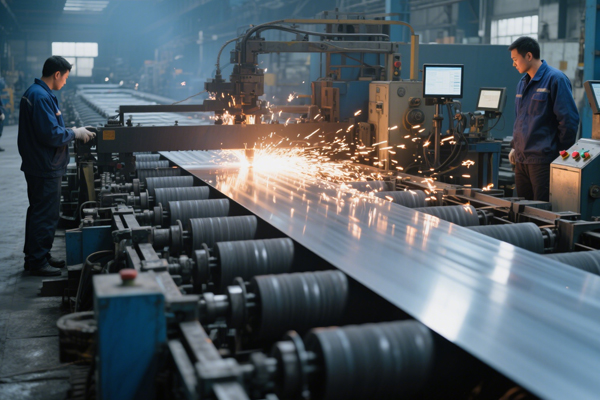
To produce a reliable boiler and high-pressure steel, such as HP295, a strict method is needed from melting to coiling. This process begins with a carefully balanced burden in an alkaline oxygen furnace or electric arc furnace, in which residual elements such as phosphorus and sulfur are reduced to a minimum to improve cleanliness and toughness. Secondary metallurgy, usually ladle furnace refining, is very important to achieve a narrow composition range that limits the welding characteristics of this level.
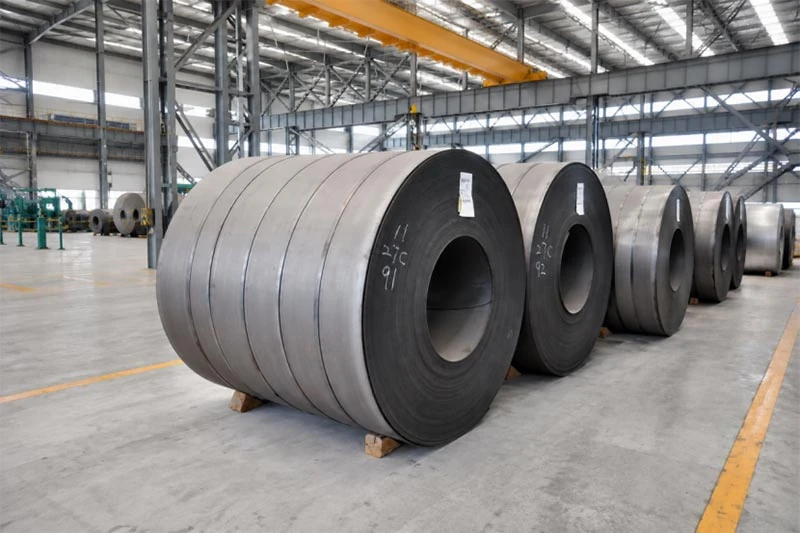
Continuous casting into slabs, followed by controlled hot rolling, determines the ultimate mechanical properties. The rolling parameters must balance the demand for fine-grain structure and the formability needed for cylinder manufacturing. After rolling, the steel coils should be accurately cooled and usually leveled to ensure a smooth and defect-free surface. Surface quality is the most important; Any imperfection on the strip can become a stress raiser during the pressurization cycles of the finished vessel. Specialized carbon steel manufacturer will adopt online and offline tests (from ultrasonic testing to mechanical testing of the sample) to ensure that each coil meets the applicable thickness range . For this specification, the thickness range is usually from 1.6 mm to 14 mm, and the width is from 1000 mm to 2500 mm, depending on the production capacity of the plant.
HP295 and SG295: Two Sides of the Same Critical Standard
Generally, discussions around JIS G3116 focus on two main levels: HP295 and SG295. Although both of them are designed for gas cylinder applications, their mechanical requirements for windows are slightly different, so it is very valuable for engineers to compare them directly. HP295 is typically specified with a minimum yield strength in the vicinity of 295MPa, reflecting its grade designation, and offers an excellent balance of strength and ductility for standard LPG cylinder applications.
On the other hand, SG295 is another widely used grade within the same series. When higher strength is a design requirement, SG295 is usually selected. Comparing HP295 with SG295 is not a better problem than the other one; On the contrary, the choice depends on the calculation of the working pressure, cylinder diameter and wall thickness. SG295 tends to provide a higher tensile strength, which can allow thinner wall designs under some high-pressure conditions, thus potentially reducing weight. However, HP295 usually shows better and more tolerant stamping formability, and is used for deep drawing of half-cylinders. The choice between HP295 and SG295 represents a careful optimization between forming complexity and final pressure-bearing requirements. For standard consumer LPG containers, acetylene cylinders, and similar vessels, the proven formability track record of HP295 makes it a dominant, long-standing choice in many production lines.
Core Applications and Unmatched Advantages
The main purpose of HP295 steel is to manufacture welding gas cylinders, which are used for storing and transporting propane, butane, acetylene and various refrigerant gases. These are not passive containers; They are pressure vessels, which bear internal pressures, handling fatigue and are often exposed to harsh environments. The combination of steel’s high strength, excellent welding integrity and dimensional consistency ensures that the cylinder can withstand mandatory water pressure test and decades of field use.
In addition to its main function as a gas cylinder steel, the stable quality of HP295 also makes it applicable to other related welding structures and pipelines that need high integrity. Its rugged features make it suitable for selected welded pipe applications, structural components and general mechanical parts. The versatility of the product comes from its metallurgical cleanliness. A reliable carbon steel manufacturer will ensure that the material not only meets the standard but also optimizes the downstream processes, such as automatic welding lines and powder spraying.
When sourcing HP295, several practical advantages come from partnering with an established mill or a specialized distributor with mill-integrated services:
- Full-Service Supply with Factory Economics: Clients can access mill-direct pricing combined with the flexibility of trading-company logistics, without hidden intermediaries.
- Stringent Quality Management: The product quality is closely monitored, and has been certified by third-party inspection institutions such as SGS, BV, IQI and TUV, and the compliance of the ISO system has been strengthened.
- Responsive Support: 24-hour response time and a structured 48-hour solution supply framework are promised to ensure that technical queries or supply problems are handled in time.
- Collaborative Flexibility: Knowing that trust is built step by step, real suppliers will accept trial orders before formally establishing long-term cooperation, allowing manufacturers to verify HP295 steel in their own operating environment.
We believe that our role is not just a supplier. As a professional carbon steel manufacturer, our responsibility extends to providing technical transparency and reliable factory test reports, and providing honest suggestions on whether the substitution grades, such as HP295 or SG295, are the most suitable for the expected pressure vessel design.
Conclusion
The integrity of a pressure vessel ultimately depends on the integrity of its material. As we have discussed, the safety of end users-families who use liquefied petroleum gas for cooking, welders who rely on acetylene and enterprises operating forklifts-depends entirely on the quality of the steel in cylinders. This is a reality that any carbon steel manufacturer with conscience attaches great importance to. Lasting trust in HP295 has never been the result of active marketing; This is the result of predictable security performance in this field for decades. While grades like SG295 offer valuable alternatives in the same standard for higher-strength design requirements, HP295 continues to distinguish itself through proven formability and consistent welding behavior. By strictly observing JIS G3116 standard and focusing on the basic metallurgical foundation, this grade is still a reliable, cost-effective and globally available material for the field of boiler and high-pressure steel.